




01. Edit your form 709 software free online
Type text, add images, blackout confidential details, add comments, highlights and more.

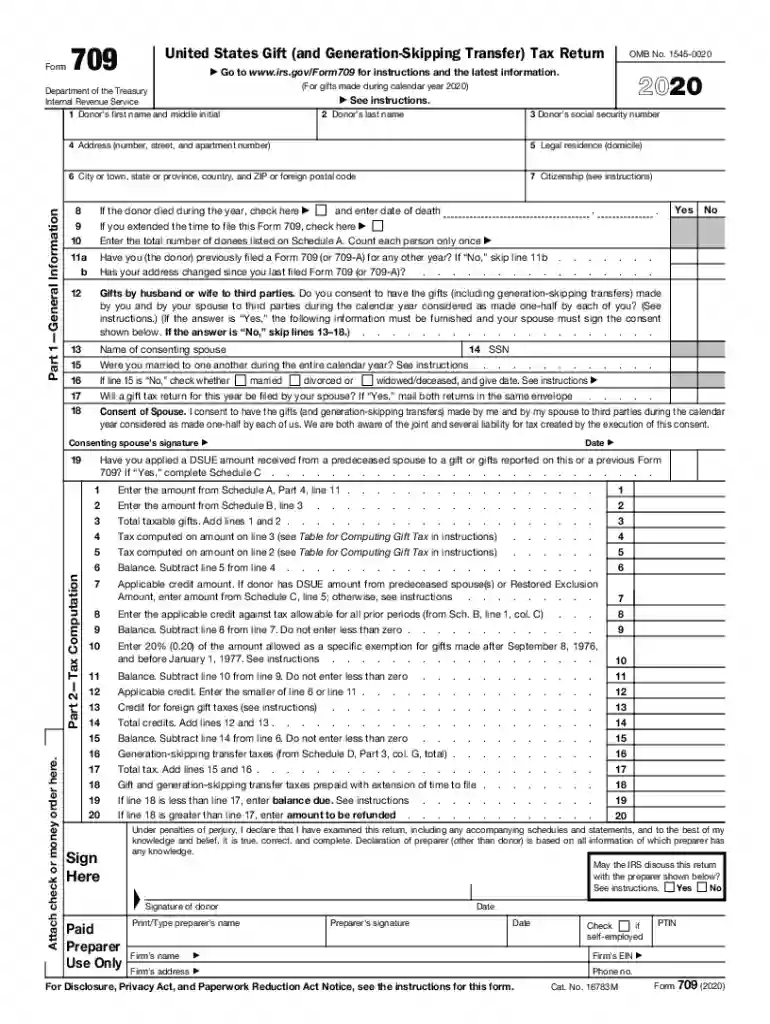
Type text, add images, blackout confidential details, add comments, highlights and more.

Draw your signature, type it, upload its image, or use your mobile device as a signature pad.

Send form 709 software via email, link, or fax. You can also download it, export it or print it out.
Form 709, the United States Gift (and Generation-Skipping Transfer) Tax Return, is a crucial document used to report gifts that an individual has made during the calendar year that exceed the annual exclusion amount. Additionally, it helps in documenting generation-skipping transfers, where gifts are given to a person who is two or more generations younger than the donor. The form captures essential details such as donor and donee information, and it calculates applicable gift taxes. Understanding this form is vital for ensuring compliance with federal tax laws.
Filing Form 709 is necessary for individuals who have made significant gifts or specific generation-skipping transfers. It is crucial to fill out all relevant sections accurately to ensure compliance and avoid penalties.
Form 709 can be easily accessed through the IRS website in both digital and printable formats. It can also be obtained from tax software platforms that are compliant with IRS regulations.
Form 709 is primarily used by individuals in the United States who engage in gifting behaviors that surpass the annual exclusion threshold set by the IRS, as well as those planning for estate taxes through generation-skipping transfers. This can include:
To comprehend Form 709, it is essential to be familiar with the terminology used within it. Key terms include:
Adhering to IRS guidelines and meeting filing deadlines is imperative when dealing with Form 709 to avoid penalties. Below are essential points about the guidelines and timelines:
Failure to file Form 709 in a timely and accurate manner can result in significant penalties. These can include fines based on the amount of tax owed and interest on unpaid taxes. It is crucial to adhere to all filing requirements to avoid these punitive measures.
Form 709 can be submitted in both paper and digital formats. Each has different requirements but ultimately serves the same purpose of reporting gifts and transfers to the IRS.
Choosing the appropriate format based on individual preference and access to technology can streamline the filing process of Form 709.
We've got more versions of the form 709 software free form. Select the right form 709 software free version from the list and start editing it straight away!
| Versions | Form popularity | Fillable & printable |
|---|---|---|
| 2025 | 4.3 Satisfied (24 Votes) | |
| 2024 | 4.2 Satisfied (58 Votes) | |
| 2023 | 4.4 Satisfied (50 Votes) | |
| 2022 | 4.9 Satisfied (46 Votes) | |
| 2021 | 4.9 Satisfied (24 Votes) | |
| 2020 | 4.3 Satisfied (180 Votes) | |
| 2019 | 4.3 Satisfied (183 Votes) | |
| 2018 | 4.3 Satisfied (183 Votes) | |
| 2017 | 4.2 Satisfied (54 Votes) | |
| 2016 | 4.4 Satisfied (60 Votes) | |
| 2015 | 4 Satisfied (25 Votes) | |
| 2014 | 4 Satisfied (38 Votes) | |
| 2013 | 4.3 Satisfied (55 Votes) | |
| 2012 | 4.1 Satisfied (59 Votes) | |
| 2011 | 4 Satisfied (41 Votes) |
At DocHub, your data security is our priority. We follow HIPAA, SOC2, GDPR, and other standards, so you can work on your documents with confidence.
Please fill in the Return Label at the bottom of this page. 1. I request an extension of time until to file my income tax return for the calendar year 2017,.Read more
Feb 11, 2026 Use Form 709 to report: Transfers subject to the federal gift and certain generation-skipping transfer (GST) taxes.Read more


