




01. Edit your 2011 form 709 instructions online
Type text, add images, blackout confidential details, add comments, highlights and more.

Type text, add images, blackout confidential details, add comments, highlights and more.

Draw your signature, type it, upload its image, or use your mobile device as a signature pad.

Send 2011 form 709 via email, link, or fax. You can also download it, export it or print it out.
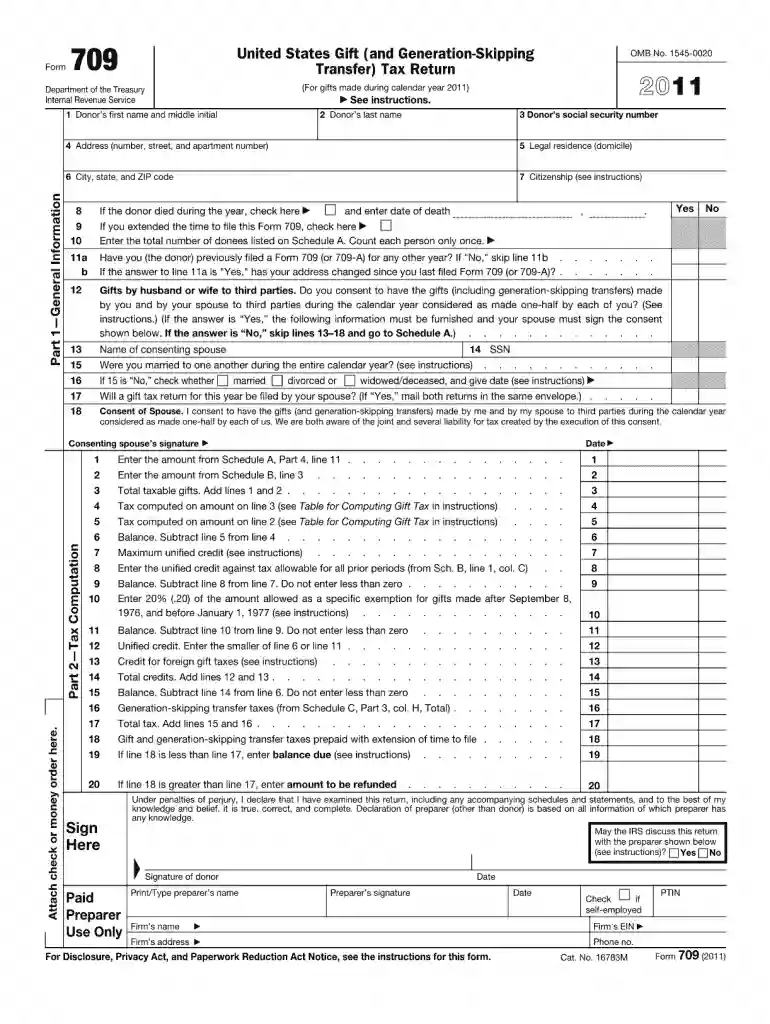
The Form 709, officially known as the United States Gift (and Generation-Skipping Transfer) Tax Return, is a tax document used to report gifts and generation-skipping transfers during the year. In 2011, this form was required for individuals who made gifts exceeding the annual exclusion limit or who wish to allocate their lifetime gift tax exemption. The form helps the Internal Revenue Service (IRS) track taxable gifts and ensures compliance with federal tax regulations regarding such transfers.
The Form 709 allows individuals to disclose gifts made during the year and to either pay the necessary gift taxes or use part of their lifetime exemption. It is central to managing tax liabilities associated with gifts and is crucial for those who make significant gifts to relatives or other beneficiaries. Successful use of the form involves listing each gift's value, identifying the recipient, and determining whether to apply the annual exclusion or the lifetime exemption.
The 2011 Form 709 can be accessed through the Internal Revenue Service’s official website or by requesting a physical copy from the IRS directly. Tax professionals and software solutions also commonly provide access to the form as part of their tax preparation services. Retaining a personal copy of the form can be crucial for audit purposes, as having your documentation organized and readily available can save time and potential issues.
Identify Gifts: List all the gifts made over the year, including monetary gifts, vehicles, property, and other tangible assets.
Valuation: Fair market value of each gift must be assessed and recorded accurately.
Use of Exclusions: Determine which gifts exceed the annual exclusion limit, and decide how much of the lifetime exemption (if any) will be allocated.
Filing Details: Provide all necessary personal information, including the taxpayer identification number and appropriate signatures.
Forms and Schedules: Complete any additional attached schedules or forms, which may be necessary depending on the complexity and nature of the gifts.
Form 709 is primarily utilized by U.S. citizens and residents who make substantial gifts above the yearly exclusion limits. It includes individual taxpayers engaged in estate planning to minimize their tax burden and those involved in extensive charitable giving that involves transferring significant assets over to families, friends, or institutions without incurring unnecessary tax liabilities.


While the Form 709 pertains to federal gift taxation, some states may have additional regulations or tax obligations related to gift-giving. Taxpayers are guided to check with state tax authorities to determine any additional state-level reporting or payment requirements, ensuring compliance in multiple jurisdictions.
Failure to file the Form 709 when required can lead to late filing penalties and interest on any unpaid tax. The IRS imposes penalties up to 5% of the owed tax for each month the return is late, capped at 25%. Deliberate negligence or fraudulent disclosures can result in more severe penalties, including substantial fines or legal action. It is crucial to maintain accurate records and comply with filing deadlines.
The IRS provides comprehensive instructions for completing Form 709, including definitions of applicable terms, guidance on calculating exclusions and exemptions, and clarification of reportable gifts. Following these instructions closely ensures compliance and mitigates the risk of errors or omissions. Users of the form are advised to frequently refer to the IRS's official guidelines and attend to any updates or notices that might affect their tax situation. This ongoing diligence helps safeguard against unexpected liabilities and maximizes the strategic benefits of gift planning.
We've got more versions of the 2011 form 709 instructions form. Select the right 2011 form 709 instructions version from the list and start editing it straight away!
| Versions | Form popularity | Fillable & printable |
|---|---|---|
| 2025 | 4.3 Satisfied (24 Votes) | |
| 2024 | 4.2 Satisfied (58 Votes) | |
| 2023 | 4.4 Satisfied (50 Votes) | |
| 2022 | 4.9 Satisfied (46 Votes) | |
| 2021 | 4.9 Satisfied (24 Votes) | |
| 2020 | 4.3 Satisfied (180 Votes) | |
| 2019 | 4.3 Satisfied (183 Votes) | |
| 2018 | 4.3 Satisfied (183 Votes) | |
| 2017 | 4.2 Satisfied (54 Votes) | |
| 2016 | 4.4 Satisfied (60 Votes) | |
| 2015 | 4 Satisfied (25 Votes) | |
| 2014 | 4 Satisfied (38 Votes) | |
| 2013 | 4.3 Satisfied (55 Votes) | |
| 2012 | 4.1 Satisfied (59 Votes) | |
| 2011 | 4 Satisfied (41 Votes) |
At DocHub, your data security is our priority. We follow HIPAA, SOC2, GDPR, and other standards, so you can work on your documents with confidence.
For Disclosure, Privacy Act, and Paperwork Reduction Act Notice, see the instructions for this form. Cat. No. 16783M. Form 709 (2011). Page 2. Form 709 (2011).Read more
Our recommendation to detect cases of PA places a high value on avoiding the risks associated with missing a PA diagnosis (and thus forgoing the opportunity ofRead more
The first step in this procedure is determining the amount of applicable exclusion spent on taxable gifts to a same-sex spouse, calculated by multiplying theRead more


