






Definition & Meaning
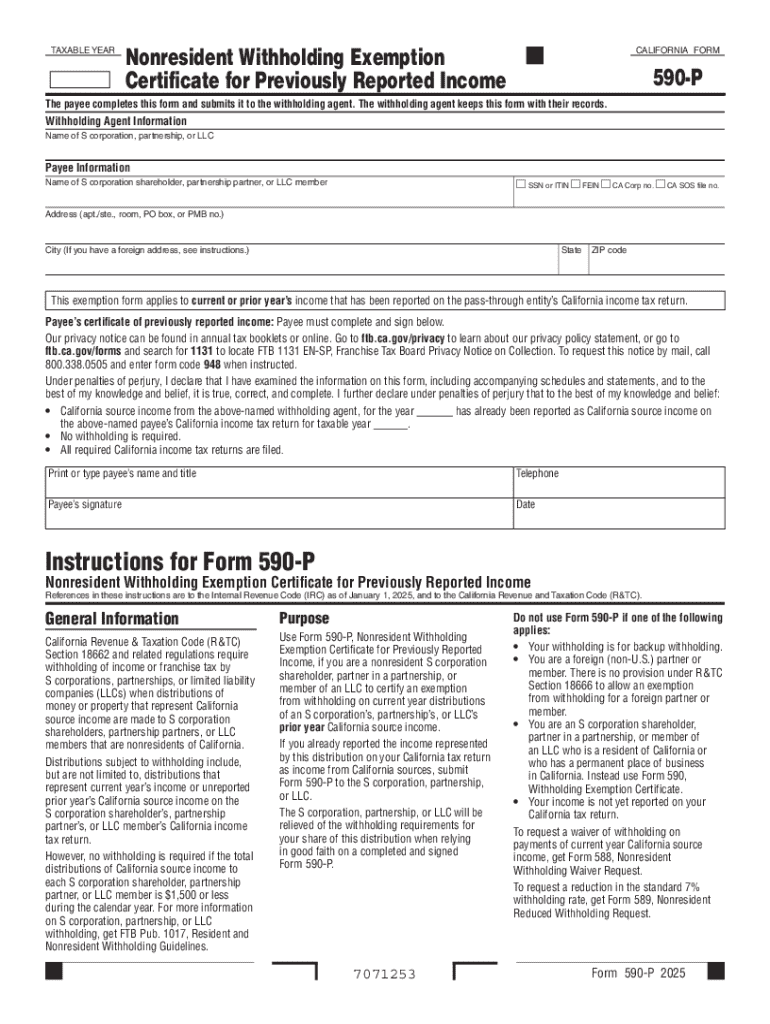
The California Form 590-P Nonresident Withholding Exemption Certificate is a critical document used by nonresidents to claim an exemption from California tax withholding on income sourced from the state. Typically, this form is employed by payees who can demonstrate that their income is not subject to withholding taxes under California law. It allows taxpayers to communicate exemption eligibility to withholding agents to prevent automatic deductions from their payment streams.
How to Use the California Form 590-P Nonresident Withholding Exemption Certificate
For effective utilization of California Form 590-P, nonresident taxpayers must first determine their eligibility for exemption from withholding. Once eligibility is confirmed, the form must be completed accurately and submitted to the withholding agent responsible for managing tax withholdings. The agent then uses the information provided to adjust withholding procedures accordingly. Typically, this involves completing all relevant details, including personal information and specific exemption claims.
Steps to Complete the California Form 590-P
-
Personal Information: Enter your name, address, and taxpayer identification number. Accuracy in this section is critical to ensure the form is processed correctly.
-
Exemption Claims: Specify the nature of your income and justify why it is exempt from state withholding tax. Provide detailed explanations backed by relevant tax codes or regulations.
-
Signature: Sign and date the form to certify the accuracy of the information provided. This also serves as your declaration of compliance with state tax laws.
-
Submission: Send the completed form to your withholding agent. Ensure you keep a copy for your records.
Eligibility Criteria
Eligibility for using the California Form 590-P involves specific parameters. Generally, you must be a nonresident receiving California-source income that qualifies for a withholding exemption. Common criteria include:
- Nonresident Status: Confirm you do not have residency in California or substantial connection that would warrant state tax withholdings.
- Qualified Income: Verify that your income type aligns with those exempt under state laws, such as certain business or investment incomes.
- Documentation: Provide necessary documentation or evidence supporting your exemption claim.


Required Documents
To complete the California Form 590-P, you may need supplementary documents to validate your exemption status. Typical documentation includes:
- Proof of Nonresident Status: Such as a driver’s license or a copy of a non-California state tax return.
- Income Documentation: Details about the nature of your California-source income.
Additionally, maintaining comprehensive records can facilitate a smoother exemption process and mitigate any challenges to your claim.
Important Terms Related to California Form 590-P
Understanding key terminology is essential for accurately completing the form:
- Withholding Agent: The entity required to withhold taxes from payments made to a nonresident.
- Exemption: A legal allowance for a portion of income not subject to tax withholding.
- Income Type: The specific category of income received (e.g., independent contractor fees, royalties).
Key Elements of the California Form 590-P
The form encompasses several essential sections that require meticulous completion:
- Identification Information: Crucial for aligning the exemption with the right taxpayer.
- Income Description: A clear summary of the income type, ensuring it's eligible for exemption under California law.
- Certification by Payee: This section guarantees that you comply with state tax legislation, affirming your nonresidency and exempt income status.
Penalties for Non-Compliance
Failing to submit a properly filled California Form 590-P can lead to significant consequences:
- Withholding Errors: Inaccurate or unsubmitted forms could result in unnecessary tax withholdings, reducing your net income.
- Legal Ramifications: Misrepresentation can lead to audits and penalties, impacting your financial standing and credibility.
Who Typically Uses the California Form 590-P Nonresident Withholding Exemption Certificate
Various entities and individuals routinely engage with the California Form 590-P, notably:
- Freelancers and Contractors: Those offering services in California but residing outside the state.
- Business Entities: Corporations domiciled outside of California yet deriving income from within the state.
- Investors: Nonresidents earning California-based interest, dividends, or royalties that may qualify for exemptions.
Adhering to these insights ensures optimal utilization of California Form 590-P while aligning tax practices with state regulations. This structured approach aids in maintaining compliance, reducing withholding errors, and streamlining exemption claims.