




Definition and Purpose of the 2012 Form 1040-ES
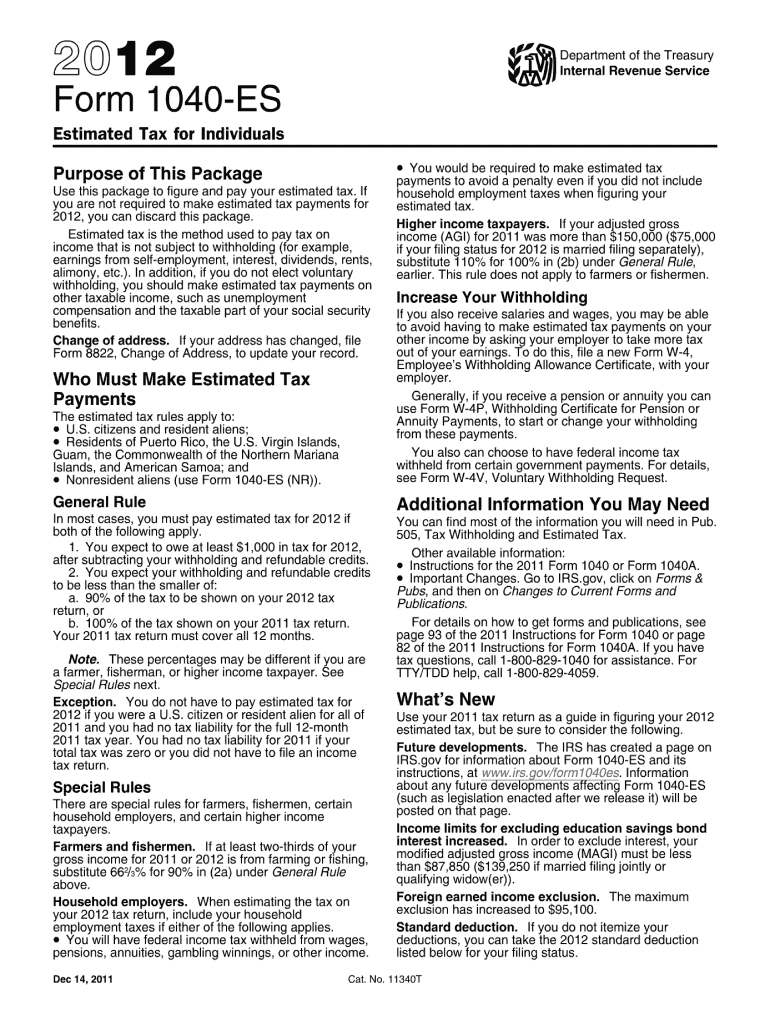
The 2012 Form 1040-ES is specifically designed for the computation and payment of estimated taxes by individuals. This form is quintessential for those who do not have sufficient tax withheld from their income throughout the year. It primarily serves taxpayers who anticipate owing at least $1,000 in taxes after accounting for withholding and credits on their ordinary income. Commonly, self-employed individuals, retirees, and those with significant investment or freelance income find themselves utilizing this form to prepay their tax liabilities in quarterly increments. This proactive approach helps in avoiding potential penalties due to underpayment.
Steps to Complete the 2012 Form 1040-ES
-
Estimate Gross Income: Start by calculating the total anticipated gross income for the year, which includes wages, self-employment income, dividends, interest, and other forms of compensations.
-
Determine Deductions and Credits: List all eligible deductions and credits that will apply. This includes personal deductions, standard or itemized deductions, and any applicable tax credits.
-
Compute Taxable Income: Subtract the deductions and any credits from the gross income to determine the actual taxable income.
-
Calculate Estimated Tax Obligation: Use the tax brackets for the 2012 fiscal year to compute the estimated taxes due based on your taxable income.
-
Divide and Schedule Payments: Divide the total tax owed into four equal payments as per IRS guidelines and schedule them for each quarterly due date during the year.
-
Complete Payment Vouchers: Fill out the payment vouchers included with Form 1040-ES to accompany each quarterly tax payment.
How to Obtain the 2012 Form 1040-ES
The 2012 Form 1040-ES can be accessed through multiple channels for convenience:
- IRS Website: Download directly from the official IRS website, where past-year forms are archived.
- Tax Preparation Software: Utilize software like TurboTax or QuickBooks, which might offer integrated access to historical forms.
- Request by Mail: For those who prefer physical copies, the IRS provides a mail-order service to deliver the physical forms.
Ensuring access to the correct form version is crucial, especially for retrospective filing or audits.
Important Terms Related to Form 1040-ES
- Estimated Tax: Taxes predicted on non-wage income such as self-employment or investment income, paid quarterly.
- Adjusted Gross Income (AGI): Gross income minus adjustments; a key figure in determining tax liability.
- Self-Employment Tax: A specific tax levied on individuals' net earnings from self-employment, separately calculated from income tax liabilities.
- Safe Harbor Rule: A provision allowing taxpayers to avoid penalties if their estimated tax payments equal 100% of the previous year’s liability or 90% of the current year's amount.
Understanding these terms ensures precise form completion and accurate tax payments.
Why Use the 2012 Form 1040-ES
Utilizing the 2012 Form 1040-ES is imperative if you have substantial income outside of regular salaried wages. By computing and prepaying estimated taxes, taxpayers can effectively manage their financial obligations without facing large, unforeseen end-of-year tax payments.
- Avoid Penalties: Pay taxes throughout the year to avoid late-payment penalties.
- Financial Planning: Facilitate better financial planning by anticipating tax liabilities.
- Compliance Assurance: Ensure compliance with federal tax regulations, thereby avoiding IRS scrutiny.
Who Typically Uses the 2012 Form 1040-ES
This form primarily serves individuals whose income typically includes:
- Freelancers and Independent Contractors: Income not subject to withholding.
- Self-Employed Individuals: Pay taxes on net profits beyond regular employment earnings.
- Investors and Retirees: Substantial income from investments or retirement funds not previously taxed.
Such profiles necessitate the use of 1040-ES to manage estimated tax payments effectively.

IRS Guidelines for Form 1040-ES
The IRS stipulates specific requirements when it comes to estimated tax payments via Form 1040-ES:
- Quarterly Due Dates: Payments are due on four specific dates throughout the year: April 15, June 15, September 15, and January 15 of the following year.
- Payment Calculation Factors: Include prior year taxes, anticipated income, and expected deductions to calculate the obligation accurately.
- Penalties for Underpayment: Incur penalties if less than 90% of the current year’s tax or 100% of prior year's liability is prepaid.
Adhering to these guidelines aids in maintaining compliance and avoiding potential fines.
Filing Deadlines and Important Dates
Staying informed about crucial filing dates is vital for maintaining good standing with the IRS:
- Quarterly Payment Deadlines: Understand specific deadlines; for instance, the payment for each quarter is to be made by the 15th of April, June, September, and the following January.
- Amendment and Recalibration: Should your income fluctuate, adjustments to calculations can be made before quarter deadlines.
Timely payments assist in managing cash flow effectively while maintaining tax compliance.
Required Documents and Information
To accurately complete the 2012 Form 1040-ES, gather and maintain:
- Income Records: Documentation of earnings from all sources, including self-employment and investments.
- Tax Deduction Proofs: Receipts and acknowledgments for all claimed deductions and credits.
- Prior Tax Returns: Previous year's tax returns as they provide a reference for current year projections.
Meticulously organizing these documents ensures accuracy in tax computations and prepares you for potential audits.