
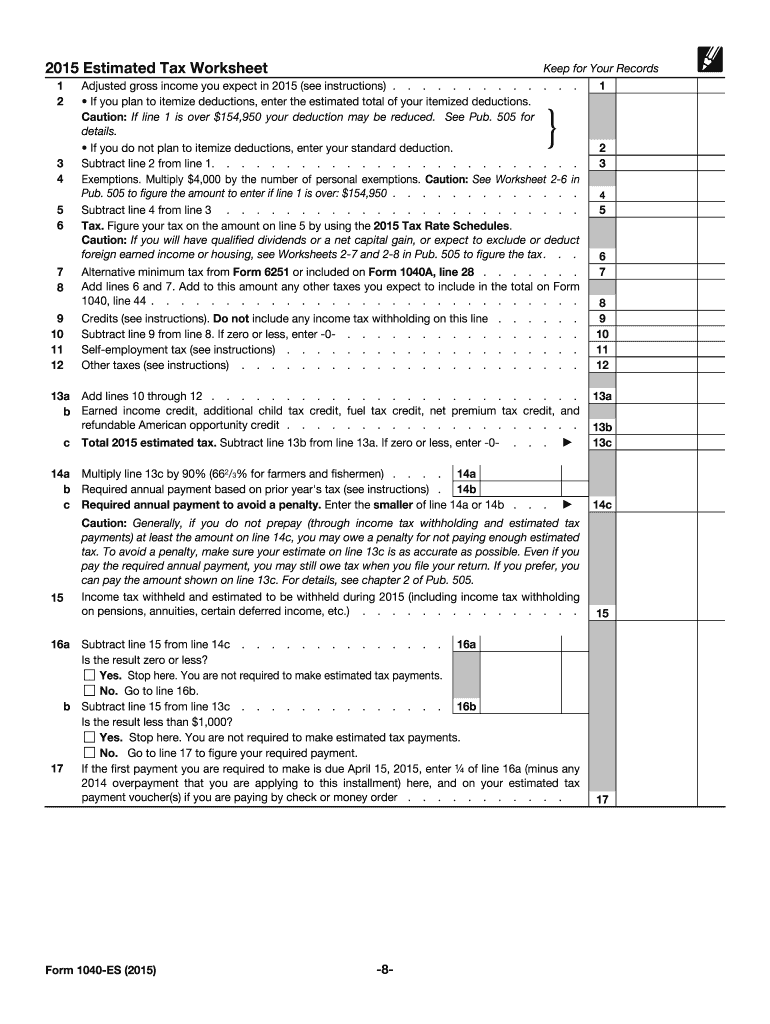







Definition and Purpose of Form 1040-ES
Form 1040-ES is used by individuals in the United States to estimate and pay quarterly taxes. This form is most relevant for those receiving income not subject to standard withholding, such as self-employed individuals or those with investment income. It ensures compliance with the IRS's pay-as-you-go tax system by requiring quarterly tax payments on expected income.
Who Uses Form 1040-ES
Those who receive income beyond regular wages, including freelancers, independent contractors, business owners, and individuals with significant dividend or capital gains income, use Form 1040-ES. It’s crucial for taxpayers to assess whether their withholding is sufficient or if estimated tax payments are required.
How to Obtain Form 1040-ES
You can download Form 1040-ES directly from the IRS website or obtain it from tax preparation software like TurboTax or QuickBooks. Physical copies may be available at local IRS offices or mailed as part of a tax packet by request.
Steps to Complete Form 1040-ES
- Calculate Expected Income: Determine total expected income for the year, considering all sources, including wages, investments, and self-employment income.
- Estimate Adjustments and Deductions: Identify eligible deductions and adjustments to income, such as retirement contributions or health savings account deposits.
- Compute Total Tax Liabilities: Use the IRS tax tables to calculate the total tax based on expected income, then apply any credits, such as earned income or child tax credits.
- Divide into Quarterly Payments: Split the total estimated tax liability into four equal payments, aligning with IRS quarterly due dates.
- Submit Payments: Payments can be mailed using payment vouchers included with Form 1040-ES or submitted electronically via the IRS Direct Pay system.
Legal Implications and Use
Using Form 1040-ES correctly is crucial to avoid IRS penalties for underpayment of taxes. The IRS mandates that individuals who owe $1,000 or more after withholdings should make estimated payments using this form. Failure to comply can result in fines, emphasizing the importance of accurate calculation and timely submission.
Penalties for Non-Compliance
The IRS imposes penalties on taxpayers who fail to pay sufficient estimated taxes throughout the year. Even if the total tax liability is met by the end of the year, failing to make timely quarterly payments can lead to additional charges. It is vital to adhere to the payment schedule outlined in Form 1040-ES.
Key Elements and Terminology
Payment Vouchers
These are sections included with Form 1040-ES that you submit when you make your quarterly estimated tax payments. Each voucher corresponds to a specific quarter and includes space for entering personal information and the payment amount.
Safe Harbor Rule
This IRS provision allows taxpayers to avoid underpayment penalties if they pay at least 100% of the previous year's tax liability or 90% of the current year's expected liability, whichever is less. This rule serves as protection against unforeseen income increases.
IRS Guidelines and Compliance
The IRS provides comprehensive guidance on when and how to use Form 1040-ES. It advises maintaining thorough records of income and expenses to ensure accurate estimated tax payments. Taxpayers can also refer to the IRS's Publication 505 for detailed instructions and examples.
Filing Deadlines and Important Dates
Estimated tax payments for individuals using Form 1040-ES are due quarterly. The due dates typically fall on April 15, June 15, September 15, and January 15 of the following year. Engaging with a calendar reminder system can be beneficial to meet these deadlines.
Examples and Scenarios
Freelancers
Freelancers often make use of Form 1040-ES as their primary means of tax compliance. Since their income is often received without any withheld taxes, accurately estimating their quarterly liabilities is crucial.
Retirees with Investment Income
Retirees withdrawing retirement funds or living off investment income should also use Form 1040-ES to manage their tax responsibilities efficiently. Estimating accurately can prevent large unexpected tax bills during filing season.
These sections provide a detailed exploration of Form 1040-ES, offering important insights and practical guidance for taxpayers navigating the complexity of estimated tax payments in the U.S.


