
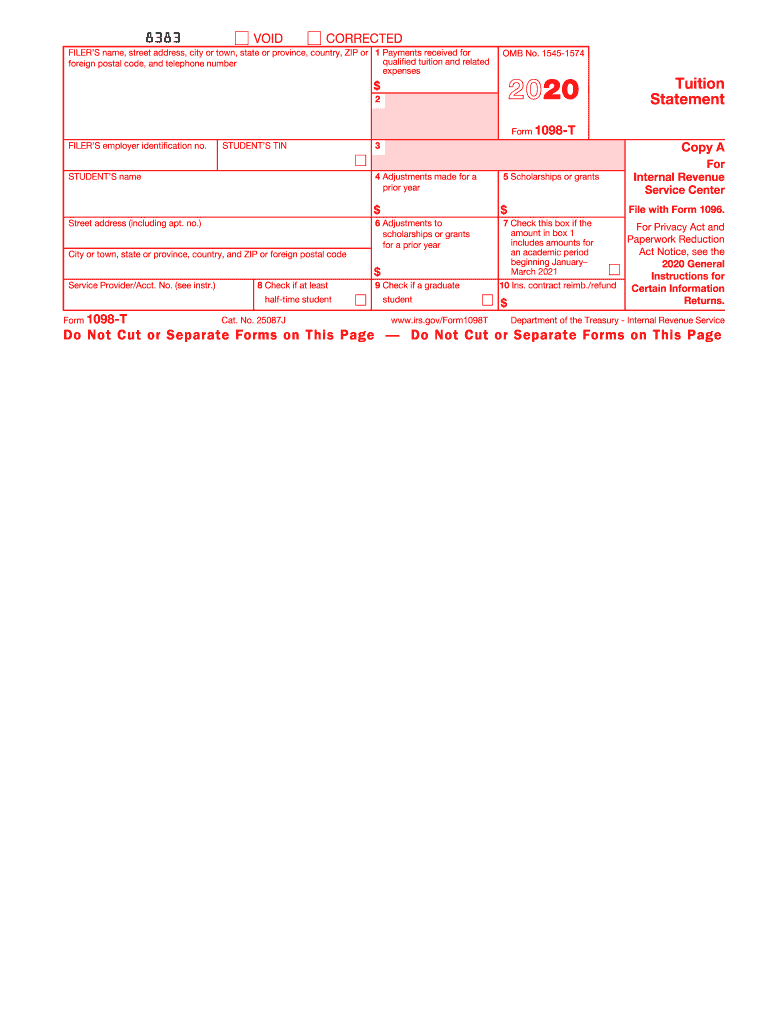







Definition & Meaning
The Form 1098-T, or Tuition Statement, is furnished by eligible educational institutions to report payments received for qualified tuition and related expenses. It includes information needed by students or their guardians to claim education credits on their federal tax returns. These credits can offset tuition costs, reduce tax liability, or, in some cases, increase a tax refund. The form is instrumental in detailing tuition payments, scholarships or grants, and adjustments, providing a comprehensive summary of educational expenses and financial aid received.
How to Obtain the 1098-T Form 2020
Educational institutions are required to issue Form 1098-T to each student who pays qualified education expenses. Most commonly, these forms can be accessed by students through the online student portal of their respective institutions. In some cases, hard copies may also be mailed to the students’ address on record. It's essential for students to ensure their contact details are up-to-date with their educational institution to receive their form timely. Should a student not receive their form, they should contact their institution’s bursar's office or financial services department for assistance.
Key Elements of the 1098-T Form 2020
The form contains several essential sections which include:
- Box 1: Payments received for qualified tuition and related expenses.
- Box 2: Reserved for future use and is generally left blank.
- Box 5: Scholarships and grants received that reduce the amount of qualified tuition paid.
- Box 7: Checked if the amount in Box 1 includes amounts for an academic period beginning January-March 2021.
- Student Status Boxes: Indicating if the student was a graduate student or at least half-time during the year.
Accurate completion of these sections is crucial for claiming the appropriate tax benefits and ensuring compliance with IRS requirements.
Steps to Complete the 1098-T Form 2020
- Verify Personal Information: Ensure that your name, social security number, and address are accurately listed.
- Check Boxes 1 and 5: Note the amounts listed for payments received and scholarships/grants.
- Understand Your Eligibility: Reflect on whether you qualify for education tax credits like the American Opportunity Credit or the Lifetime Learning Credit.
- Consult IRS Guidelines: Refer to IRS Publication 970 for detailed guidance on addressing education benefits, the qualification threshold, and potential benefits.
The exact steps may vary depending on individual circumstances, and seeking assistance from a tax professional can often elucidate this process.
Who Typically Uses the 1098-T Form 2020
Students enrolled in postsecondary institutions within the United States, and their guardians, primarily use Form 1098-T. This form is relevant for individuals tackling expenses related to higher education, potentially qualifying them for educational credits such as the American Opportunity Credit or the Lifetime Learning Credit. Tax professionals and accountants also extensively utilize this form while preparing client returns to ensure correct application of tax credits.


IRS Guidelines
The IRS mandates that educational institutions furnish Form 1098-T to both the student and the IRS. The information provided on the form helps the IRS track educational tax credits claimed by taxpayers. Key guidelines include maintaining accurate records of tuition payments and grant reception, ensuring eligibility for any claimed credits is clear, and adhering to filing deadlines. IRS Publication 970 offers comprehensive insights into education tax benefits and should be consulted for further clarity.
Filing Deadlines / Important Dates
Educational institutions must issue Form 1098-T to students by January 31 and file a copy with the IRS by March 31 if filing electronically or by February 28 if filing by paper. Students should plan to receive and review their form promptly in February, allowing ample time to address any discrepancies before filing their tax return.
Form Submission Methods (Online / Mail / In-Person)
Form 1098-T is generally distributed to students via an online student portal, but hard copies may also be mailed to the address on record. The form is automatically filed by the institution with the IRS, so no additional action is required from the student apart from retaining their copy for their personal tax records. However, if corrections are necessary, institutions typically have protocols in place to handle and reissue corrected forms.
Penalties for Non-Compliance
Educational institutions that fail to furnish Form 1098-T to students or the IRS on time may face penalties. The IRS imposes fines on institutions that either delay submissions or provide incorrect information. For students, presenting accurate and comprehensive information when using this form is critical, as misreporting or understated figures could lead to audits or adjustments.


