






Definition and Purpose of Form 1098-T
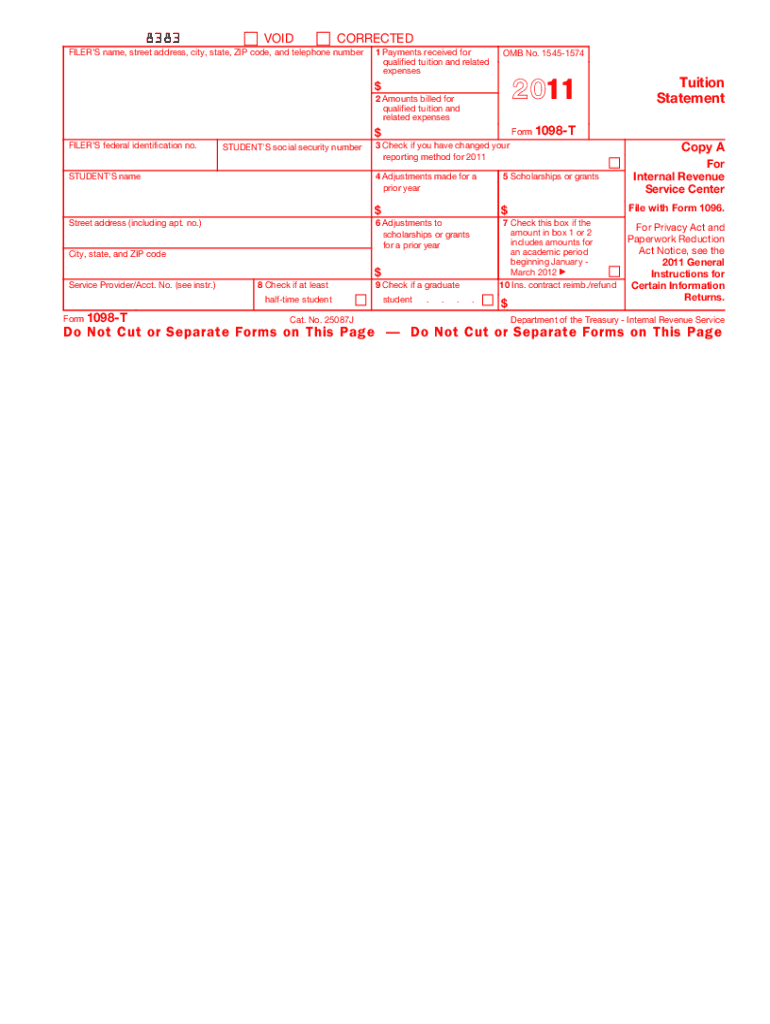
The Form 1098-T, also known as the Tuition Statement, is a tax form used by eligible educational institutions to report information about qualified tuition and related expenses paid by or on behalf of students. The purpose of this form is to help students and their families determine their eligibility for education tax credits such as the American Opportunity Tax Credit or the Lifetime Learning Credit. The 1098-T form provides important details that are necessary for preparing accurate tax returns.
How to Use Form 1098-T
Students or their guardians should use Form 1098-T to accurately calculate education-related tax credits when filing their federal tax returns. The form contains critical sections, such as Box 1, which reports the total amounts paid for qualified tuition and related expenses during the calendar year. It is essential to review each section of Form 1098-T carefully:
- Box 1: Amounts received for qualified tuition and related expenses.
- Box 2 (no longer in use post-2017 adjustments): Previously used to show amounts billed.
- Box 5: Scholarships and grants that offset tuition.
- Box 7: If checked, indicates payments for a term that begins in January through March of the following year.
The IRS may require this information even if you do not qualify for education credits, as it can corroborate income deductions or credit claimed.
Steps to Complete Form 1098-T
If responsible for preparing the 1098-T, follow these essential steps:
- Verify Student Information: Ensure the student’s name, address, and Social Security Number (SSN) are accurate.
- Calculate Tuition Payments: Add up all qualifying tuition payments made within the year.
- Include Scholarships and Grants: Record any scholarships or grants received. These are stated in Box 5 and must be used to adjust tuition expenses reported in Box 1.
- Finalize Form Entries: Double-check entries for accuracy to avoid incorrect reporting and subsequent penalties.
- Review Filing Instructions: Follow IRS instructions for payment eligibility and reporting requirements.
Who Issues Form 1098-T
Eligible educational institutions such as colleges, universities, vocational schools, or any other postsecondary institutions issuing degrees, typically provide Form 1098-T to each enrolled student who paid for qualified tuition and related expense. The form serves both students and the IRS for tax-related matters.
Important Terms Related to Form 1098-T
Understanding the terminology associated with 1098-T is crucial:
- Qualified Tuition and Related Expenses: Fees required for enrollment or attendance, excluding personal expenses like room and board.
- Scholarships and Grants: Financial aid that reduces tuition costs and is considered for tax credit eligibility.
- Box 1 and Box 5: Critical form components for determining deductible amounts.
IRS Guidelines for Using Form 1098-T
The IRS provides precise guidelines for institutions issuing Form 1098-T and taxpayers relying on it for tax reporting. Institutions must submit the form by January 31 of the following year to both students and the IRS. Individuals must ensure accurate amounts are reported and utilized when pursuing tax credits.
Penalties for Non-Compliance
Failure to properly file Form 1098-T can result in penalties for both educational institutions and taxpayers:
- Institutions: May incur fines for delays or incorrect submissions to the IRS.
- Taxpayers: Inaccurately reporting or omitting 1098-T information can lead to penalties or interest on unpaid taxes.
Examples of Using Form 1098-T
Consider a student who paid $10,000 in tuition and received $3,000 in scholarships. The student's Form 1098-T shows:
- Box 1: $10,000, indicating tuition paid.
- Box 5: $3,000, detailing scholarship amounts.
This information aids in calculating how much of the tuition is eligible for the tax credits available.
Filing Methods
While traditionally provided as a physical paper form, many institutions offer a digital version of Form 1098-T accessible through the student’s online account with the educational institution. The IRS does not accept Form 1098-T for scanning due to its machine-readable format not being consistent. Taxpayers must retain it for their records rather than submitting it with their tax return.
Software Compatibility
Popular tax preparation software tools, such as TurboTax and QuickBooks, support importing 1098-T form data. These programs guide users through entering information accurately by importing data directly from an institution’s digital platform on supported file formats such as CSV or PDF. Integration helps ensure precise calculation of education credits.
Filing Deadlines and Important Dates for Form 1098-T
Educational institutions must issue Form 1098-T to students by January 31, and file copies with the IRS by February 28 if filing on paper, or March 31 if filing electronically. Complying with these deadlines helps avoid penalties and ensures that students receive necessary tax documents in a timely manner.
Providing comprehensive details in each section helps ensure the accurate and effective use of Form 1098-T for both educational institutions and taxpayers.