
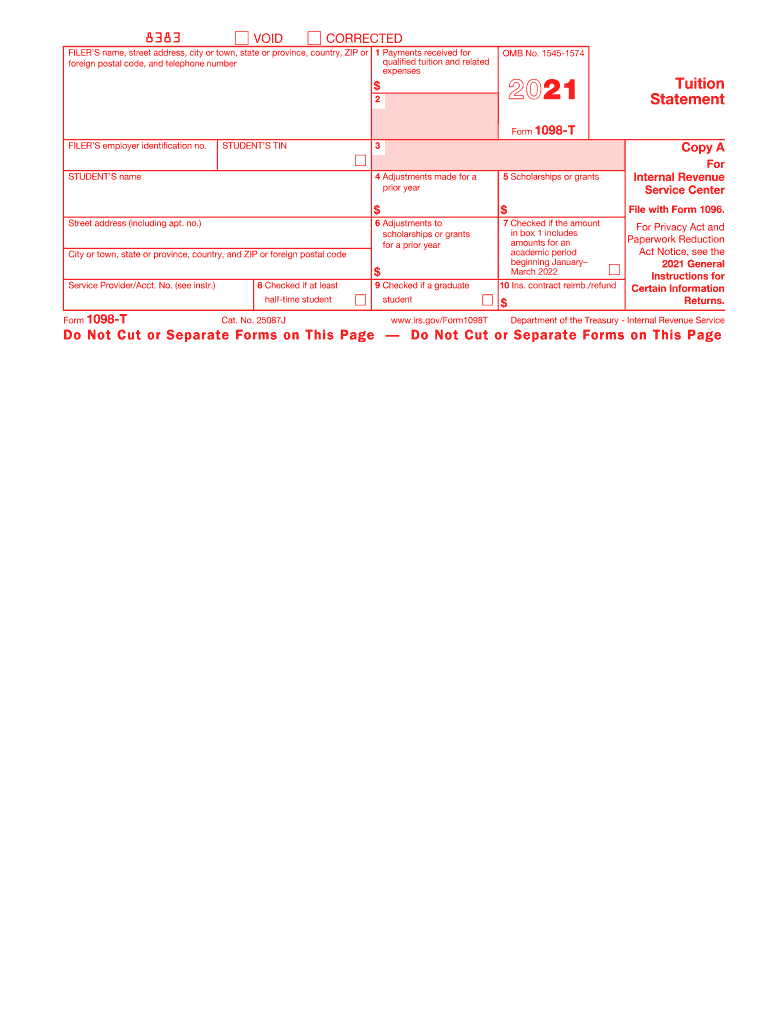







Definition and Meaning of the 1098-T Form
The 1098-T form, also known as the Tuition Statement, is an official document used in the United States to report qualifying tuition payments and related educational expenses. This form is typically issued by higher education institutions to both students and the Internal Revenue Service (IRS). It helps students and their families claim educational tax credits, such as the American Opportunity Credit or the Lifetime Learning Credit. Educational institutions fill out the 1098-T form to comply with federal tax regulations. It's essential for recipients to accurately report this information on their federal tax returns.
How to Use the 1098-T Form
Understanding the 1098-T form is crucial for taxpayers hoping to claim education-related tax credits. The form includes information about qualified educational expenses, such as tuition and fees acknowledged by the IRS. Taxpayers should examine the form to verify their expenses against payments made during the tax year. If there are discrepancies, it is advisable to contact the corresponding educational institution for clarification. Utilize the form to potentially decrease tax liability by claiming applicable credits, which can reduce the amount of tax owed or increase the refund amount.
Important Tax Credits
- American Opportunity Credit: Allows for a maximum annual credit per eligible student of up to $2,500.
- Lifetime Learning Credit: Offers a credit of up to $2,000 per tax return for qualifying education expenses.
Steps to Complete the 1098-T Form
This form is primarily filled out by educational institutions, but students need to understand its elements to make accurate claims on their taxes. Here is how to complete it effectively:
- Receive the Form: Obtain your 1098-T from your college or university, generally provided by January 31.
- Verify Information: Ensure all personal and institutional details on the form are correct, including Social Security Numbers and Taxpayer Identification Numbers.
- Check Box 1 and Box 5: These important fields show payments received for qualified tuition and scholarships or grants, respectively.
- Report and Claim: Use amounts from these boxes on your tax return to calculate eligibility for educational credits.
Detailed Breakdown
- Box 1: Reports payments received for qualified tuition and fees.
- Box 2: Previously reported amounts billed for tuition, but now generally left blank since IRS changes.
- Box 5: Lists scholarships and grants received, which may offset the credit.
Who Typically Uses the 1098-T Form
The 1098-T form is primarily used by students eligible for higher education tax credits, such as those enrolled in colleges, universities, and other post-secondary institutions. Parents or guardians who financially support students may also utilize the form when claiming tax credits.


Typical Users Include:
- Undergraduate and graduate students
- Parents or guardians supporting a student’s education
- Independent students filing their own taxes
Who Issues the Form
Educational institutions—including universities, colleges, vocational schools, and other providers of post-secondary education—are responsible for issuing the 1098-T form. They must send the form to students by January 31 each year and submit a copy to the IRS.
Responsibilities of Issuers:
- Gather accurate data on tuition and related payments
- Ensure timely distribution and submission of the form to both students and the IRS
IRS Guidelines on the 1098-T Form
The IRS provides explicit directives on the use of Form 1098-T, primarily focusing on educational tax credits. The IRS mandates that institutions report qualified educational expenses, although not every recipient will qualify for a credit. Taxpayers must adhere to IRS Publication 970, which details the educational tax benefits and requirements.
Key Points:
- Educational institutions must send a 1098-T form for eligible expenses.
- Use the 1098-T in conjunction with IRS Publication 970 to file correctly.
- Students should review all reported amounts for consistency and accuracy.
Filing Deadlines and Important Dates
It is crucial for students and taxpayers to be aware of the filing timelines. Educational institutions typically provide the 1098-T form by January 31 each year. Taxpayers should file their completed tax returns by the IRS deadline, usually April 15.
Key Dates:
- January 31: Deadline for receiving 1098-T from institutions
- April 15: Standard tax filing deadline for federal returns
Penalties for Non-Compliance
Failure to comply with 1098-T reporting guidelines can result in penalties for both educational institutions and taxpayers. Institutions failing to issue the form may incur IRS penalties, while taxpayers neglecting to report the form accurately may face fines or disallowance of tax credits.
Penalty Risks:
- Educational institutions can face penalties for late or inaccurate submissions.
- Taxpayers risk losing credits or incurring additional taxes for non-reporting or inaccuracies.
Software Compatibility and Solutions
Tax preparation software like TurboTax and QuickBooks can streamline using the 1098-T form. These solutions often include built-in interviews to guide users on claiming educational credits accurately, ensuring users maximize their tax benefits.
Useful Features:
- Import Capabilities: Many software options support the import of 1098-T data.
- Guided Assistance: Walk-throughs can help users report expenses accurately.
- Error Checking: Some programs offer error-checking features to prevent discrepancies.
By understanding the integral aspects of the 1098-T form, taxpayers can leverage educational expenses to optimize their tax returns efficiently and accurately.




