
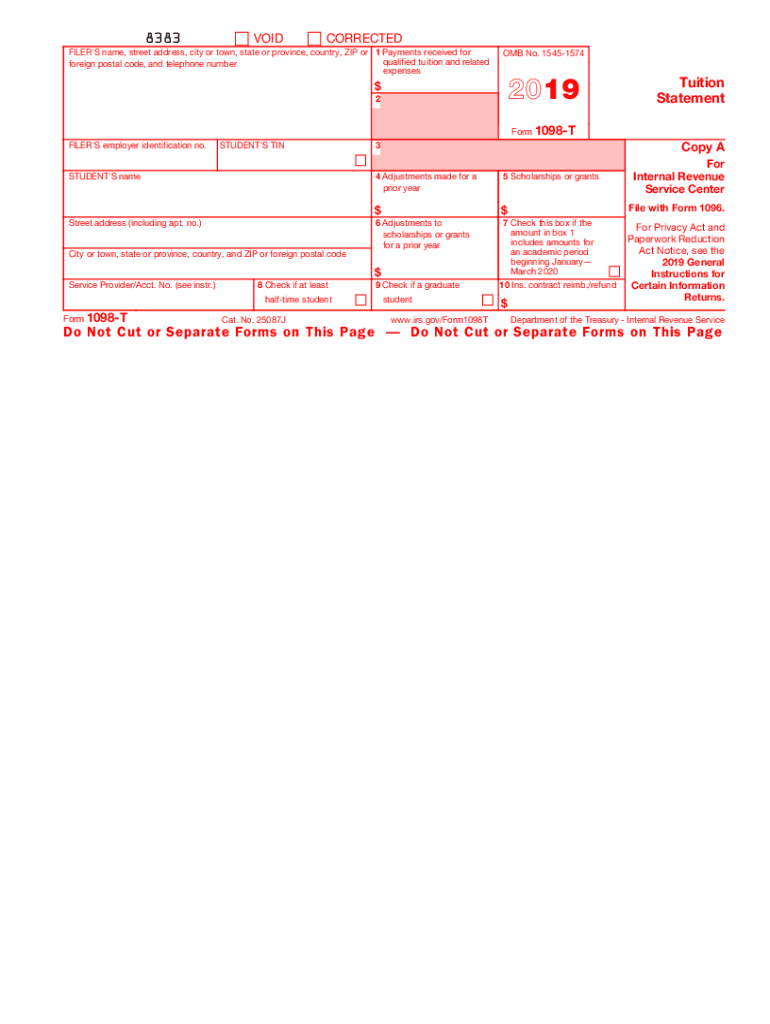







Definition and Purpose of Form 1098-T
The Form 1098-T, officially termed the "Tuition Statement," is used in the United States to report qualified tuition and related educational expenses, a crucial document for students and educational institutions. This form is primarily issued by educational institutions to students and the IRS to outline the amount paid for tuition and fees during the tax year. The form aids students or their families in determining eligibility for educational tax credits, such as the American Opportunity Credit or the Lifetime Learning Credit. The 1098-T form illustrates the educational expenses that can be deducted or credited, making it an essential tool for tax savings associated with higher education costs.
Key Components of Form 1098-T
Understanding the elements of Form 1098-T is crucial for accurately using it. The form includes:
- Box 1: Payments received for qualified tuition and related expenses.
- Box 2: Amounts billed for qualified tuition and related expenses (this box may be blank if the institution uses Box 1).
- Box 5: Scholarships or grants received, which might reduce the credit amount students can claim.
- Box 7: Indicates if payments or billing includes amounts for an academic period beginning in January through March of the following tax year.
- Student and Institution Information: Includes the student's taxpayer identification number and the institution's federal identification number.
Obtaining Your Form 1098-T
Students typically receive Form 1098-T from the educational institution they attended during the tax year. Here's how to obtain it:
- University/College Portal: Most institutions provide a digital version via the student portal.
- Mail Delivery: Alternatively, you may receive a paper copy by mail if this option is selected.
- Contact the Bursar's Office: If you haven't received your form, contact the institution's financial office for assistance.
Ensure your contact details are updated with the institution to avoid delays in receiving your form.
Steps to Complete the 1098-T Form
Once you obtain Form 1098-T, it's essential to review the provided details for accuracy. If discrepancies exist, contact your institution for corrections. To utilize the form when filing taxes:
- Compare with Personal Records: Verify amounts listed using your own financial records.
- Calculate Tax Credits: Determine eligibility and calculate credits like the American Opportunity Tax Credit.
- Include on Tax Return: Attach relevant figures when filing IRS Form 8863 to claim educational credits.
Review each section carefully and consult a tax professional if needed, as accurate information is vital for tax benefits.
IRS Guidelines for Form 1098-T
The IRS holds strict guidelines for educational institutions when filling out Form 1098-T. Institutions must:
- File and furnish the form to students by January 31st each year.
- Electronically file the returns if exceeding 250 forms.
- Ensure only qualified education expenses are reported while excluding non-qualified costs like room and board.
Institutions comply with these regulations to facilitate students' credit claims and avoid penalties.
Filing Deadlines and Important Dates
Timeliness is key for both institutions and students:
- January 31: Deadline for educational institutions to mail Forms 1098-T to students.
- April 15: The annual deadline for filing personal federal income tax returns, which may include the educational tax credits derived from Form 1098-T.
Stay informed of these dates each tax season to ensure educational benefits are claimed promptly.
Penalties for Non-Compliance
Educational institutions failing to issue Form 1098-T or accurately report information may face IRS penalties. Penalties also apply if institutions file incorrect information without correction. For students, discrepancies or oversight in reporting educational credits could lead to penalties or lost credits during audits. Ensuring the accurate and timely handling of Form 1098-T is essential for compliance and claiming educational tax benefits.
Software Compatibility When Filing
Tax preparation software like TurboTax or QuickBooks supports working with Form 1098-T. These programs:
- Simplify the data entry process by auto-filling from student records.
- Offer guided assistance to calculate available educational credits.
- File electronically with the IRS, ensuring efficiency and accuracy.
Leveraging such software can streamline the tax filing process, especially for dealing with educational expenses.




