






Definition & Meaning
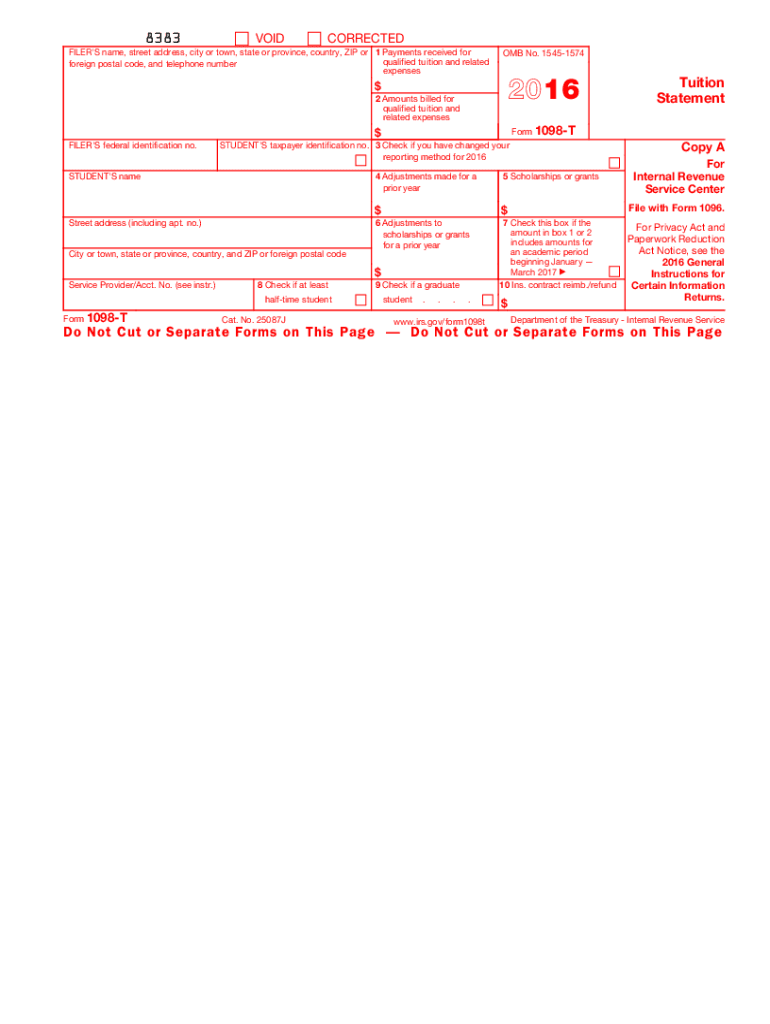
Form 1098-T is a tax document used by educational institutions to report payments received for qualified tuition and related expenses during the calendar year 2016. It is essential for both students and parents as it informs them of any tuition payments that could be eligible for education-related tax credits, such as the American Opportunity Credit and the Lifetime Learning Credit. This form includes details about the student, the institution, and the financial transactions relevant to tax filings.
How to Use the 1098-T Form 2016
The 1098-T form serves to help taxpayers determine if they can claim educational tax credits or deductions. To use this form effectively, taxpayers should compare the amounts listed with their actual tuition payments and other receipts. When filing taxes, the amounts from the 1098-T are included in IRS Form 8863, Education Credits. A precise understanding of the data such as tuition billed versus paid is fundamental for claiming any eligible credits.
Steps to Complete the 1098-T Form 2016
-
Receive the Form: Ensure you receive a copy of Form 1098-T from your educational institution. This is typically dispatched via mail or can be accessed online.
-
Verify Information: Check the student’s information for accuracy, including name, Social Security Number, and the school's details. Ensure all monetary figures reflect the actual amounts paid for tuition.
-
Report on Tax Return: Transfer relevant amounts to IRS Form 8863 if claiming education credits. Forms like the 1040 or 1040A are used to file these credits.
-
Attach Necessary Documentation: Include 1098-T forms and any required documents when submitting your tax return for the year 2016.
Who Typically Uses the 1098-T Form 2016
The primary users of Form 1098-T are students and their families who are paying for higher education in the United States. Educational institutions also use this form to account for and report qualified tuition payments and scholarships. Both full-time and part-time students who are enrolled in higher education institutions and are eligible for education tax credits will find this form essential for accurate tax reporting.


Key Elements of the 1098-T Form 2016
-
Student and Institution Details: The form records the student’s information, educational institution, and their federal identification number.
-
Payment and Scholarship Details: Boxes contain the total amounts billed for qualified tuition and, if applicable, the amount of scholarships received.
-
Adjustments: Any adjustments to prior year tuition and payments are also documented, which could impact credit eligibility.
Required Documents
When preparing to use Form 1098-T, gather important documents, including:
-
Proof of Payment: Receipts or bank statements documenting tuition payments.
-
Statements from Educational Institutions: Invoices and statements showing breakdowns of tuition, fees, and any scholarships or grants received during 2016.
-
Prior Year Tax Returns: To reconcile any adjustments made in the current year to payments made in the prior year.
Filing Deadlines / Important Dates
Educational institutions must provide Form 1098-T to students by January 31 of each year, with copies sent to the IRS by February 28 if filing by mail, or March 31 for electronic submissions. It is crucial for students and parents to include this form within their tax filings by April 15, aligning with the typical tax deadline.
IRS Guidelines
The IRS requires educational institutions to send the Form 1098-T to both the student and the IRS. The guidelines further detail eligibility conditions, clarifying how tuition payments and scholarships might impact the available educational tax credits. It is critical to follow IRS protocol for filing these forms to avoid possible penalties or misapplication of tax credits.
Examples of Using the 1098-T Form 2016
For instance, if a student paid $8,000 in tuition in 2016 and received a $2,000 scholarship, the 1098-T form will show these payments and scholarships in the designated boxes. The taxpayer will use this information to determine eligibility for tax credits. If credits are applicable, taxpayers can reduce their taxable income or increase their tax refund.
Penalties for Non-Compliance
Failure to file Form 1098-T can lead to penalties imposed by the IRS. Educational institutions that neglect to issue the form by the deadline can incur fines, and taxpayers may face delays or complications in claiming their education credits. It is imperative to adhere to stipulated IRS timelines and requirements to ensure compliance and avoid unnecessary penalties.