




01. Edit your adult physical form online
Type text, add images, blackout confidential details, add comments, highlights and more.

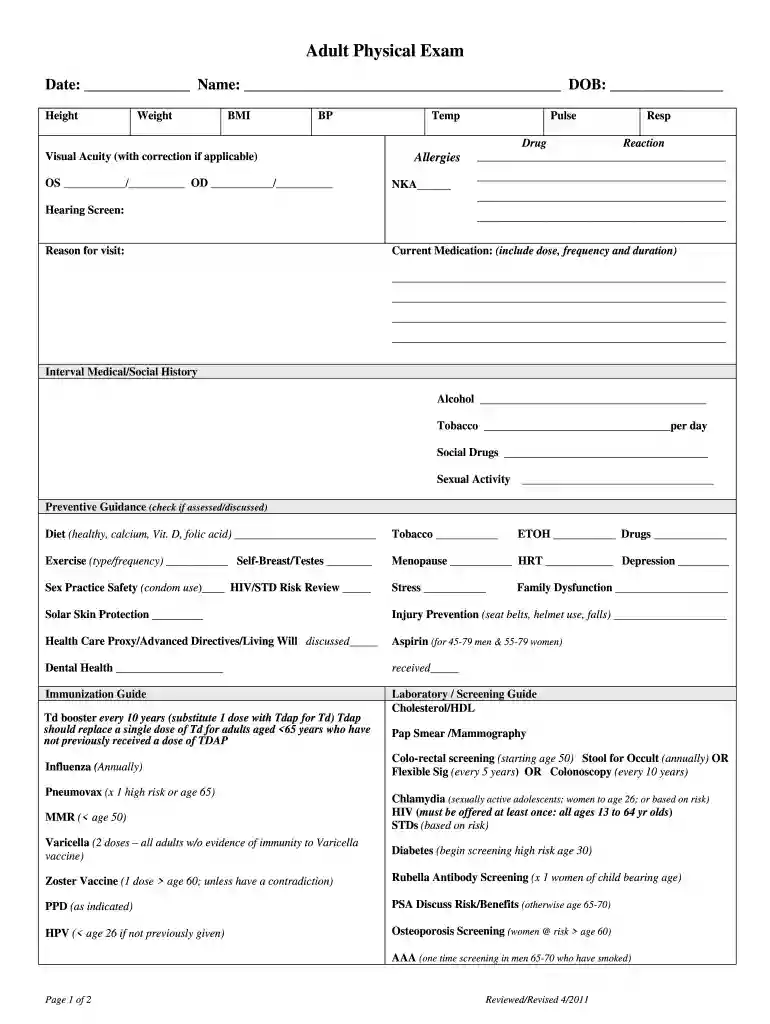
Type text, add images, blackout confidential details, add comments, highlights and more.

Draw your signature, type it, upload its image, or use your mobile device as a signature pad.

Send printable basic physical exam form pdf for adults via email, link, or fax. You can also download it, export it or print it out.
The adult physical form is a documented record used primarily for health assessments, medical examinations, and physical evaluations. This form captures a comprehensive overview of an individual's health status, detailing medical history, vital signs, and other critical health indicators. It serves various purposes, such as fulfilling requirements for employment, educational institutions, sports participation, or health insurance documentation. Medical professionals utilize it to evaluate and ensure fitness, as well as to identify any potential health risks during routine check-ups.
Key features of the adult physical form include:
The adult physical form is crucial for maintaining a record of one's health and ensuring that healthcare providers have access to comprehensive health information when conducting examinations.
Using the adult physical form effectively requires understanding its structure and sections. The form must be filled out accurately to provide a clear picture of the individual’s health status. Here is a step-by-step guide on how to use it:
Gather Personal Information: Start by entering essential personal details, including name, date of birth, address, and contact details. This information should be clear and accurate to avoid any miscommunication.
Complete Medical History: Carefully review and fill in the medical history section. It’s important to provide all relevant health information, including past surgeries, chronic conditions, allergies, and mental health issues. This data will assist healthcare providers in offering tailored medical advice.
List Current Medications: Accurately record all medications currently being taken, including prescriptive drugs, over-the-counter remedies, and supplements. Specify dosages and reasons for taking them, as this helps the medical professional assess possible interactions or health concerns.
Physical Examination Findings: During your check-up, allow the healthcare provider to complete this section based on the findings of the physical examination. Trust the professional to provide an accurate assessment of your health.
Follow Preventive Guidance: After the examination, pay attention to any recommendations made in the preventive guidance section. This may include upcoming screenings, vaccinations, or lifestyle changes beneficial for long-term health.
By thoroughly completing each section, the adult physical form can serve as an essential tool for effective communication between patients and healthcare providers, ensuring a thorough understanding of an individual’s health status.
Completing the adult physical form is a straightforward process but requires attention to detail. The following steps outline how to approach filling out the form:
Preparation: Collect any pertinent medical documents before beginning, including previous medical records and a list of medications.
Fill Out Personal Information: Enter your full name, date of birth, gender, and address. Ensure accuracy to avoid potential delays in processing.
Detail Medical History: Provide comprehensive information regarding previous health issues. Include conditions like diabetes, hypertension, or surgeries, as these can influence your current health assessment.
Indicate Current Medications: Create a list of all the medications currently being taken. If unsure about dosages, consult your pharmacist or healthcare provider for confirmation.
Understand the Examination Process: Be prepared to undergo a physical examination where the healthcare provider will record findings such as height, weight, blood pressure, and other vital signs directly onto the form.
Review Preventive Recommendations: After the examination, carefully review any preventive measures suggested by your healthcare provider. This helps in planning future health activities and assessments.
Completing the adult physical form accurately ensures effective healthcare delivery and fosters better health awareness and preventive care.
The adult physical form is commonly utilized by a range of individuals and organizations, making it an essential document in various contexts. Here are some typical users:
Employers: Many businesses require an adult physical form as part of their hiring process to ensure that potential employees meet health requirements necessary for specific roles, especially in physically demanding jobs.
Educational Institutions: Colleges and universities often require students to submit this form to confirm their fitness for participation in sports or other activities.
Healthcare Providers: Medical professionals use the form during routine check-ups, wellness programs, and before surgical procedures to ensure that patients are in good health.
Sports Organizations: Athletes are often required to complete an adult physical form before participating in sports programs to assess their physical fitness and minimize health risks.
Insurance Companies: Insurers may request this form to evaluate an applicant's health status when underwriting health policies or assessing coverage eligibility.
Understanding the various users of the adult physical form highlights its significance across multiple domains, ensuring that health assessments are conducted uniformly and effectively.


A range of important terms is associated with the adult physical form. Being familiar with these terms enhances understanding and ensures accurate completion. Here are some key terms:
Vital Signs: Essential measurements taken during a physical examination, including heart rate, blood pressure, respiratory rate, and temperature. These indicators provide insights into a person’s general health status.
Medical History: A detailed account of a person’s past health conditions, treatments, surgeries, and any existing health issues. This information is crucial for healthcare providers to make informed decisions about patient care.
Preventive Care: Medical services aimed at preventing health issues before they arise. This includes screenings, immunizations, and annual check-ups aimed at identifying risks early.
Physical Examination: A systematic evaluation conducted by a healthcare provider to assess an individual's health status, physical fitness, and identify any medical conditions.
Fillable Form Fields: Sections within the adult physical form where specific information is collected, including text boxes for personal information and checkboxes for medical history.
Understanding these terms is essential for effectively using the adult physical form and engaging in informed discussions about health assessments and care options.
We've got more versions of the adult physical form form. Select the right adult physical form version from the list and start editing it straight away!
| Versions | Form popularity | Fillable & printable |
|---|---|---|
| 2011 | 4.8 Satisfied (120 Votes) |
At DocHub, your data security is our priority. We follow HIPAA, SOC2, GDPR, and other standards, so you can work on your documents with confidence.
Sep 2, 2015 Age: Height: Weight: Skin: Head and Scalp: Eyes: Lymph Nodes: Ears: Left TM: Right TM: Mouth: Teeth: Gingiva: Palate: Throat:.Read more
RECORD OF ADULT PHYSICAL HEALTH EXAMINATION. State Form 49970 (R6 / 7-19). Address (number and street, city, state, and ZIP code). MEDICAL HISTORY. I. List pastRead more


