




01. Edit your california 1999 online
Type text, add images, blackout confidential details, add comments, highlights and more.

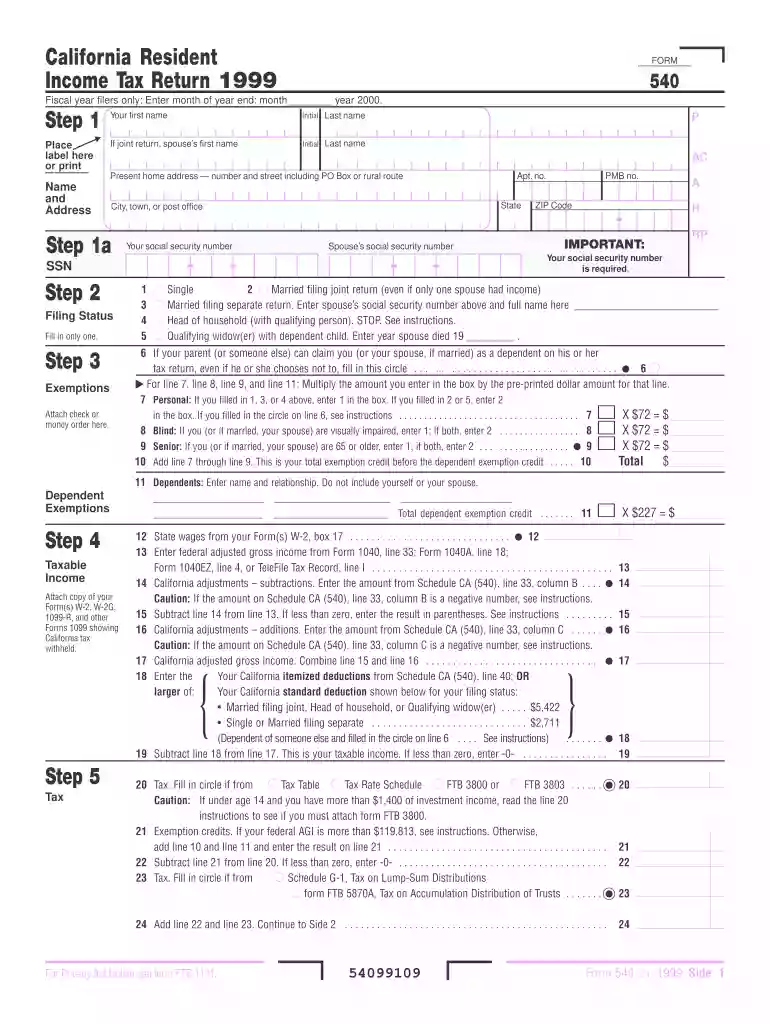
Type text, add images, blackout confidential details, add comments, highlights and more.

Draw your signature, type it, upload its image, or use your mobile device as a signature pad.

Send form 1099 g california via email, link, or fax. You can also download it, export it or print it out.
A 1099-G form in California is used to report certain types of government payments that may require federal tax reporting. This form is primarily issued to individuals who have received unemployment compensation, state or local income tax refunds, agricultural payments, or taxable grants within California. The form serves as an official record, ensuring that both recipients and the IRS are informed of the taxable benefits received during the year.
Understanding how to use the 1099-G California form is crucial for accurate tax reporting and compliance:
Verify Personal Information: Check that your personal details such as name, address, and Social Security Number are correctly listed on the form.
Identify Payment Types: Each box on the form corresponds to specific types of payments (e.g., unemployment compensation in Box 1, state tax refunds in Box 2). Confirm the amounts reported match your records.
Report on Tax Returns: Use the information to complete federal and state tax returns by entering the amounts in the relevant sections for taxable income.
Keep for Records: Retain a copy of the form with your tax records for at least three years in case of any auditing or inquiries from tax authorities.
Filling out your 1099-G California form involves understanding each section:
Personal Information: Ensure your personal details are up to date.
Income Amounts: Confirm the amounts listed are accurate based on what you received during the year.
Tax Identification Numbers: Check the employer's or payer's tax ID number for any discrepancies.
Filing Taxes: Include the reported amounts in the relevant income sections on your federal and state tax returns.
Reconcile Discrepancies: If discrepancies exist, contact the issuer immediately to resolve these before filing taxes.
Receiving your 1099-G form is a critical step in preparing your taxes:
Issued by the State Government: Typically, residents of California who received qualifying payments will automatically receive their 1099-G form from the state's tax agency.
Online Access: Some individuals may have access to download the form through secure state government websites, especially for unemployment benefits.
Mail Delivery: Most forms are mailed to your last known address toward the beginning of the tax season (typically by the end of January).
The 1099-G form is an essential part of the tax-filing process for those who receive government payments. Failing to accurately report income from the form could lead to issues with the IRS or inaccurate tax calculations, which may result in penalties or a higher tax liability. The form also helps verify that taxable income from government resources is accounted for, maintaining fair tax practices.
Understanding the layout of the 1099-G form is vital:
Box 1: Unemployment compensation subject to federal income tax.
Box 2: State or local income tax refunds, which might be taxable if you itemized deductions in the prior year.
Box 3: If applicable, details about benefit years and excess payments appear here.
Payer Details: Includes the government's information issuing the payments.
California may have specific rules concerning the 1099-G form:
Unemployment Compensation: May be subject to both federal and state taxes as taxable income.
Refunds and Credits: If you did not itemize deductions, state income tax refunds are not typically taxable.
Tax Reporting Differences: State deductions or credits used can affect how federal income tax is calculated.
The IRS requires that the amounts on the 1099-G form are reported appropriately to ensure that taxpayers and the government are matched in reported amounts:
Form 1040 Reporting: Amounts should be entered on corresponding sections of IRS Form 1040.
Additional Forms: As needed, forms like Schedule 1 may be used to report unemployment compensations and other incomes.
Guideline Compliance: Ensures all advertised refunds or insurance payments are reported accurately, providing transparency in taxpayer income sources.
We've got more versions of the california 1999 form. Select the right california 1999 version from the list and start editing it straight away!
| Versions | Form popularity | Fillable & printable |
|---|---|---|
| 2025 | 4.9 Satisfied (32 Votes) | |
| 2024 | 4.5 Satisfied (41 Votes) | |
| 2023 | 4.8 Satisfied (57 Votes) | |
| 2022 | 4.4 Satisfied (58 Votes) | |
| 2021 | 4.8 Satisfied (196 Votes) | |
| 2020 | 4.4 Satisfied (68 Votes) | |
| 2019 | 4.3 Satisfied (176 Votes) | |
| 2018 | 4.3 Satisfied (120 Votes) | |
| 2017 | 4.3 Satisfied (127 Votes) | |
| 2016 | 4.4 Satisfied (234 Votes) | |
| 2015 | 4.3 Satisfied (243 Votes) | |
| 2014 | 4 Satisfied (31 Votes) | |
| 2013 | 4 Satisfied (47 Votes) | |
| 2012 | 4.3 Satisfied (54 Votes) | |
| 2011 | 4 Satisfied (35 Votes) |
At DocHub, your data security is our priority. We follow HIPAA, SOC2, GDPR, and other standards, so you can work on your documents with confidence.
Sep 16, 2013 Based on a reliable calculation of discount rates applicable to the anticipated income streams of uncontrolled companies whose resources,.Read more
Form 1099G shows the total taxable income we paid you in a calendar year. We also send this information to the Internal Revenue Service (IRS).Read more
Some students are required to submit a copy of their 1099-G. Please confirm on your Financial Aid Document Checklist if you need to submit this document.Read more


