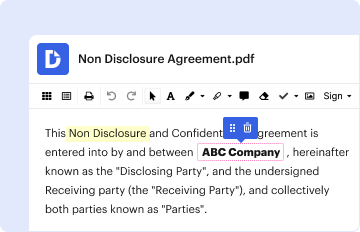
Type text, add images, blackout confidential details, add comments, highlights and more.
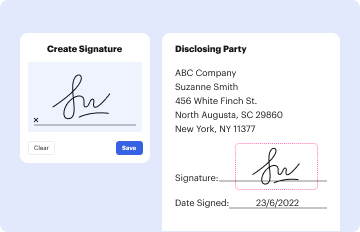
02. Sign it in a few clicks
Draw your signature, type it, upload its image, or use your mobile device as a signature pad.
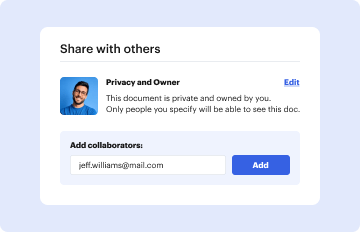
03. Share your form with others
Send it via email, link, or fax. You can also download it, export it or print it out.
How to use or fill out deprivation form 4 with our platform
Ease of Setup
DocHub User Ratings on G2
Ease of Use
DocHub User Ratings on G2
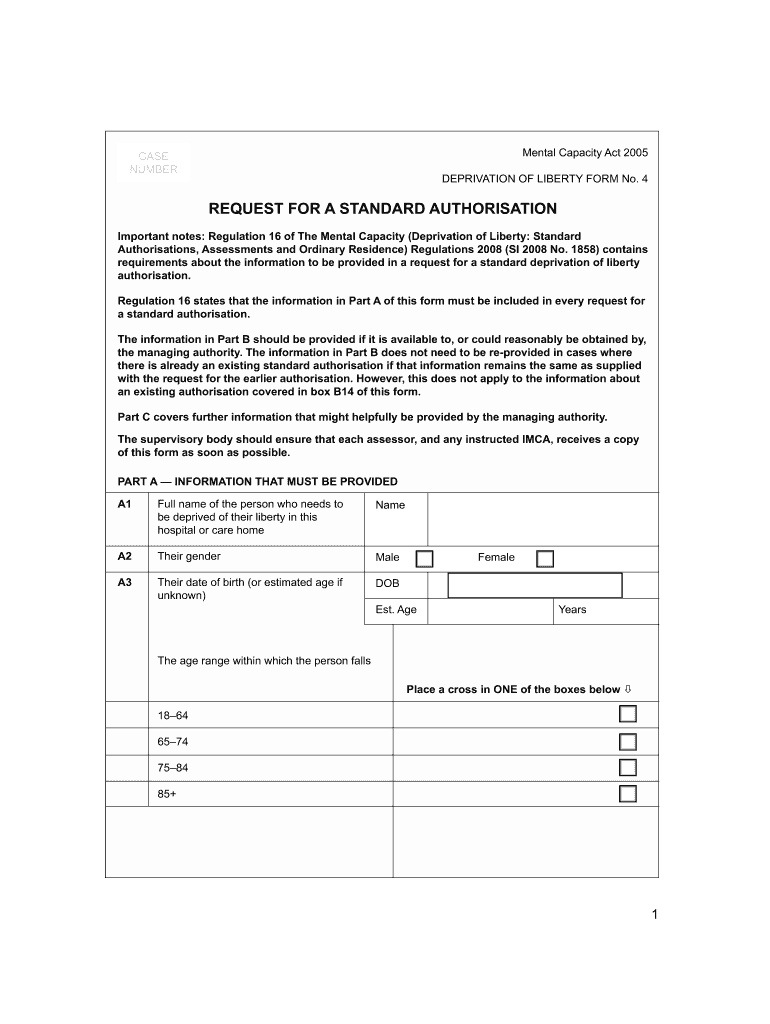
Click ‘Get Form’ to open the deprivation form 4 in the editor.
Begin with Part A, where you must provide essential information about the individual. Fill in their full name, gender, and date of birth. Ensure accuracy as this data is crucial for the authorisation process.
Next, indicate the current location of the person needing authorisation. Select from options such as 'Already in this hospital or care home' and provide any necessary details.
In Part A7, describe the purpose for which the authorisation is requested. Clearly outline the care or treatment that necessitates this request.
Proceed to Part B to include additional relevant information if available. This may include medical history or diagnosis related to their mental health.
Finally, review all sections for completeness and accuracy before submitting your form through our platform.
Start using our platform today to fill out deprivation form 4 easily and efficiently!
In order for a child to be eligible for Title IV-E Foster Care, the child must be deprived of parental support or care during the removal month by reason ofRead more
18 U.S. Code 242 - Deprivation of rights under color of law
Whoever, under color of any law, statute, ordinance, regulation, or custom, willfully subjects any person in any State, Territory, Commonwealth, Possession,Read more
In the early study of deprivation myopia in guinea pigs, 7-MX could eliminate eyeball elongation caused by morphological deprivation 4. Another report alsoRead more
Cookie consent notice
This site uses cookies to enhance site navigation and personalize your experience.
By using this site you agree to our use of cookies as described in our Privacy Notice.
You can modify your selections by visiting our Cookie and Advertising Notice.