



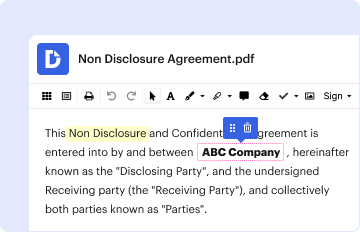
01. Edit your form online
Type text, add images, blackout confidential details, add comments, highlights and more.

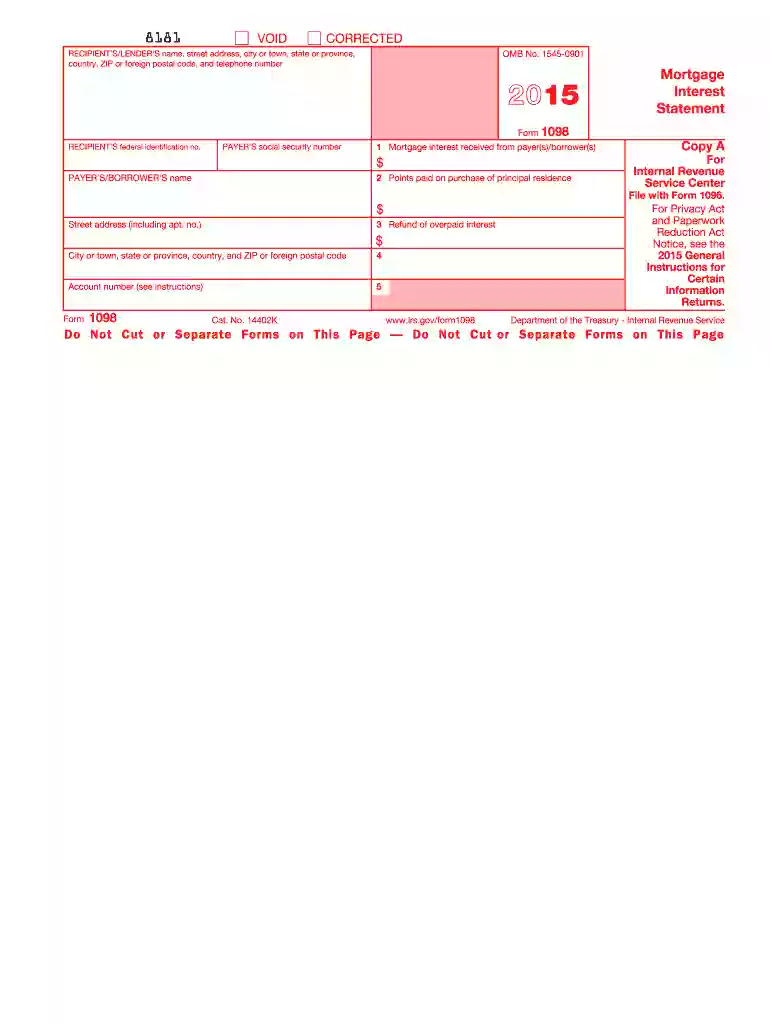
Type text, add images, blackout confidential details, add comments, highlights and more.
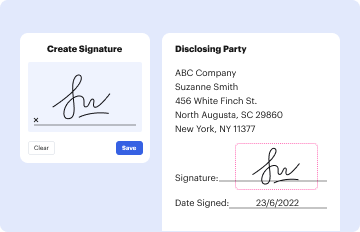
Draw your signature, type it, upload its image, or use your mobile device as a signature pad.

Send it via email, link, or fax. You can also download it, export it or print it out.
Form 1098, known as the Mortgage Interest Statement, is a critical tax document used by lenders to report mortgage interest of $600 or more received from borrowers in a single tax year. The 2015 version of this form serves the same purpose and is essential for taxpayers who have paid mortgage interest to potentially claim a deduction on their federal income tax returns. The document benefits homeowners by providing the necessary information to reduce their taxable income, resulting in potential tax savings.
The 1098 form includes several key elements that outline the transactions between lenders and borrowers. It details:
Completing Form 1098 for the 2015 tax year requires careful attention to specific sections to ensure accuracy. The process involves:
Each step demands accuracy since errors could result in discrepancies that may trigger IRS inquiries or penalties.
Receiving the 1098 form is relatively straightforward, as lenders are required to issue it to borrowers by the end of January following the tax year. Borrowers typically get the form by mail or through secure online portals provided by their mortgage companies or banks. For those who have not received their form by the expected date, contacting the lender directly or accessing their online account may provide solutions.
The primary reason for utilizing the 1098 form in tax calculations is to leverage the mortgage interest deduction. Homeowners who itemize their deductions instead of taking the standard deduction can reduce their taxable income dollar-for-dollar by the amount of qualifying mortgage interest paid during the year.
The 1098 form is primarily utilized by individuals and entities paying mortgage interest. The primary users include:
In some instances, borrowers with alternative financing arrangements or who pay significant amounts in mortgage interest without formal documentation may also seek to use the 1098.


The IRS requires lenders to issue Form 1098 to both the borrower and the IRS, providing a record of mortgage interest transactions. Failure to submit the form or inaccuracies can lead to penalties including:
Adhering to IRS guidelines minimizes chances of audits and enhances compliance with federal tax laws.
Form 1098 for 2015 can be submitted through either digital or paper methods depending on the preferences and capabilities of the lender. Electronic filing is encouraged by the IRS for its accuracy and speed advantages. Lenders with numerous forms to submit often opt for this method via IRS-approved electronic filing systems. Paper forms, while still accepted, necessitate additional processing time and may be subject to higher error margins.
While the 1098 form is federally standardized, state-specific regulations may influence the use and reporting of mortgage interest. Several states may have additional reporting requirements or offer specific incentives for utilizing Form 1098 in tax submissions. Understanding these nuances ensures alignment with both federal and state tax obligations, especially for taxpayers who own properties across multiple states.
We've got more versions of the 1098 form 2015 form. Select the right 1098 form 2015 version from the list and start editing it straight away!
| Versions | Form popularity | Fillable & printable |
|---|---|---|
| 2022 | 4.9 Satisfied (20 Votes) | |
| 2021 | 4.8 Satisfied (113 Votes) | |
| 2020 | 4.2 Satisfied (69 Votes) | |
| 2019 | 4.4 Satisfied (328 Votes) | |
| 2018 | 4.4 Satisfied (296 Votes) | |
| 2017 | 4.3 Satisfied (331 Votes) | |
| 2016 | 4.4 Satisfied (460 Votes) | |
| 2015 | 4.2 Satisfied (66 Votes) | |
| 2014 | 4 Satisfied (40 Votes) | |
| 2013 | 4 Satisfied (45 Votes) | |
| 2012 | 4.3 Satisfied (65 Votes) | |
| 2011 | 4 Satisfied (33 Votes) | |
| 2010 | 4.1 Satisfied (61 Votes) | |
| 2008 | 4 Satisfied (53 Votes) |
At DocHub, your data security is our priority. We follow HIPAA, SOC2, GDPR, and other standards, so you can work on your documents with confidence.



2015 Student Tax Information. Request a Paper Statement. Former Students may request a former student login which will allow access the 1098-T: HERE. If youRead more
To complete Form 1098, use: the 2015 General Instructions for Certain Information. Returns, and. the 2015 Instructions for Form 1098. To order theseRead more
Dec 29, 2017 You may be able to choose to be exempt from social security and Medicare taxes, including the SE tax, if you are a member of a recognized.Read more


