



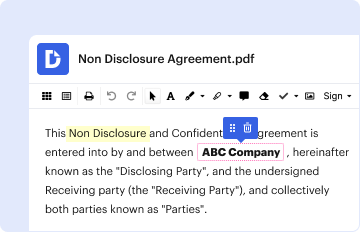
01. Edit your form online
Type text, add images, blackout confidential details, add comments, highlights and more.

Type text, add images, blackout confidential details, add comments, highlights and more.
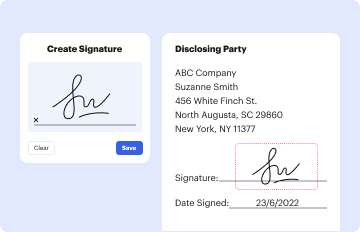
Draw your signature, type it, upload its image, or use your mobile device as a signature pad.

Send it via email, link, or fax. You can also download it, export it or print it out.
Form 1098, also known as the "Mortgage Interest Statement," is utilized to report mortgage interest received from individuals or sole proprietors during the tax year. The 2010 edition of this form continues to serve as a crucial tool for facilitating the accurate reporting of mortgage interest payments, which can result in potential tax deductions for borrowers. Mortgage lenders or servicers typically issue this form, providing details about the interest received, including other pertinent information such as points paid on the mortgage.
Borrowers use this evidence in their tax returns to claim deductions on mortgage interest, thus reducing their taxable income. Mortgage interest deductions are significant components of many taxpayers' financial strategies, making this form an essential part of the tax filing process.
Gather Required Information: Collect all pertinent data from mortgage transaction records, including your lender's details, the amount of mortgage interest paid, and any other charges like points.
Fill Out the Borrower’s Section: Enter personal identification, such as your name and Social Security Number. Ensure these details exactly match your mortgage documentation to avoid discrepancies.
Complete Lender Information: Accurately fill in the lender's information, including their account number and Federal Tax Identification Number (TIN). This data ensures both parties are properly identified.
Report Interest and Points: In the appropriate boxes, enter the total amount of mortgage interest paid and any points paid. Make sure these numbers are exactly as reported by your lender on their records to maintain consistency.
Check for Accuracy: Review all entered data for accuracy and completeness. Errors can lead to delayed processing or inaccurate deductions.
Submit the Form: If you are responsible for filing, ensure the form is sent to the IRS in a timely manner. Note that the version provided by your lender is typically not submitted directly to the IRS, but used for personal tax filing.
Typically, your mortgage lender or servicer will issue Form 1098 to you by January 31 of the following tax year. They are responsible for sending this documentation to both you and the IRS to ensure compliance with federal reporting requirements. If you do not receive your form by early February, contact your lender directly for assistance.
Forms can also be accessed via the lender's online portals in many cases. This digital availability allows for convenient access and download, simplifying your record-keeping and ensuring you have the documentation needed for tax preparation.
Form 1098 is primarily used by individual taxpayers who have paid over $600 in mortgage interest throughout the tax year. This form is relevant to homeowners, including first-time home buyers and seasoned property owners seeking to deduct mortgage interest on their primary residence or other qualifying real estate.
Self-employed individuals may also rely heavily on this form to substantiate interest deductions on property used for business purposes. Understanding and utilizing Form 1098 is essential for maximizing potential deductions and optimizing tax outcomes.


Mortgage Interest Paid: Records the total amount of interest paid during the tax year, which a borrower can claim as a deduction.
Points Paid on the Mortgage: Details any points paid under section 6050H, which may be deductible in certain circumstances.
Mortgage Insurance Amount: Includes information about any applicable mortgage insurance premiums that may also be deductible.
Understanding these elements is crucial for taxpayers to make informed decisions about their deductions and maintain comprehensive records for tax filings.
The IRS sets specific guidelines regarding who must file Form 1098 and which supplemental documents are required. Lenders must report any mortgage interest of $600 or more during the fiscal year. Borrowers need to confirm that the information matches their records to ensure eligibility for interest deductions.
The IRS strongly recommends taxpayers keep a copy of their Form 1098 for at least three years post-filing. This retention ensures that taxpayers can provide documentation if requested during audits or reviews.
If lenders fail to issue Form 1098 or provide incorrect information, they may face penalties from the IRS. These penalties can be significant, beginning at $50 per form per late or inaccurate submission and increasing based on the degree of non-compliance.
For taxpayers, failing to accurately report mortgage interest or deductions can lead to audits and penalties, including back taxes and interest for any incorrectly claimed deductions. It's crucial for both lenders and borrowers to ensure accuracy and timely completion of their responsibilities related to Form 1098.
For the 2010 tax year, lenders must send Form 1098 by January 31 of the following year. Taxpayers then use this form while preparing their tax returns due by April 15. Extensions might be available for submitting returns; however, to avoid penalties or interest, all taxes owed should be paid by the original April deadline.
Early preparation and attention to these dates ensure both compliance and the optimization of tax benefits associated with mortgage interest deductions.
We've got more versions of the 2010 form 1098 mortgage interest form. Select the right 2010 form 1098 mortgage interest version from the list and start editing it straight away!
| Versions | Form popularity | Fillable & printable |
|---|---|---|
| 2022 | 4.9 Satisfied (20 Votes) | |
| 2021 | 4.8 Satisfied (113 Votes) | |
| 2020 | 4.2 Satisfied (69 Votes) | |
| 2019 | 4.4 Satisfied (328 Votes) | |
| 2018 | 4.4 Satisfied (296 Votes) | |
| 2017 | 4.3 Satisfied (331 Votes) | |
| 2016 | 4.4 Satisfied (460 Votes) | |
| 2015 | 4.2 Satisfied (66 Votes) | |
| 2014 | 4 Satisfied (40 Votes) | |
| 2013 | 4 Satisfied (45 Votes) | |
| 2012 | 4.3 Satisfied (65 Votes) | |
| 2011 | 4 Satisfied (33 Votes) | |
| 2010 | 4.1 Satisfied (61 Votes) | |
| 2008 | 4 Satisfied (53 Votes) |
At DocHub, your data security is our priority. We follow HIPAA, SOC2, GDPR, and other standards, so you can work on your documents with confidence.
Form 1098-E, Student Loan Interest Statement, for loans made before September 1, 2004. If loan origination fees arent included in the amount reported onRead more
Find IRS forms, instructions, publications, and notices for prior years back to 1864. Form 1098 Title Mortgage Interest Statement Revision Date. Instructions


