
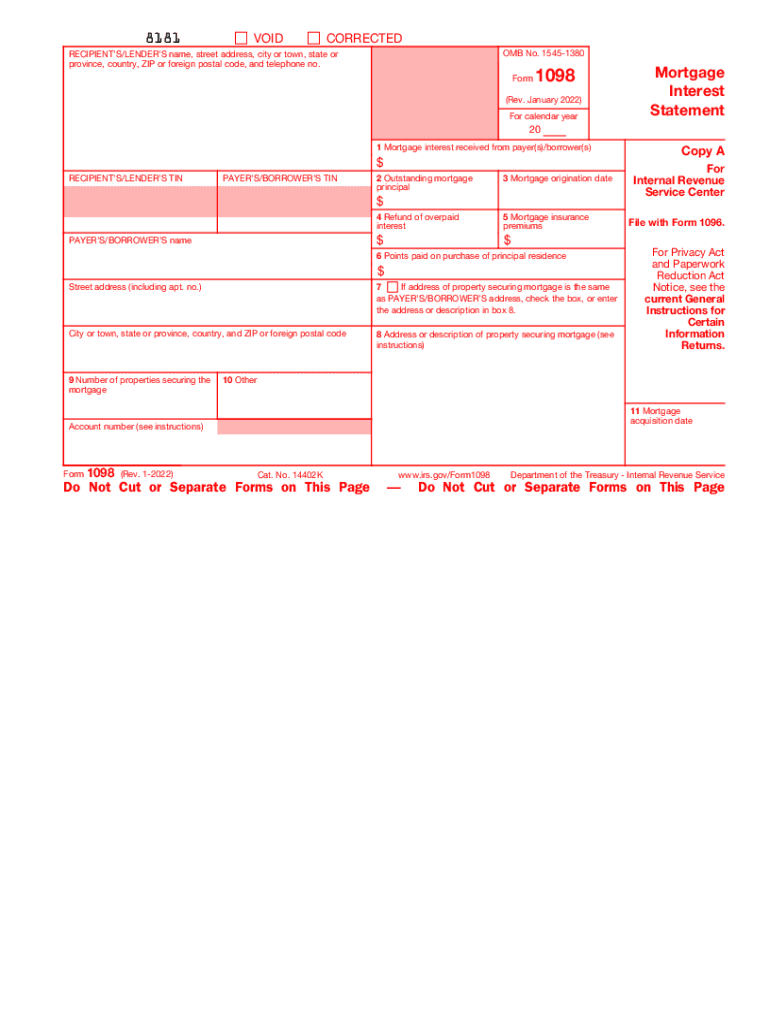







Definition & Meaning
Form 1099-DIV is an essential IRS tax document used by individuals and businesses to report dividends and distributions received throughout the year. It specifically addresses dividend income, which is the earnings distributed by corporations to their shareholders, typically derived from the company's profits. The "Copy A" of this form is a crucial component used by institutions to report directly to the IRS, ensuring accurate tracking of taxable dividend income for auditing and compliance purposes.
Who Typically Uses the f1099div.pdf - Attention: Copy A of this Form is Provided
Form 1099-DIV is most commonly used by financial institutions, corporations, and tax professionals who provide services to clients receiving dividend income. Although individuals receive a separate copy for their records and tax filing, financial institutions submit Copy A to the IRS to report dividend distributions. As such, shareholders receiving dividends and tax preparers who assist in filing individual tax returns also engage with data from this form, albeit indirectly.


How to Obtain the f1099div.pdf - Attention: Copy A of this Form is Provided
Financial institutions such as brokerage firms and mutual funds are responsible for generating form 1099-DIV. They must distribute these forms to shareholders and submit Copy A to the IRS by the deadline. Financial advisors and tax preparation software can provide guidance and access to electronic copies of this form for individuals and businesses. For official copies, access is typically restricted to registered institutions and professionals.
Steps to Complete the f1099div.pdf - Attention: Copy A of this Form is Provided
-
Collect Dividend Information: Gather all relevant data for dividend distributions, including dates, amounts, and type of dividends.
-
Enter Shareholder Details: Include the recipient's name, address, and taxpayer identification number (TIN) for accurate recording and reporting.
-
Input Dividend Amounts: Record the total dividend distributions, qualifying dividends, and any applicable foreign taxes or federal withholdings.
-
File with the IRS: Submit Copy A of the completed form to the IRS by the specified deadline, ensuring the use of the official IRS printed version for compliance.
-
Distribute to Recipients: Provide the completed forms to individual shareholders under the IRS guidelines, facilitating their personal tax reporting.
IRS Guidelines
The IRS requires that Form 1099-DIV be filed by financial institutions to report dividends and distributions over $10. Key compliance points include submitting Copy A to the IRS by the end of February (or the end of March if filing electronically) and furnishing copies to payees by January 31. Institutions must ensure accuracy to prevent penalties, using IRS-approved forms for Copy A submission.
Filing Deadlines / Important Dates
- January 31: Deadline for institutions to send form copies to shareholders.
- February 28: Deadline for mail submission of Copy A to the IRS.
- March 31: Extended deadline for electronic filing of Copy A.
Failure to meet these deadlines may result in penalties and interest on underreported income.
Penalties for Non-Compliance
Institutions that fail to file Form 1099-DIV or provide inaccurate information may face significant fines. Penalties start at $50 per form if corrected within 30 days, increasing to $280 per form if not corrected by August 1. The IRS can impose higher fines for intentional disregard, emphasizing the importance of compliance.
Software Compatibility (TurboTax, QuickBooks, etc.)
Various professional tax software, including TurboTax and QuickBooks, integrate Form 1099-DIV processing. These platforms streamline data entry, facilitate submission, and ensure accuracy in reporting dividend income, providing seamless transitions from dividend information collection to detailed tax reporting.
Digital vs. Paper Version
While paper versions remain mandatory for IRS submissions, institutions and individuals often prefer digital copies for convenience. Many tax software solutions support e-filing, and digital records offer ease of access and archiving, reducing the physical storage burden while maintaining security and compliance.




