






Definition and Purpose of the 1098 Form
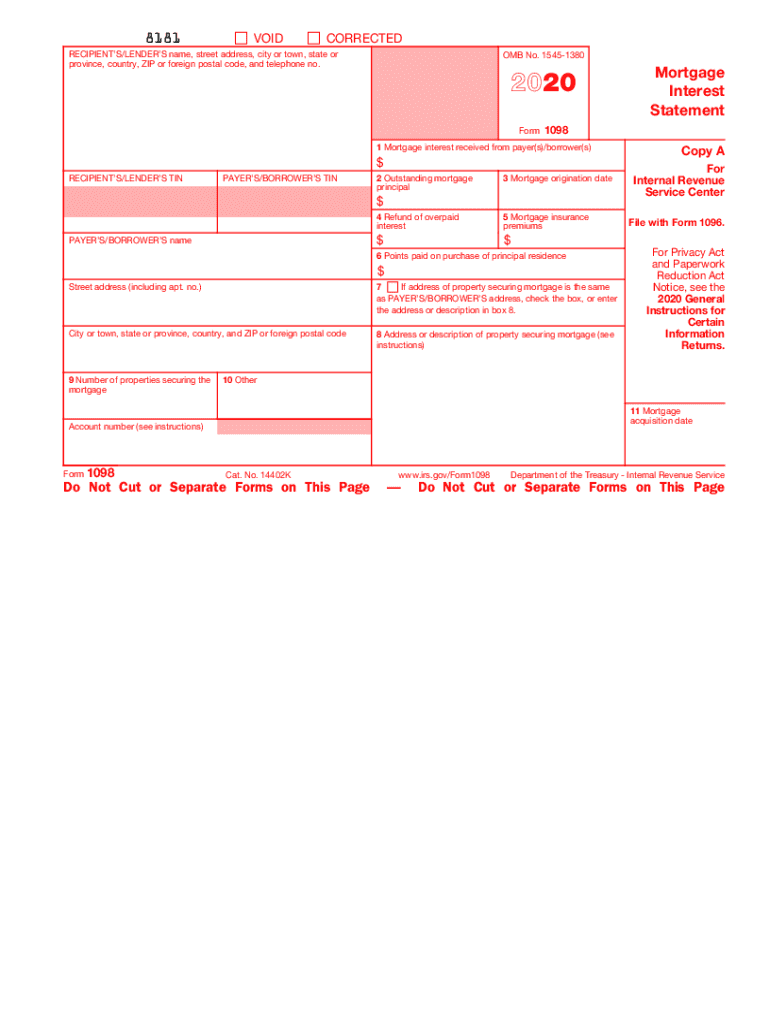
The 1098 form, officially known as the Mortgage Interest Statement, is a vital document used in the U.S. tax system to report interest that a borrower paid on a mortgage during a tax year. It is primarily used by lenders to detail amounts that must be reported to the Internal Revenue Service (IRS) and to the borrower. This form helps taxpayers claim deductions for mortgage interest paid, contributing to potential tax savings.
Who Typically Uses the 1098 Form
Borrowers with mortgages on their primary or secondary residences are the primary users of the 1098 form. Lenders, including financial institutions and mortgage companies, are responsible for issuing this form to borrowers who have paid $600 or more in mortgage interest during the tax year. In some cases, educational institutions may also use a variant of the 1098 form to report tuition-related interest payments.


How to Use the 1098 Form for Tax Deductions
Utilizing the 1098 form can be a straightforward process for taxpayers looking to benefit from mortgage interest deductions. Here's a simple guide:
- Obtain the Form: Typically, borrowers receive the 1098 form by January 31st for the previous tax year.
- Review Details: Ensure all information, including mortgage amounts and other personal tax details, is accurate.
- Report on Tax Return: Transfer the interest detail to the Schedule A (Form 1040) to claim a deduction.
- Consult with a Tax Professional: For complex tax situations, seek advice to maximize deductions and remain compliant.
Important Sections of the 1098 Form
The 1098 form contains several critical sections requiring attention:
- Box 1: Reports mortgage interest received from the borrower.
- Box 2: Details outstanding mortgage principal as of January 1.
- Box 3: May cover the date of property acquisition or other relevant dates.
How to Obtain the 1098 Form
Securing a 1098 form involves a few reliable steps, depending on your relationship with your lender:
- Automatic Issuance: Most lenders automatically send this form to borrowers by mail or email.
- Online Retrieval: Many financial institutions offer digital downloads via their online banking platforms.
- Direct Request: In case of non-receipt, contact your lender to request a duplicate copy.
Form Submission Methods
Submitting details from the 1098 form can be accomplished through several avenues:
- Online Filing: Utilize tax software that imports the form automatically.
- Mail: Traditional paper-based return filers can include the form details on the Schedule A.
- In-Person Filing: Walk-in services at IRS locations provide additional support.
Key Elements and Sections of the 1098 Form
Understanding each section is essential for accurate reporting:
Key Sections:
- Borrower/Lender Identifiers: Includes full names, addresses, and taxpayer IDs.
- Interest Amounts: Specific mortgage interest received and additional charges, if applicable.
- Property Description: Provides identification, such as addresses or parcel numbers.
Important Terms Related to the 1098 Form
It is crucial to comprehend terms linked to the 1098 form:
- "Interest": The cost of borrowing funds, deductible if the mortgage is secured by the property.
- "Principal": The original loan amount upon which interest is calculated.
Filing Deadlines and Important Dates
Awareness of key filing timelines ensures compliance:
- January 31: Deadline for lenders to send the 1098 forms to borrowers.
- April 15: Typical deadline for submitting individual tax returns, including 1098 details.
IRS Guidelines for the 1098 Form
Tax authorities provide exhaustive guidelines to ensure uniformity:
- Eligibility Criteria: Details on who must receive and file the form.
- Documentation Requirements: Importance of accurate and thorough record-keeping.
Penalties for Non-Compliance
Non-compliance with form requirements can trigger penalties:
- Incorrect Filing: Substantial charges apply for erroneous details.
- Late Submission: Penalties may be imposed for failing to issue or file the form within prescribed timelines.
Common Errors to Avoid
Prevent mistakes by ensuring:
- Correct Information: Cross-verify all amounts and identifiers.
- Timely Action: Respect deadlines to avoid discrepancies or penalties.
Example Use Cases of the 1098 Form
Practical scenarios illustrate the importance of the 1098 form:
- Self-employed Homeowners: Deduction benefits can meaningfully reduce tax liabilities.
- Multiple Property Owners: Careful divisional accounting of interest payments across properties enhances compliance and benefit realization.
Maintaining a solid grasp of the structure and utility of the 1098 form benefits taxpayers by optimizing tax reporting accuracy and maximizing eligible deductions.