



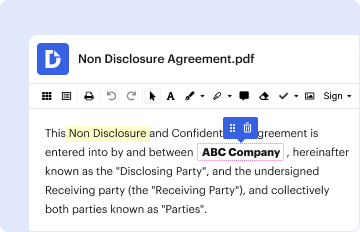
01. Edit your form 1099c online
Type text, add images, blackout confidential details, add comments, highlights and more.

Type text, add images, blackout confidential details, add comments, highlights and more.
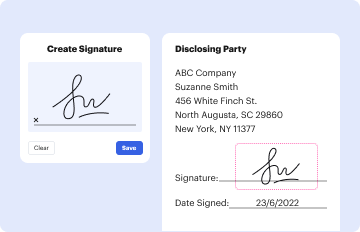
Draw your signature, type it, upload its image, or use your mobile device as a signature pad.

Send it via email, link, or fax. You can also download it, export it or print it out.
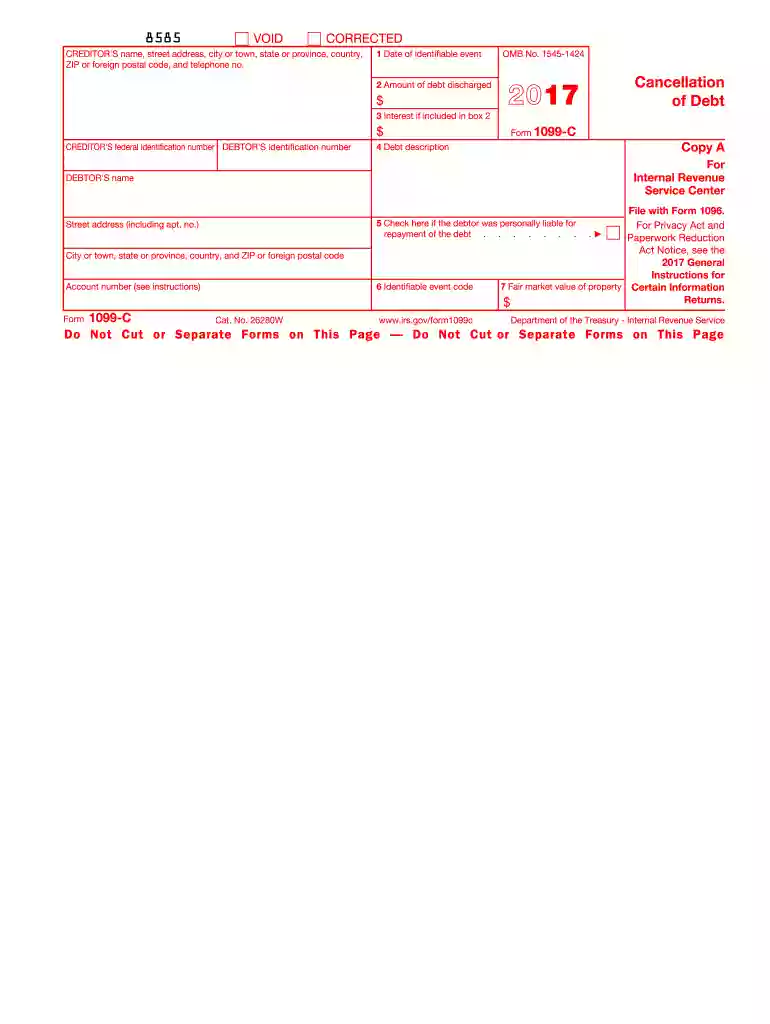
The Form 1099-C, Cancellation of Debt, is an Internal Revenue Service (IRS) tax form used to report the cancellation of debt to the debtor and the IRS. It is essential in documenting forgiven or canceled debt of $600 or more as potentially taxable income to the debtor. Debt can be canceled in various scenarios, including foreclosures, the renegotiation of debt terms, or as a result of the debtor's bankruptcy proceedings. Understanding this form's implications is crucial for both debtors and creditors, since failure to report such debt can result in significant IRS penalties.
You can obtain a 1099-C form from several sources. Creditors, including banks, financial institutions, and credit card companies, typically issue this form when they forgive a debtor's outstanding balance. You can expect to receive the form at the end of the tax year. If you don't receive it, you can visit the IRS website to download a copy. Keep in mind that Copy A is not printable from the IRS site due to scannability issues and should only be filed electronically or requested through official IRS channels.
The IRS outlines specific guidelines for handling canceled debt. Creditors are required to issue a 1099-C form to debtors and the IRS for amounts over $600. The IRS considers canceled debt income unless the debtor qualifies for an exemption. Debtors must calculate this income when filing annual taxes, except for exemptions such as bankruptcy or documented insolvency cases. The guidelines also specify handling unique situations, like joint liabilities or multiple creditors.
The 1099-C form holds legal significance as it directly affects taxable income reporting. Proper acknowledgment of canceled debt prevents misreporting income, which could lead to IRS audits or penalties. Legal stipulations dictate that debtors must include any amounts reported on a 1099-C as part of their gross income unless they meet IRS exemption conditions. It's advisable to consult with a tax professional if there are complexities regarding canceled debt circumstances or exemptions.
Failing to report canceled debt as income can result in significant IRS penalties, which range from monetary fines to criminal liability in cases of intentional tax evasion. Creditors may also face penalties if they fail to issue the form correctly or on time. Taxpayers should ensure that all relevant debts are accurately reported and seek professional guidance if uncertainties arise about potential exemptions or about calculating owed amounts.
Various tax filing software like TurboTax and QuickBooks offer modules to handle 1099-C forms. These programs help ensure accurate report generation by importing data and offering step-by-step instructions. They typically allow for electronic submission to comply with IRS filing requirements and provide additional features for tracking form status and managing related tax documents efficiently. Ensure that the version of the software being used is up-to-date to support the latest regulations and file formats.
We've got more versions of the form 1099c form. Select the right form 1099c version from the list and start editing it straight away!
| Versions | Form popularity | Fillable & printable |
|---|---|---|
| 2022 | 4.5 Satisfied (52 Votes) | |
| 2021 | 4.8 Satisfied (205 Votes) | |
| 2020 | 4.4 Satisfied (266 Votes) | |
| 2019 | 4.4 Satisfied (163 Votes) | |
| 2018 | 4.2 Satisfied (39 Votes) | |
| 2017 | 4.4 Satisfied (568 Votes) | |
| 2016 | 4.2 Satisfied (122 Votes) | |
| 2015 | 4 Satisfied (34 Votes) | |
| 2014 | 4.1 Satisfied (73 Votes) | |
| 2013 | 4.3 Satisfied (55 Votes) | |
| 2012 | 4.4 Satisfied (70 Votes) | |
| 2011 | 4.1 Satisfied (36 Votes) | |
| 2010 | 4.3 Satisfied (66 Votes) | |
| 2001 | 4.2 Satisfied (61 Votes) |
At DocHub, your data security is our priority. We follow HIPAA, SOC2, GDPR, and other standards, so you can work on your documents with confidence.
Form 1099-C (canceled debt). Form 1099-A (acquisition or abandonment of Form W-9 (Rev. 11-2017). Page 6. The IRS does not initiate contacts withRead more
To complete Form 1099-C, use: the 2017 General Instructions for Certain Information. Returns, and. the 2017 Instructions for Forms 1099-A and 1099-C. ToRead more
Form 1099C, foreclosures, insolvency). -Tax treatment of a U.S. citizen/resident with foreign income (e.g., tax treaties, Form 1116, Form. 2555, Form 3520, Form.


