




01. Edit your 1099 c form online
Type text, add images, blackout confidential details, add comments, highlights and more.

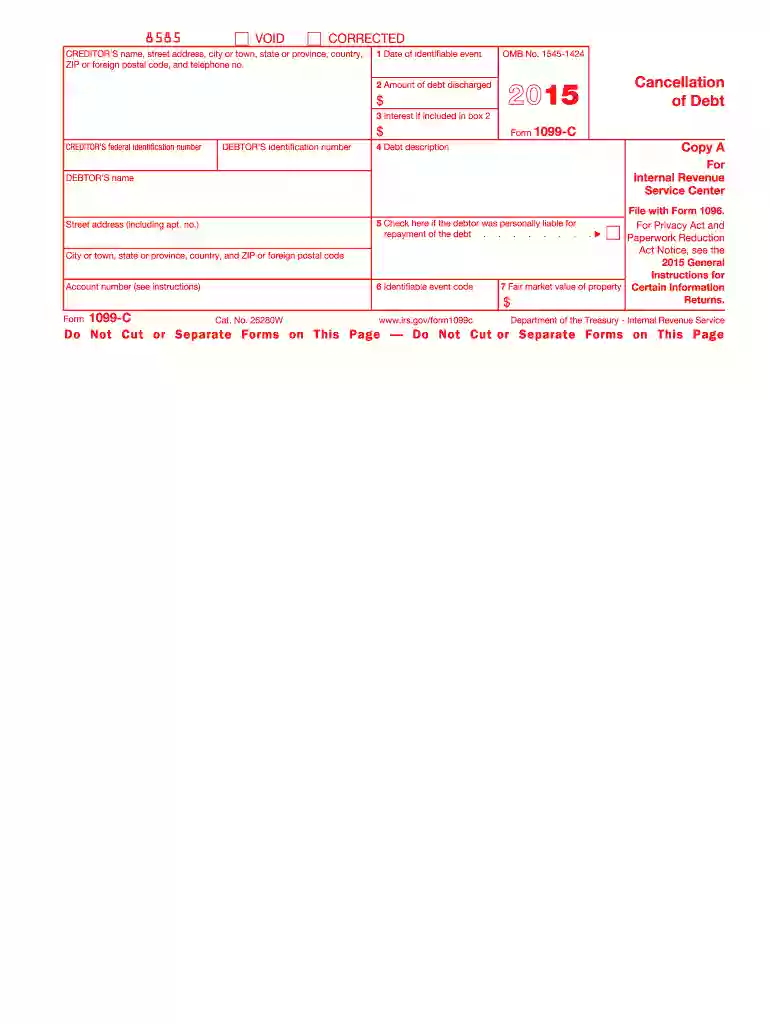
Type text, add images, blackout confidential details, add comments, highlights and more.

Draw your signature, type it, upload its image, or use your mobile device as a signature pad.

Send 1099 c instructions via email, link, or fax. You can also download it, export it or print it out.
The 2-C form is a tax document used by creditors to report the cancellation or forgiveness of a debt to the IRS. When a debt of $600 or more is canceled by a financial institution, government agency, or credit company, the creditor must file this form to inform both the debtor and the IRS. The form is critical as the forgiven debt is often considered taxable income for the debtor, influencing their federal income tax obligations. Understanding this form is essential for both creditors and debtors to accurately report canceled debts and avoid potential penalties.
Using the 2-C form involves several steps for both creditors and debtors. Creditors must accurately fill out the form, ensuring all required fields, such as the amount of canceled debt and the debtor's identification information, are correctly entered. Debtors, upon receipt, should review the form for accuracy and report the canceled debt as income on their tax return unless they qualify for an exclusion or exception. This form helps maintain transparency and accuracy in tax reporting for canceled debts.
Completing the 2-C form accurately is crucial for compliance with IRS regulations. The process involves detailed documentation and precise entry of information.
The IRS sets specific guidelines for the 2-C form that dictate how it should be completed and submitted. These requirements ensure uniformity and transparency in reporting canceled debts.
Meeting deadlines for the 2-C form is crucial to avoid penalties. Specific dates must be adhered to each tax year for the distribution and submission of the form.
Failure to meet these deadlines can result in fines and complications for both creditors and debtors.
Non-compliance with the annual filing requirements of the 2-C form can incur significant penalties from the IRS. Penalties vary based on how late the form is filed and if there was intentional neglect.
The 2-C form can be submitted either digitally or on paper, with each method having its own set of procedures and benefits.
Regardless of the method chosen, accuracy and adherence to IRS guidelines are crucial to ensure proper handling and reporting of canceled debts.
We've got more versions of the 1099 c form form. Select the right 1099 c form version from the list and start editing it straight away!
| Versions | Form popularity | Fillable & printable |
|---|---|---|
| 2022 | 4.5 Satisfied (52 Votes) | |
| 2021 | 4.8 Satisfied (205 Votes) | |
| 2020 | 4.4 Satisfied (266 Votes) | |
| 2019 | 4.4 Satisfied (163 Votes) | |
| 2018 | 4.2 Satisfied (39 Votes) | |
| 2017 | 4.4 Satisfied (568 Votes) | |
| 2016 | 4.2 Satisfied (122 Votes) | |
| 2015 | 4 Satisfied (34 Votes) | |
| 2014 | 4.1 Satisfied (73 Votes) | |
| 2013 | 4.3 Satisfied (55 Votes) | |
| 2012 | 4.4 Satisfied (70 Votes) | |
| 2011 | 4.1 Satisfied (36 Votes) | |
| 2010 | 4.3 Satisfied (66 Votes) | |
| 2001 | 4.2 Satisfied (61 Votes) |
At DocHub, your data security is our priority. We follow HIPAA, SOC2, GDPR, and other standards, so you can work on your documents with confidence.
Sep 11, 2015 The IRS received a copy of the 1099-C and sought to collect the amount from the petitioner as income that should have been reported on the 2011Read more
To complete Form 1099-C, use: the 2015 General Instructions for Certain Information. Returns, and. the 2015 Instructions for Forms 1099-A and 1099-C. ToRead more


