




01. Edit your 1099c online
Type text, add images, blackout confidential details, add comments, highlights and more.

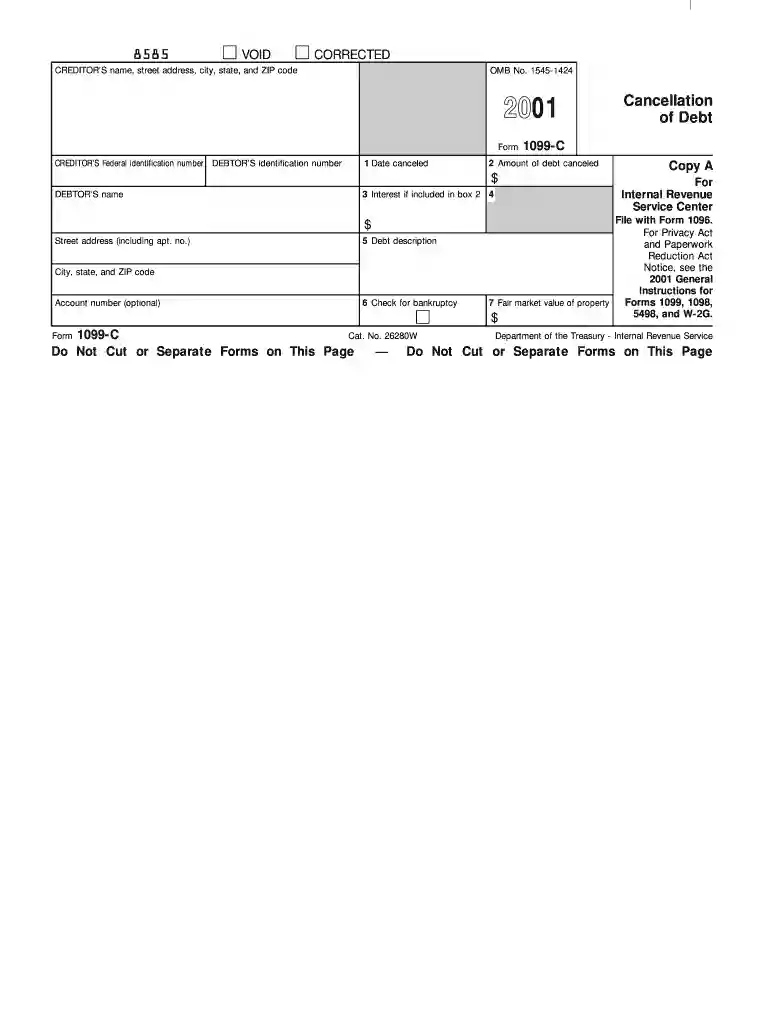
Type text, add images, blackout confidential details, add comments, highlights and more.

Draw your signature, type it, upload its image, or use your mobile device as a signature pad.

Send 1099 c via email, link, or fax. You can also download it, export it or print it out.
The 2001 Form 1099-C is a critical document used for reporting the cancellation of a debt to the IRS. This form is essential for creditors who cancel debts of $600 or more, as it helps both the IRS and the debtor track potentially taxable income. When a debt is forgiven, reduced, or canceled, it can result in what is known as "cancellation of debt" (COD) income. Understanding the implications of this form is vital because COD income is typically taxable, although there are specific exceptions, such as bankruptcy or insolvency, where it might not be considered taxable.
Using Form 1099-C involves understanding both the reporting process for creditors and the tax implications for debtors.
For Creditors:
For Debtors:
Completing the 2001 Form 1099-C correctly ensures compliance and avoids potential IRS issues.
Understanding the terminology associated with Form 1099-C aids in its accurate completion and comprehension.
Form 1099-C is used by various entities under specific circumstances:
The legal implications of Form 1099-C are significant, particularly in ensuring compliance with IRS tax laws.
The IRS provides specific guidelines on the use, submission, and reporting of Form 1099-C:
Failure to correctly file Form 1099-C can result in significant penalties:
Ensure compliance by adhering to key deadlines:
We've got more versions of the 1099c form. Select the right 1099c version from the list and start editing it straight away!
| Versions | Form popularity | Fillable & printable |
|---|---|---|
| 2022 | 4.5 Satisfied (52 Votes) | |
| 2021 | 4.8 Satisfied (205 Votes) | |
| 2020 | 4.4 Satisfied (266 Votes) | |
| 2019 | 4.4 Satisfied (163 Votes) | |
| 2018 | 4.2 Satisfied (39 Votes) | |
| 2017 | 4.4 Satisfied (568 Votes) | |
| 2016 | 4.2 Satisfied (122 Votes) | |
| 2015 | 4 Satisfied (34 Votes) | |
| 2014 | 4.1 Satisfied (73 Votes) | |
| 2013 | 4.3 Satisfied (55 Votes) | |
| 2012 | 4.4 Satisfied (70 Votes) | |
| 2011 | 4.1 Satisfied (36 Votes) | |
| 2010 | 4.3 Satisfied (66 Votes) | |
| 2001 | 4.2 Satisfied (61 Votes) |
At DocHub, your data security is our priority. We follow HIPAA, SOC2, GDPR, and other standards, so you can work on your documents with confidence.
Specific information needed to complete this form is given in the 2001 Instructions for Forms 1099-A and 1099-C. A chart in the general instructions gives aRead more
Feb 3, 2023 6050P(c)(2) are required to issue a Form 1099-C reporting debt cancellation income to the IRS when they reduce a debt by at least $600. TheRead more


