




01. Edit your form online
Type text, add images, blackout confidential details, add comments, highlights and more.

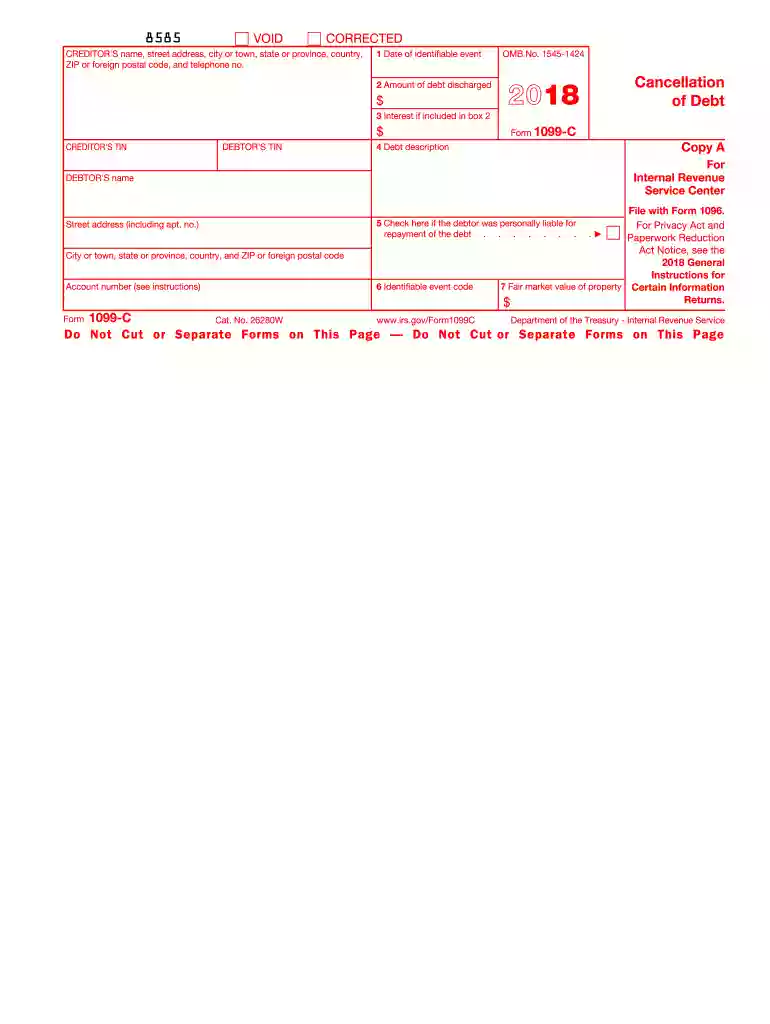
Type text, add images, blackout confidential details, add comments, highlights and more.

Draw your signature, type it, upload its image, or use your mobile device as a signature pad.

Send it via email, link, or fax. You can also download it, export it or print it out.
Form 1099-C, known as the Cancellation of Debt form, is essential for reporting debt forgiveness in tax filings. When a debt is forgiven, canceled, or discharged, it is considered taxable income by the IRS. Lenders who forgive $600 or more of debt must issue this form to the debtor and the IRS.
Obtain the Form: The official Form 1099-C can be obtained through the IRS or financial institutions. It's important to use the correct version, such as the 2015 edition, for specifying the relevant tax year.
Complete the Form: Debtors must fill out parts of the form to ensure the lender and IRS receive accurate information. This involves personal details and the nature of the forgiven debt.
Submit the Form: Lenders submit the completed form to the IRS and the debtor by January 31 of the following tax year. Debtors should then include the information in their federal tax return.
Form 1099-C is crucial in tax reporting because it ensures income transparency for debt cancellation, which the IRS regards as taxable. Proper reporting can prevent legal issues or fines associated with tax evasion.
Form 1099-C features specific components that parties must understand:
The IRS provides directives for form accuracy:
Noncompliance with Form 1099-C can lead to penalties:
For instance, when a bank writes off a portion of a loan due to the debtor's financial hardship, this forgiven amount is reported as taxable income. The specific entry of this cancellation must reflect in the annual tax return.
Understanding and correctly utilizing Form 1099-C is vital to adhering to IRS tax requirements. By ensuring accurate completion and timely submission, both creditors and debtors can avoid potential legal troubles and maintain financial transparency.
We've got more versions of the 2015 1099 c form. Select the right 2015 1099 c version from the list and start editing it straight away!
| Versions | Form popularity | Fillable & printable |
|---|---|---|
| 2022 | 4.5 Satisfied (52 Votes) | |
| 2021 | 4.8 Satisfied (205 Votes) | |
| 2020 | 4.4 Satisfied (266 Votes) | |
| 2019 | 4.4 Satisfied (163 Votes) | |
| 2018 | 4.2 Satisfied (39 Votes) | |
| 2017 | 4.4 Satisfied (568 Votes) | |
| 2016 | 4.2 Satisfied (122 Votes) | |
| 2015 | 4 Satisfied (34 Votes) | |
| 2014 | 4.1 Satisfied (73 Votes) | |
| 2013 | 4.3 Satisfied (55 Votes) | |
| 2012 | 4.4 Satisfied (70 Votes) | |
| 2011 | 4.1 Satisfied (36 Votes) | |
| 2010 | 4.3 Satisfied (66 Votes) | |
| 2001 | 4.2 Satisfied (61 Votes) |
At DocHub, your data security is our priority. We follow HIPAA, SOC2, GDPR, and other standards, so you can work on your documents with confidence.
To complete Form 1099-C, use: the 2015 General Instructions for Certain Information. Returns, and. the 2015 Instructions for Forms 1099-A and 1099-C. ToRead more
Sep 11, 2015 The IRS received a copy of the 1099-C and sought to collect the amount from the petitioner as income that should have been reported on the 2011Read more


