






Definition & Purpose of Form 1099-C
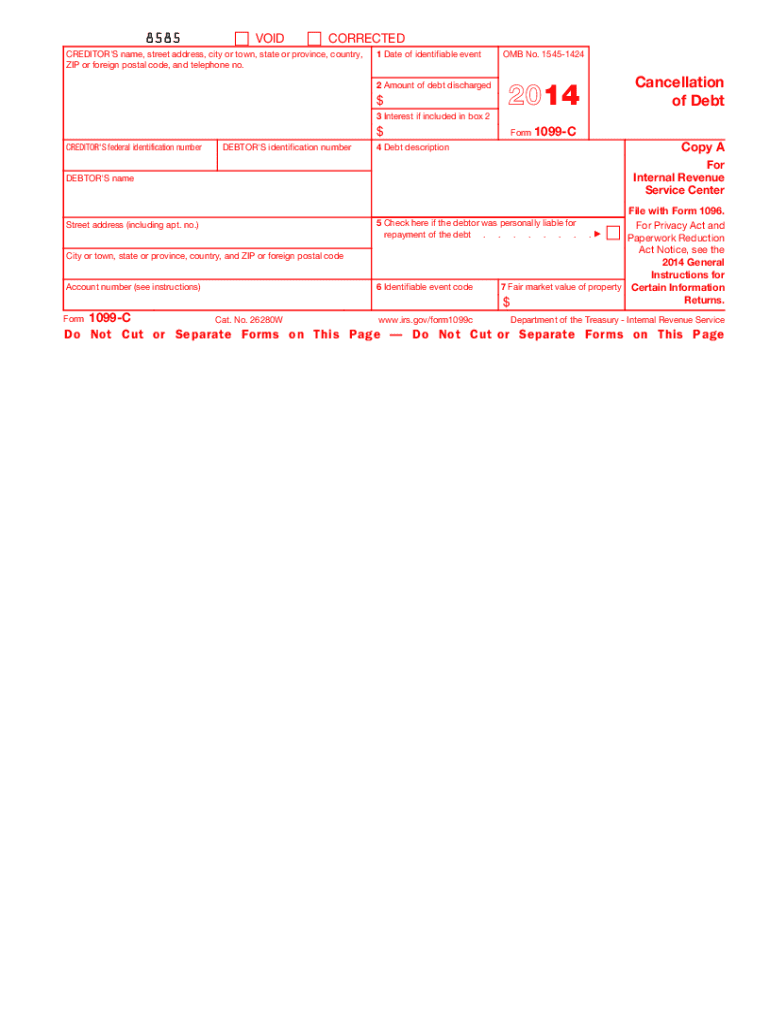
Form 1099-C, Cancellation of Debt, is a critical document used to report instances in which a creditor has forgiven or discharged a borrower’s debt. This form is primarily used in the United States tax system and serves as an official record that a particular debt amount is no longer owed, which can have significant tax implications for the debtor.
- Purpose: The primary purpose of Form 1099-C is to ensure proper tax reporting of canceled debt, which the IRS considers as taxable income in many cases.
- When Used: This form must be filed when a debt of $600 or more is canceled, except for certain exclusions.
- Who Uses it: Creditors, including financial institutions and government entities, are responsible for issuing Form 1099-C to both the debtor and the IRS.
Understanding the detailed requirements of Form 1099-C is crucial for both creditors and debtors to avoid penalties and ensure compliance with tax laws.
How to Use the 1099-C 2014 Form
Using Form 1099-C requires careful attention to detail to ensure accurate reporting and compliance with IRS guidelines. Following these steps will help you properly complete and use the form:
- Obtain the Form: You can obtain Form 1099-C from the IRS website or through authorized tax software.
- Enter Identifying Information: Include the creditor’s name, address, and taxpayer identification number (TIN) along with the debtor’s name, address, and TIN.
- Provide Debt Details: List the date of cancellation, the amount of the canceled debt, and any relevant descriptions.
- Submit and Distribute Copies: Ensure copies are submitted to the IRS and distributed to the debtor as required.
Being meticulous with each step helps prevent errors that could result in tax complications or penalties.
How to Obtain Form 1099-C
Obtaining Form 1099-C is a straightforward process. Here are the steps to procure the form:
- Download from IRS: The form can be directly downloaded from the IRS website.
- Tax Software: Many commercial tax software programs include Form 1099-C as part of their package.
- Request from Creditor: If you are a debtor, you should receive this form directly from your creditor if applicable.
Ensuring you have the latest version of Form 1099-C is vital for accurate and compliant tax reporting.
Steps to Complete the 1099-C 2014 Form
Completing Form 1099-C involves several important steps:
- Verify Information: Double-check debtor and creditor details for accuracy.
- Detail Debt Cancellation: Clearly outline the nature of the debt and reasons for cancellation.
- Include Amounts and Dates: Accurately report the canceled amount and the date the debt was discharged.
- Review for Errors: Carefully review the completed form to ensure accuracy.
These meticulous steps help protect against IRS penalties and ensure your reporting is correct.
Why Should You File Form 1099-C
There are several reasons why filing Form 1099-C is necessary:
- Legal Requirement: Creditors must file Form 1099-C for applicable debt cancellations exceeding $600.
- Tax Compliance: Ensures all relevant income is reported to the IRS, avoiding penalties for underreporting income.
- Transparency: Provides a clear record to both debtor and IRS about canceled debts and their potential tax implications.
By understanding the importance of this form, both creditors and debtors can fulfill their legal obligations accurately.
Key Elements of the 1099-C 2014 Form
Form 1099-C contains several key elements that must be correctly filled out, including:
- Creditor and Debtor Information: TIN, addresses, and other identifying details.
- Debt Cancellation Details: Describe the nature of the debt and reasons for cancellation.
- Amounts and Dates: The amount of debt canceled and the date it was canceled.
- Signatures: Required for validity and completion of the form.
These elements are crucial for accurate IRS filing and for maintaining transparency for all parties involved.
IRS Guidelines for Form 1099-C
IRS guidelines offer clarity on when and how to use Form 1099-C:
- Filing Threshold: Required for canceled debts of $600 or more.
- Deadline Compliance: Ensure all forms are submitted by the due date to avoid late fees and penalties.
- Reporting Requirements: Include all necessary details as specified in IRS guidelines to prevent inadvertent errors.
Following these guidelines ensures compliance and mitigates risks of penalties.
Filing Deadlines and Important Dates
Adhering to filing deadlines is crucial for Form 1099-C compliance:
- Submission Deadline: Typically due by January 31 to debtors and February 28 to the IRS if paper filed, March 31 if electronically filed.
- Annual Updates: Verify dates annually as they may be subject to IRS adjustments.
Timeliness ensures compliance with federal regulations and avoids fines.
Required Documents for Form 1099-C
Certain documents are required to complete Form 1099-C accurately:
- Loan Agreement or Debt Record: Provides clarity on the details of the original debt.
- Debt Cancellation Agreement: Documents the terms and reasons for the cancellation.
- Identification Documents: Necessary for both debtor and creditor verification.
Having these documents ready will streamline the filing process and support accurate reporting.
Penalties for Non-Compliance
Failing to comply with Form 1099-C regulations can lead to penalties:
- Late Filing: Penalties may apply for each late form submitted.
- Filing Errors: Inaccurately completed forms can result in fines and additional scrutiny.
- Omission of Filing: Not filing required forms carries substantial penalties and potential legal repercussions.
Understanding these penalties underscores the importance of accurate and timely filing.