







Definition & Purpose of 2012 Forms
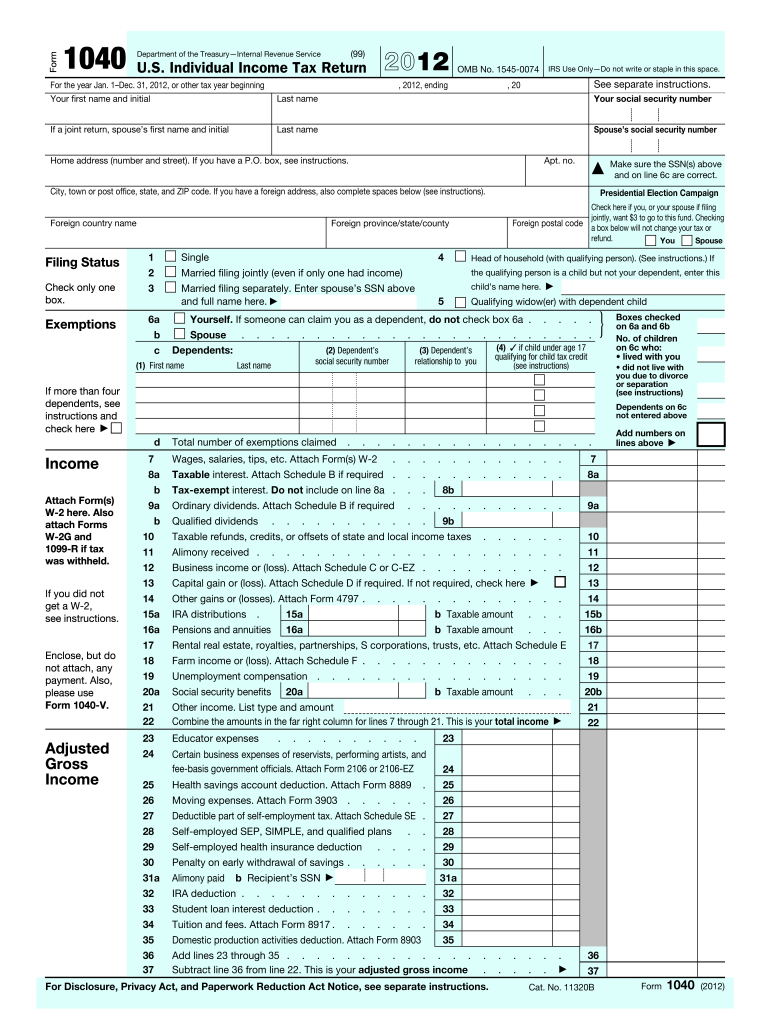
The 2012 forms, primarily the U.S. Individual Income Tax Return Form 1040, are essential documents for taxpayers reporting their income, claiming deductions and credits, and calculating their tax liabilities for the year 2012. The primary purpose of these forms is to facilitate the accurate reporting of income and calculation of taxes owed to the Internal Revenue Service (IRS) by individuals and businesses in the United States. This includes detailing specific deductions, credits, and income sources, providing a comprehensive financial picture for tax purposes.
Key Elements of the Form 1040
The Form 1040 includes several crucial sections that guide the taxpayer through the filing process:
- Personal Information: Includes the taxpayer’s name, Social Security Number, and filing status (e.g., single, married filing jointly).
- Income Sources: Covers various income types, such as wages, investments, retirement income, and more.
- Deductions and Credits: Lists allowable deductions, such as mortgage interest and student loan interest, and credits like the Earned Income Tax Credit.
- Tax Calculations: Helps determine the total tax liability after considering applicable deductions and credits.
These sections collectively ensure that taxpayers can accurately calculate their taxes and claim any relevant benefits.
How to Obtain the 2012 Forms
There are multiple avenues to obtain the 2012 forms for tax filing purposes:
- Download from the IRS Website: Taxpayers can visit the IRS official website to download the necessary forms.
- Order by Phone: The IRS provides a service to order forms via phone, delivering them to the taxpayer's address.
- Visit Local Libraries or Post Offices: Many local libraries and post offices maintain paper copies of tax forms for public access.
- Tax Software Programs: Many tax software programs also offer access to historical tax forms for download.
These options provide flexibility for taxpayers to acquire the necessary forms in a way that suits their preferences.
How to Use the 2012 Forms
Completing the 2012 forms involves several steps to ensure accuracy and compliance:
- Gather Necessary Documentation: This includes W-2 forms, 1099s, receipts for deductible expenses, and Social Security statements.
- Read Instructions Carefully: Each form comes with detailed instructions from the IRS, which are crucial for correct completion.
- Fill Out Personal Information: Ensure that all personal details, such as Social Security Number and address, are correct.
- Calculate Income and Expenses: Record all income streams and allowable deductions.
- Review and Submit: Double-check the form for completeness, then submit via mail or electronically through approved e-filing systems.
Each step plays a critical role in ensuring the form is correctly filled to meet legal requirements.
Steps to Complete the 2012 Forms
Completing the 2012 forms can be broken down into a series of systematic steps:
- Determine Eligibility and Filing Status: Understand which forms apply to your situation and your official filing status.
- Calculate Gross Income: Add all sources of income, ensuring nothing is omitted.
- Identify Deductions and Credits: Find applicable deductions and credits to reduce taxable income.
- Complete the Form: Fill in each section with accurate data; errors can lead to penalties or the need for amendments.
- Submit and Retain Copies: After submission, keep copies of all forms and supporting documents for at least three years for your records.
These steps provide a concise framework to guide taxpayers through the preparation and submission process, ensuring compliance.
Important Terms Related to 2012 Forms
Understanding relevant terms associated with the 2012 forms is crucial for accurate tax filing:
- Adjusted Gross Income (AGI): Total income minus allowable adjustments, such as contributions to retirement accounts.
- Taxable Income: The portion of income subject to taxation after deductions and credits.
- Standard Deduction: A fixed dollar amount that reduces the income on which you are taxed; varies by filing status.
- Itemized Deductions: Specific expenses that may be subtracted from AGI, such as medical expenses and charitable donations.
Taxpayers should familiarize themselves with these terms to navigate the tax filing process effectively.
IRS Guidelines and Compliance
Adhering to IRS guidelines is essential when completing the 2012 forms:
- Follow Filing Instructions: Each form has specific instructions that must be followed to ensure compliance.
- Meet Filing Deadlines: The standard deadline is April 15th; however, extensions are available upon request.
- Provide Accurate Information: Failure to provide complete and truthful data can result in audits and penalties.
Compliance with IRS guidelines helps mitigate risks of errors and potential audits, promoting a smoother filing experience.
Filing Deadlines for 2012 Forms
Understanding important dates is vital to avoid penalties and interest:
- Standard Filing Deadline: April 15, 2013, for personal tax returns.
- Extension Requests Deadline: Typically needs to be filed before the initial tax return deadline.
- Amended Returns: Can be filed within three years from the original filing deadline to correct any errors.
These deadlines ensure taxpayers submit their forms in a timely manner, preventing potential penalties for late submissions.
Electronic Filing and Security
Incorporating technology can streamline the submission of the 2012 forms:
- E-File Capabilities: Using tax software to submit forms electronically can expedite the process and offer confirmation of receipt.
- Security Measures: Ensure personal data is protected by using trusted software offerings with encryption.
- Assess Software Compatibility: Confirm that software used supports the 2012 forms and meets your filing needs.
Embracing electronic filing can enhance efficiency and provide additional security for sensitive information.




