
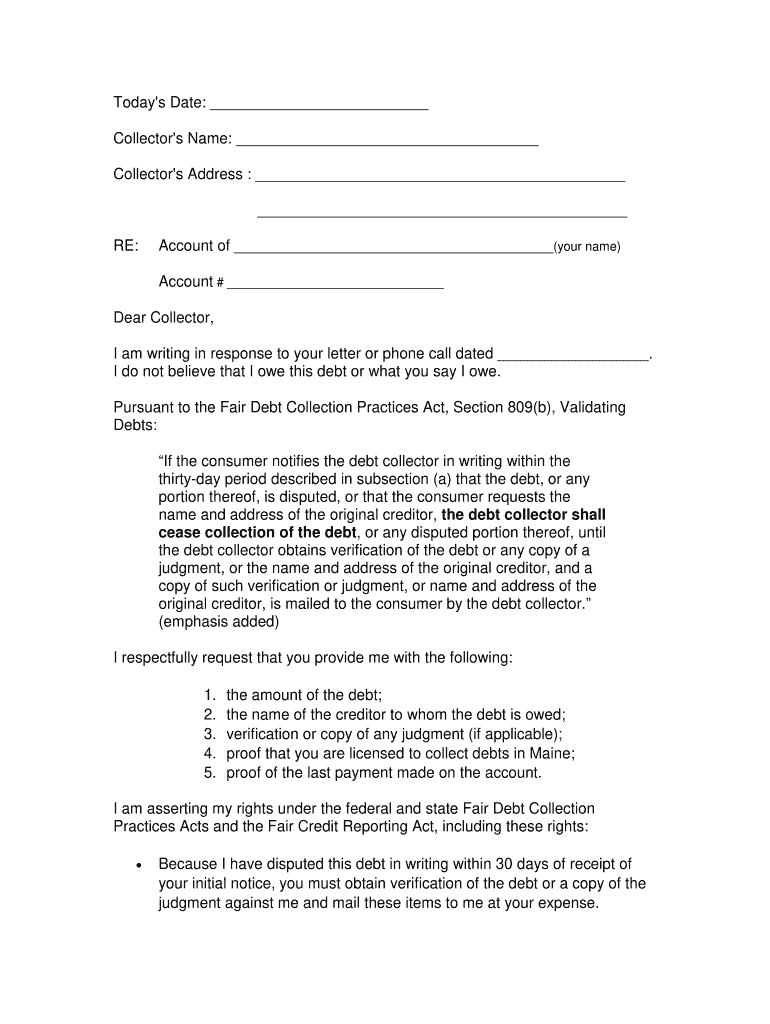







Understanding the Collections Dispute Letter Template
A collections dispute letter template serves as a formal means for consumers to dispute a debt claim made by a collection agency. It ensures individuals assert their rights under the Fair Debt Collection Practices Act (FDCPA), which protects consumers from unfair debt collection practices. This document template typically includes specific sections for the consumer to provide their details, outline the nature of the dispute, and request verification of the debt.
Importance of Using a Collections Dispute Letter
- Documentation of Dispute: Utilizing a collections dispute letter creates a formal record of the consumer's challenge against a debt claim. This documentation is crucial for both the debtor and the creditor, serving as evidence of the consumer's intent to verify the legitimacy of the debt.
- Consumer Rights Protection: The letter reinforces consumer rights under the FDCPA, allowing individuals to request proof of the debt and maintain control over their financial situation without the pressure of immediate collection actions.
- Structured Communication: A template provides a structured approach to communication with collection agencies, minimizing any ambiguity regarding the consumer's position and requests.
Key Components of the Collections Dispute Letter Template
- Consumer Information Section:
- Name and address of the consumer disputing the debt.
- Contact information, including phone number and email address.
- Debt Collector Information Section:
- Name and address of the collection agency.
- Any reference or account number associated with the debt.
- Dispute Details:
- A clear statement of the dispute regarding the debt, including reasons for the dispute such as inaccuracies in reported amounts or lack of verification.
- Reference to the FDCPA to emphasize the consumer’s rights.
Practical Considerations When Using the Template
- Review Debts Thoroughly:
- Before sending a dispute letter, review recent claims and communicate effectively about the specific details of the debt in question.
- Keep Copies of All Correspondence:
- Maintain records of the dispute letter and any responses from the collection agency. This can be important if further legal actions are necessary.
- Follow-Up on Requests:
- If no response is received in a reasonable timeframe, follow up with the collection agency either by phone or via another written correspondence.
Tips for Crafting an Effective Dispute Letter
- Stay Professional and Concise: Use clear language while maintaining a respectful tone. Focus on the facts without unnecessary emotion or lengthy explanations.
- Specify Requested Actions: Clearly state what the consumer is requesting—whether it is validation of the debt, the provision of specific documents, or a cessation of collection efforts until verification is provided.
- Use Registered Mail: Sending the letter via registered mail adds an additional layer of security, ensuring that there is proof of delivery.
Common Mistakes to Avoid in a Dispute Letter
- Incomplete Information: Failing to provide all required information can hinder the effectiveness of the dispute letter, leading to delays or misunderstandings.
- Vague Language: General statements about the dispute without specific details may result in the collection agency’s inability to address the issue adequately.
- Ignoring Deadlines: Timeliness is crucial; ensure the dispute letter is sent within the appropriate time frame stipulated by any relevant credit reporting agencies or debt collection laws.
Examples of Effective Dispute Letters
- Template A: A basic collection dispute letter addressing an account with discrepancies in amounts.
- Template B: A more complex letter that includes a request for written validation of the debt before any further collection attempts.
By carefully utilizing a collections dispute letter template, consumers can effectively communicate their disputes while protecting their rights and ensuring a proper resolution of issues with debt collection agencies.




