





Definition and Purpose of the 2011 U.S. Individual Income Tax Return Form 1040
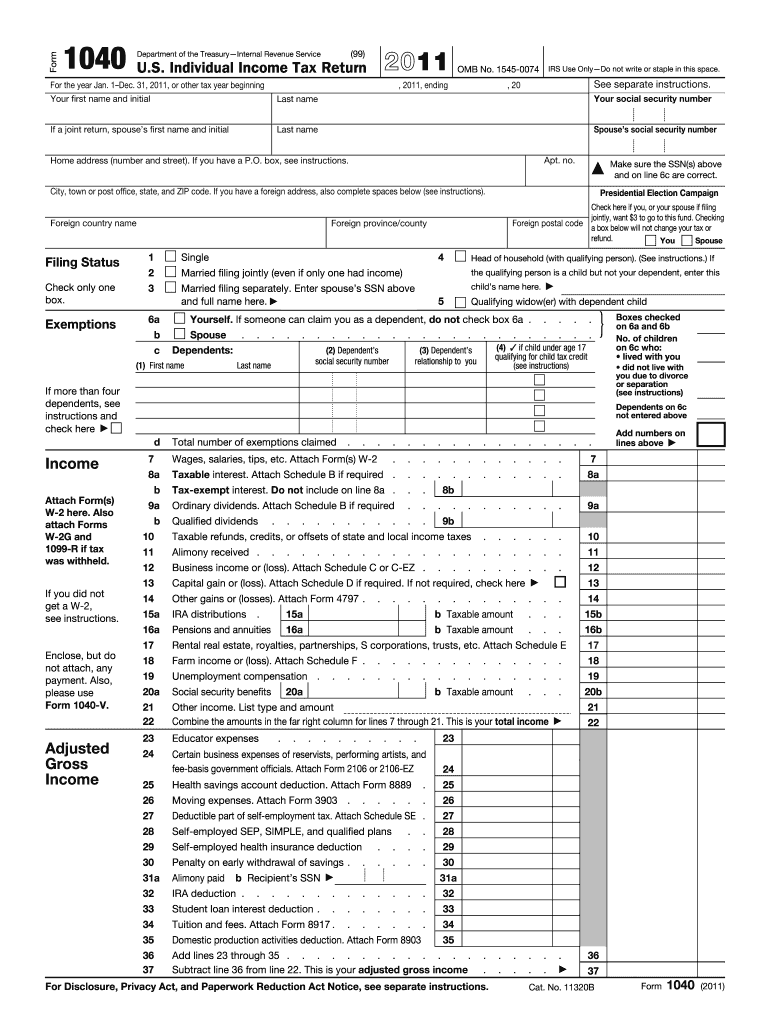
Form 1040, often referred to simply as the "tax return," is a critical document for U.S. taxpayers. The 2011 version of this form is used to report income, claim deductions and credits, and calculate tax liability for that tax year. It serves as a comprehensive record of a taxpayer's financial activities over the year, including earned income, investment returns, and other financial engagements. Individuals use this form not only to determine how much they owe to the IRS but also to confirm any refunds due.
How to Use the 2011 Form 1040
To correctly utilize the 2011 Form 1040, taxpayers must follow a sequence of steps. This involves:
- Gathering all necessary financial documents, such as W-2s, 1099s, and any receipts for deductible expenses.
- Filling in personal information, including name, address, and Social Security number.
- Reporting income from various sources like wages, dividends, and business earnings.
- Claiming eligible deductions and credits to minimize tax liability. This might include education credits, home mortgage interest, or charitable contributions.
- Calculating the total tax due for the year, taking into account any estimated tax payments made during the year.
- Reviewing the completed form for accuracy before submission.
Accuracy is crucial to avoid any discrepancies that could lead to an audit or penalties from the IRS.
Steps to Complete the 2011 Form 1040
Completing the 2011 Form 1040 involves multiple detailed steps:
-
Step 1: Personal Information
Enter essential details such as filing status and any dependents. This determines the taxpayer's eligibility for specific credits and deductions. -
Step 2: Income Reporting
Accurately list all income sources. This includes wages, interest, dividends, and rental income. Schedule C may be necessary for self-employed income. -
Step 3: Deductions and Credits
Itemize deductions if they exceed the standard option. Include medical expenses, state taxes, and charitable contributions. -
Step 4: Calculate Tax Liability
Use provided tax tables or software to compute the precise tax liability, entering all applicable credits like child tax credit or credits for the elderly. -
Step 5: Finalize and Submit
Conclude the form by calculating total payments already made, such as withheld taxes, and determine any balance due or refund.
Always review with a tax professional to ensure compliance and optimize outcomes.
Who Typically Uses the 2011 Form 1040
The 2011 Form 1040 is designed for a wide range of taxpayers, specifically:
- Individuals and families with diverse income sources.
- Self-employed persons who need to detail business income.
- Taxpayers claiming multiple credits and deductions.
- Those preferring to itemize deductions over taking the standard deduction.
Because of its comprehensive nature, this form differs from short-form alternatives like 1040A or 1040EZ, which have more restrictions on income types and deduction claims.


Key Elements of the 2011 Form 1040
Several critical sections must be understood:
- Personal and Filing Status Information: Determines which credits and deductions apply.
- Income Section: Detailed breakdown accommodates the complexity of various income forms.
- Adjustments to Income: Includes student loan interest deductions or retirement contributions.
- Tax and Credits: Encompasses calculation of applicable taxes and deductions of credit amounts.
Understanding these elements ensures accurate and complete submissions.
Required Documents for Completing the 2011 Form 1040
Key documents include:
- W-2 Form: For reporting wages from employment.
- 1099 Forms: Covering various types of income like freelance earnings or investment dividends.
- 1098 Forms: Such as the mortgage interest statement for deductible interest.
- Receipts for deductible expenses: Such as charitable donations or business expenditure.
Collecting these documents in advance simplifies the filing process, ensuring all required information is available.
IRS Guidelines and Filing Deadlines
Adhering to IRS guidelines is crucial for the 2011 tax year:
- Filing Deadline: The original deadline was April 17, 2012, due to a weekend and a federal holiday.
- Extensions: Taxpayers could obtain an extension to file until October 15, 2012, with Form 4868.
- Amendments: Use Form 1040X to amend any errors after submission.
Following these guidelines helps avoid penalties and interest from late submissions or inaccuracies.
Form Submission Methods
Taxpayers can submit the 2011 Form 1040 through several methods:
- Electronic Filing (e-file): Fast and secure, often resulting in quicker refunds.
- Mail: For those who prefer paper submissions, the printed form can be mailed to the IRS using the appropriate address.
- Authorized Tax Professionals: Utilize CPAs or tax advisors for filing, especially if the tax situation is complex.
Selecting the appropriate filing method depends on personal preference, access to technology, and complexity of the tax return.