






Definition and Purpose of the 1040 Form
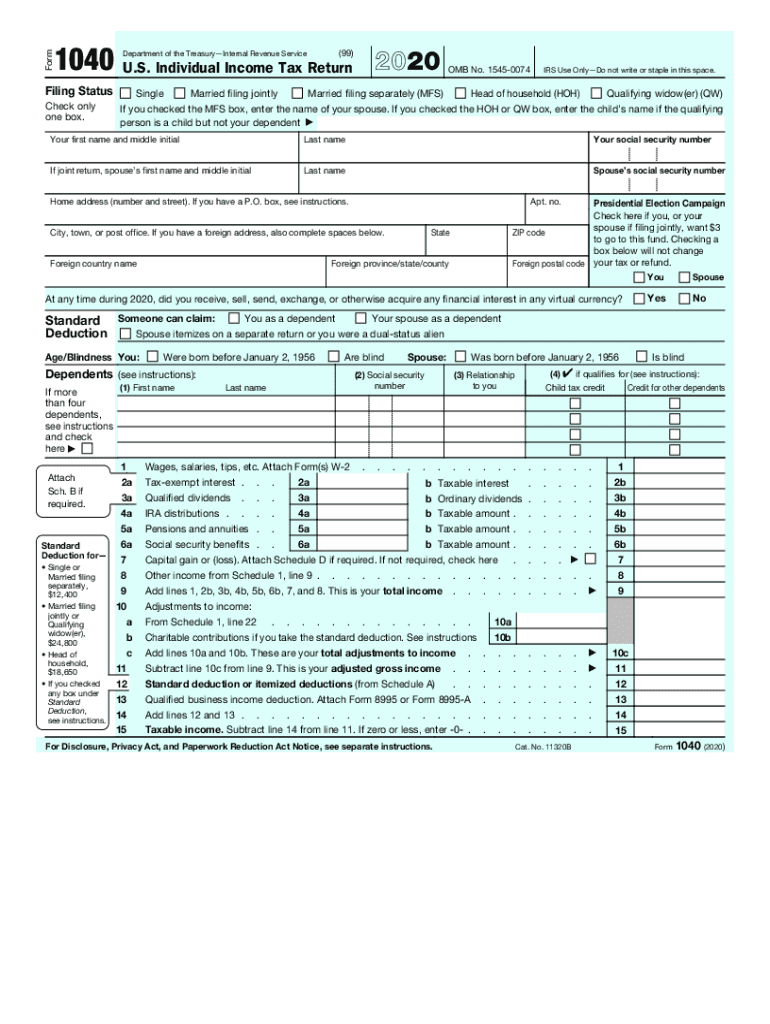
The Form 1040 is the U.S. Individual Income Tax Return used by taxpayers to report their annual income, claim deductions and tax credits, and determine their tax liabilities. This form is a central component of the American tax system and is filed with the Internal Revenue Service (IRS). Through the 1040 Form, individuals provide comprehensive details about their financial activities, including wages, dividends, capital gains, and income from businesses owned. It serves as a standardized method for both taxpayers and the IRS to ensure accurate tax reporting and compliance.
Key Sections of the 1040 Form
The 1040 Form consists of multiple sections, each designed to capture specific financial information:
- Filing Status: Options like single, married filing jointly, married filing separately, head of household, or qualifying widow(er).
- Personal Information: Name, Social Security Number (SSN), and address.
- Income Sources: Details of all income types, such as wages, dividends, and business earnings.
- Adjustments to Income: Allowable deductions that reduce taxable income.
- Tax and Credits: Calculation of tax owed and applicable credits.
- Other Taxes: Self-employment tax, alternative minimum tax, etc.
- Payments: Total taxes withheld and estimated payments.
- Refund or Amount Owed: The balance after accounting for all taxes and credits.
How to Use the 1040 Form
Using the 1040 Form involves a detailed understanding of your financial status for the tax year. Here’s a general outline of the process:
- Gather Required Documentation: Collect W-2s, 1099s, proof of deductions, and other necessary financial documents.
- Determine Filing Status: Select the appropriate filing status to understand applicable tax rates and standard deductions.
- Report Income: Accurately input income data from various sources such as salaries, investments, and self-employment.
- Claim Deductions and Credits: Identify and claim eligible deductions and credits to reduce taxable income.
- Calculate Tax: Use the tax tables or tax computation worksheets to find the exact tax liability.
- Submit the Form: File the completed 1040 Form with the IRS by the due date, either electronically or via mail.
Reporting Deductions and Credits
- Standard vs. Itemized Deductions: Decide between taking the standard deduction or itemizing deductions, which may include mortgage interest, medical expenses, and charitable contributions.
- Tax Credits: Include commonly claimed credits such as the Child Tax Credit, Earned Income Tax Credit, and education credits.
Steps to Complete the 1040 Form
Filling out the 1040 Form requires attention to detail to ensure accuracy and compliance. Here's a step-by-step guide:
- Start with Personal Information: Fill in your name, SSN, and address.
- Select Filing Status: Check the appropriate box for your filing status.
- Enter Income Data: Utilize appropriate lines for wages and other forms of income. Attach relevant schedules for additional sources.
- Calculate and Apply Adjustments: Subtract adjustments from total income to determine adjusted gross income (AGI).
- Deduct and Credit Section: Apply standard or itemized deductions, followed by applicable credits.
- Compute Total Tax and Payments: Sum up taxes owed and subtract any withholdings or estimated payments made.
- Determine Refund or Payment Due: Identify if the taxpayer is owed a refund or needs to make a payment.
- Sign and Submit: Ensure all necessary signatures are in place before submission.
Important Terms Related to the 1040 Form
Understanding key terminology can simplify the completion and filing process:
- Adjusted Gross Income (AGI): Income after adjustments, crucial for determining deductions and credits.
- Taxable Income: The amount subject to tax after deductions.
- Standard Deduction: Fixed deduction amount based on filing status.
- Tax Credits: Reductions of tax owed, which can be refundable or nonrefundable.
- Withholding: Income tax withheld by employers to cover taxes owed.
Real-World Examples
Consider a married couple with joint income from employment and investments. They need to report their earnings, claim child tax credits, and decide whether to take standard or itemized deductions. By accurately filling out their 1040, they ensure compliance and potentially maximize their refund.
Filing Deadlines and Important Dates
Accurate tax filing requires awareness of critical deadlines:
- Filing Deadline: Typically April 15, unless affected by holidays or extensions.
- Estimated Tax Deadlines: Quarterly deadlines for those required to make estimated payments, usually on April 15, June 15, September 15, and January 15.
- Extension Requests: To file an extension, use Form 4868 by the original deadline to extend the filing date until October 15.
Potential Penalties
Failure to meet these deadlines can result in penalties and interest:
- Late Filing Penalty: 5% of unpaid taxes for each month or part of a month that the return is late, generally capped at 25%.
- Late Payment Penalty: Typically 0.5% of unpaid taxes for each month unpaid.
- Interest on Unpaid Taxes: Accrues daily from the original due date until paid.
How to Obtain the 1040 Form
The 1040 Form can be acquired through various channels:
- IRS Website: Available for download as a PDF, along with instructions and supplementary schedules.
- Tax Software: Programs like TurboTax or H&R Block often include the 1040 Form and offer guided assistance in completing it.
- Tax Professionals: Accountants or tax preparers can provide and help complete the form.
- Local IRS Offices: Forms can be obtained in person at an IRS taxpayer assistance center.
Digital vs. Paper Version
Filing can be done electronically (e-filing) or via paper submission. E-filing is often quicker, with faster processing times and confirmation of receipt. Paper filing may be suitable for those who prefer traditional methods or have simpler returns.
Legal Use and Compliance of the 1040 Form
The 1040 Form is designed for lawful tax reporting. Ensuring compliance involves:
- Accuracy: All figures and information must be accurate and sourced from legitimate documents.
- Full Disclosure: Complete all relevant sections truthfully to avoid penalties or legal issues.
- Record-Keeping: Retain copies of filed returns and all supporting documents for a minimum of three years, as required by the IRS.
Common Compliance Issues
- Omitted Income: Failing to report all income sources can result in audits and penalties.
- Incorrect Deductions/Credits: Claiming ineligible deductions or credits can lead to fines.
- Identity Verification: Ensure all SSNs and names match official records to prevent processing delays.
Examples of Using the 1040 Form
Example Scenario for a Freelance Graphic Designer
A freelance designer reports income from multiple 1099 forms. After determining adjusted gross income, they can deduct business expenses such as software subscriptions and office supplies. They calculate the self-employment tax and apply eligible credits before determining whether they owe additional taxes or are due a refund.
Example for Retired Individuals
Retirees primarily rely on Social Security benefits and potential investment withdrawals. They must understand the taxability of Social Security income and any penalties associated with early withdrawals from retirement accounts. Calculating their total tax accurately ensures compliance and protects future financial security.
Taxpayer Scenarios
Tailoring the use of the 1040 Form to specific taxpayer scenarios optimizes accuracy and benefits:
- Self-Employed Individuals: Must report all income and expenses, subject to self-employment tax.
- Students with Part-Time Jobs: May qualify for education-related credits like the American Opportunity Credit.
- Retirees: Need to assess the tax implications of Social Security and retirement withdrawals.
- Investors: Must report dividends, interest, and capital gains accurately.


Detailed Taxpayer Example: Self-Employed Consultant
A self-employed consultant earning from varied clients needs to compile comprehensive records of income and allowable business expenses. By accurately calculating self-employment tax and claiming home office deductions, they manage their taxable income efficiently.
IRS Guidelines and Updates
Regular review of IRS updates is essential for staying informed about changes affecting the 1040 Form and related tax requirements:
- Annual Changes: Deductions, credits, and income thresholds may be adjusted yearly.
- Inflation Adjustments: Standard deductions and tax brackets are often indexed for inflation.
- Tax Law Changes: Legislative changes can impact filing requirements, deadlines, and procedures.
Keeping Informed
- IRS Publications: Regularly review IRS publications and official releases for detailed information.
- Professional Advice: Consulting tax professionals can provide insight into complex changes and ensure compliance.
Maintaining awareness of these elements ensures efficient and accurate use of the 1040 Form, aiding taxpayers in fulfilling their obligations and maximizing their potential tax benefits.