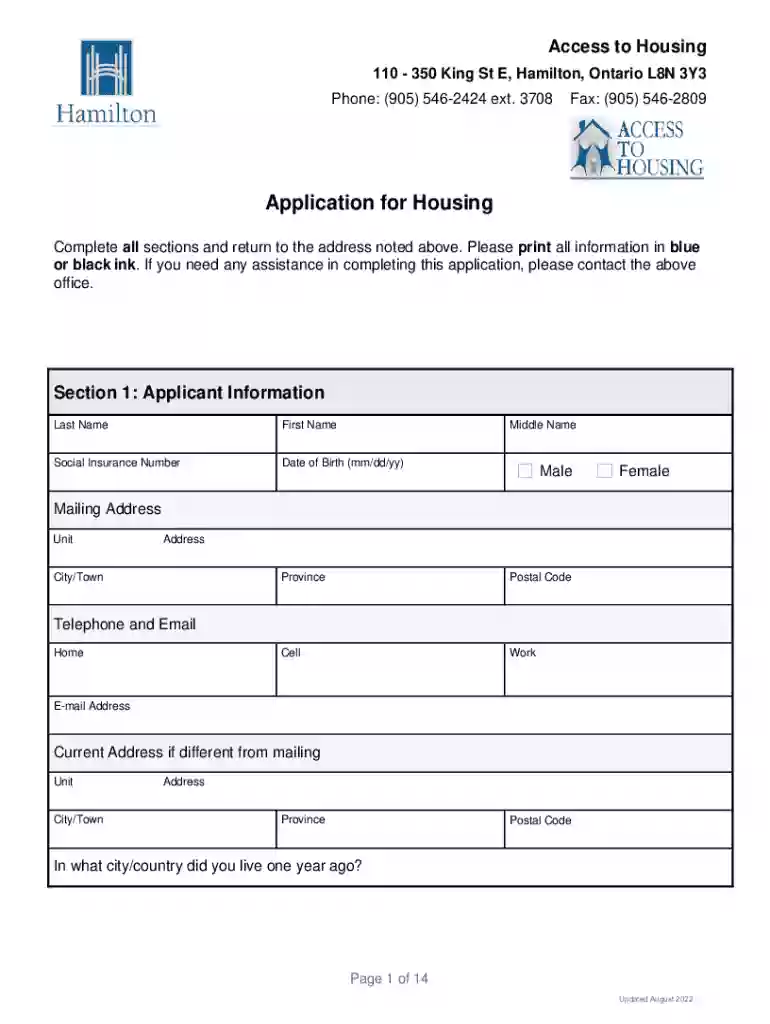
Definition and Purpose of Fillable Online Access to Housing Applications for Subsidized Housing
The Fillable Online Access to Housing Applications for Subsidized Housing serves as a crucial tool for individuals seeking affordable housing options. The primary intention of these applications is to streamline the process for those who qualify for housing assistance by enabling online submissions. This digital format helps applicants provide necessary information efficiently while reducing paperwork and processing time.
Key Features and Benefits
- Accessibility: By offering a fillable online format, the application is more accessible to individuals who may not have the ability to visit an office or submit a paper form.
- Efficiency: Digital submissions can be processed more quickly than paper versions, leading to faster responses for applicants.
- Error Reduction: Built-in checks can promptly identify errors or missing information, minimizing the chances of incomplete applications.
- Convenience: Applicants can submit forms at any time and from any location, facilitating wider reach and flexibility.
Steps to Complete the Application
Completing the Fillable Online Access to Housing Applications for Subsidized Housing involves several steps to ensure accurate and effective submission:
- Gather Necessary Documents: Before starting the form, applicants should collect all required documents, such as identification, income records, and current housing information.
- Access the Online Form: Visit the relevant housing authority's website to find and open the fillable form.
- Fill Out Personal Information: Enter personal details, including name, address, and contact information, ensuring accuracy to prevent delays.
- Provide Income Details: Fill in all fields related to income, employment, and any government assistance received.
- Detail Housing History: Complete sections concerning current and previous housing arrangements, highlighting any special circumstances.
- Attach Additional Documents: Use the platform's upload functionality to attach any supporting documents necessary for the application.
- Review and Submit: Double-check the entire form for completeness and accuracy before submitting it electronically.
Eligibility Criteria for Applicants
Eligibility for subsidized housing can vary based on location and specific housing program requirements. However, some general criteria commonly apply:

- Income Limits: Applicants must meet specific income thresholds, often determined by the area's median income, to qualify for subsidies.
- Residency Requirements: Demonstrating residency in the area where housing assistance is sought is typically necessary.
- Family Size and Composition: The size and makeup of the household can influence eligibility and the amount of assistance provided.
- Background Checks: Some programs may require background checks, verifying an applicant's rental and legal history.
Special Considerations
- Priority Groups: Certain applicants, such as veterans, families with children, or those experiencing homelessness, may receive priority.
- Documentation: Ensure all documentation is current and accurately reflects the household's situation to avoid delays.
How to Obtain the Fillable Form
Accessing the fillable application form is usually straightforward:
- Official Websites: The form is typically available on the official website of the local housing authority or other government platforms dedicated to housing assistance.
- Community Centers: Information on accessing online applications may also be available at local libraries or community centers that provide public internet access.
- Support Services: Various nonprofit organizations and housing advocacy groups can guide applicants on accessing and completing the form online.
Form Submission Methods
The submission of the Fillable Online Access to Housing Applications for Subsidized Housing can generally be completed through multiple channels:
- Online Submission: The most common method, allowing direct submission through the housing authority's website.
- Email Submission: Some authorities may accept the completed form via email, especially if additional documentation is required.
- In-Person Assistance: While the form is digital, applicants requiring assistance can often obtain help at the authority's office before submitting the form electronically.
Considerations for Each Method
- Online Submission: Fast and efficient, but requires a stable internet connection.
- Email Submission: Useful for attaching large files, but ensure proper file format and size limitations are met.
- In-Person Help: Ideal for those needing technical assistance but may be limited by office hours and availability.
Key Elements of the Application
Comprehending the critical parts of the form can help applicants ensure they complete it accurately:
- Personal Information Section: Accurate contact details are crucial for communication throughout the application process.
- Income Documentation: Clear and thorough income records must match the claims on the form.
- Housing Preferences: Specify any preferences or requirements, such as location or disability accommodations.
- Supporting Documents: Any document requests should be adhered to closely, with clear, legible copies provided.
Suggestions for Submission
- Consistency Across Forms: Cross-check information to ensure consistency if applying to multiple programs.
- Verification of Information: Validate details against official documents to mitigate errors.
Important Terms to Understand
Familiarity with specific terms can enhance an applicant's understanding of the form:
- Subsidized Housing: Government-assisted accommodation offered at reduced rent to qualified individuals.
- Eligibility: Criteria determining qualification for housing assistance.
- Median Income: The income level at which half earn more and half earn less, often used to set program limits.
- Priority Group: Categories of applicants who may receive preferential treatment during the application process.
Impact of Each Term
Understanding these terms is crucial in ensuring correct form completion and comprehending program specifics to accurately convey the household's needs and situation.
Legal Use and Compliance
The application must comply with all legal standards, ensuring the use of the data provided aligns with privacy laws and protection acts. Generally, applications for subsidized housing must:
- Adhere to Fair Housing Laws: Applicants should be aware of their rights under these laws to prevent discrimination.
- Ensure Data Security: Personal information provided in the application is protected under data security laws.
Compliance Requirements
- Non-Discrimination: All applicants must be treated equally regardless of race, nationality, gender, or disability.
- Data Privacy: All submitted data must be processed according to regulations such as the Privacy Act, ensuring confidentiality and security.
In summary, these detailed blocks explore the comprehensive processes, eligibility criteria, and legal requirements associated with the Fillable Online Access to Housing Applications for Subsidized. By understanding these in-depth aspects, individuals can navigate the housing assistance application process with greater confidence and accuracy.