
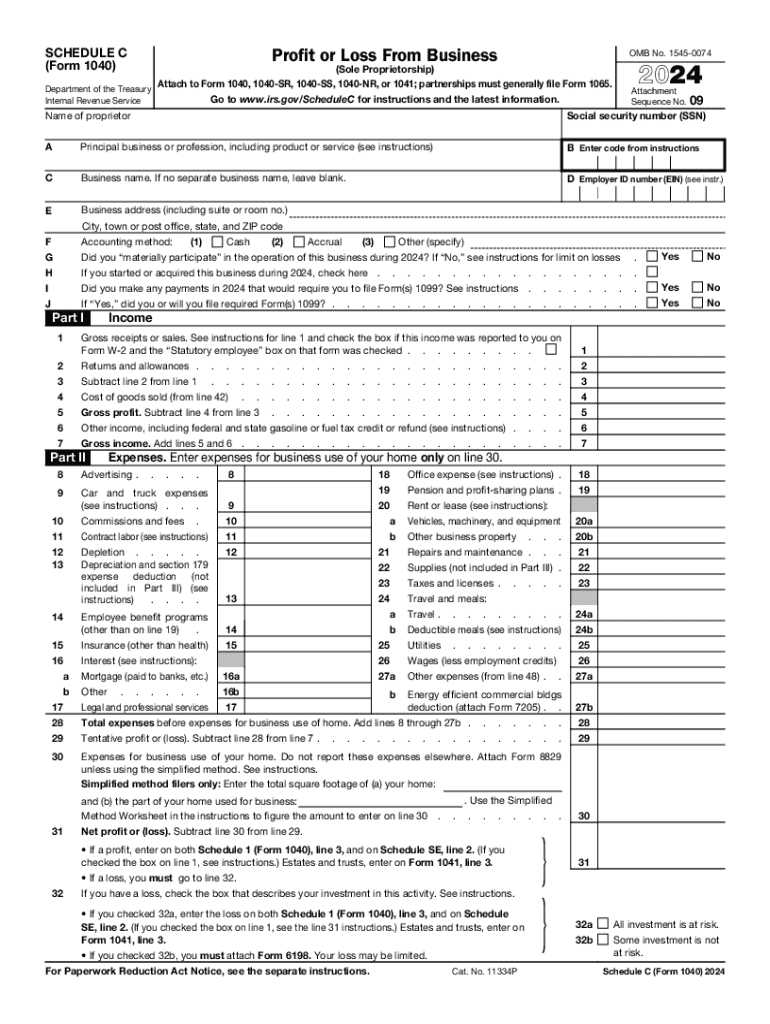







Definition & Purpose of the 2024 Form IRS 1040 - Schedule C
The 2024 Form IRS 1040 - Schedule C is a tax form utilized by sole proprietors to report their business income and expenses. It is an integral part of the IRS Form 1040, allowing individuals who operate a business as a sole proprietor or are engaged in a trade to detail their profit or loss over the tax year. Filling out this form accurately can help taxpayers maximize deductions and ensure compliance with federal tax regulations.
- Who Should Use It?: Primarily, sole proprietors and single-member LLCs use this form. Independent contractors, freelancers, and other self-employed individuals will find it essential for reporting their business activities.
- Key Features: The form includes sections for declaring income from sales or services, identifying costs of goods sold, listing operating expenses, and calculating net profit or loss.
How to Use the 2024 Form IRS 1040 - Schedule C Online
Utilizing DocHub to fill the 2024 Form IRS 1040 - Schedule C online streamlines the process, offering a user-friendly platform for completing and submitting your tax documentation.
-
Accessing the Form:
- Log in to your DocHub account.
- Upload the Schedule C form by importing it directly from your computer or connecting it from cloud storage services such as Google Drive.
-
Editing and Completing the Form:
- Use DocHub's intuitive editing tools to enter your business income and expenses directly into the form. Add text where required and ensure each section is accurately filled.
- Insert checkboxes or dropdowns for sections like accounting methods if the form structure demands it.
-
Saving and Submitting:
- Once complete, save your edited form within DocHub. You can then export it to your preferred cloud storage or directly download it to your device.
- Choose whether to submit your form online through e-file options or print the completed document for postal mailing.
Steps to Complete the 2024 Form IRS 1040 - Schedule C
Completing the 2024 Schedule C involves several detailed steps to ensure accuracy and compliance:
-
Gather Essential Documents:
- Collect all necessary records of income, such as invoices and bank statements.
- Have receipts for deductible expenses like office supplies, utilities, and business insurance at hand.
-
Enter Identification Information:
- Fill in your name, Social Security Number, and business information, including the business type and product/service offered.
-
Report Income:
- Input earnings from all business activities. This includes cash, checks, and credit card payments received during the tax year.
-
Calculate Cost of Goods Sold:
- If applicable, compute the total cost incurred for goods sold during the year. This encompasses costs of raw materials, direct labor, and manufacturing overhead.
-
Deduct Business Expenses:
- Accurately detail deductible business expenses. Categories include office expenses, advertising, transportation, home office deductions, and more.
-
Final Review and Signature:
- Carefully review the entire form for accuracy. Sign the document electronically on DocHub to finalize the completion process before submission.
Key Elements of the 2024 Form IRS 1040 - Schedule C
Knowing the form’s structure can aid in understanding its completion requirements:
- Part I - Income: Record all gross receipts or sales, returns, and allowances.
- Part II - Expenses: Identify common deductions, ranging from wages to rent and depreciation.
- Part III - Cost of Goods Sold: Particularly for businesses that sell products, involving inventory assessments.
- Part IV - Information on Your Vehicle: Deduction eligibility for vehicle usage related to business activities.
- Part V - Other Expenses: Miscellaneous deductible expenses not captured elsewhere in the form.
IRS Guidelines and Important Dates
Adhering to IRS guidelines ensures that the submission process for the 2024 Schedule C is as smooth as possible:
- Filing Deadline: The standard deadline aligns with individual tax returns, typically due by April 15, 2025.
- Amendments: Post-deadline amendments can be filed using IRS Form 1040-X if required.
- Guidelines: The IRS provides extensive instructions regarding eligible deductions and necessary documentation to provide comprehensive support during filing.
Examples of Using the 2024 Form IRS 1040 - Schedule C
- Freelancer: A photographer invoices for services, deducting travel and equipment costs.
- Online Retailer: Reports sales, deducts cost of goods sold, and claims deductions for website hosting and marketing.
- Consultant: Enters consulting fees as income and lists expenses like software subscriptions and professional memberships.
Required Documents for Accurate Filing
Providing robust documentation is crucial in substantiating claims within your Schedule C:
- Income Documentation: Client invoices, bank deposits, and PayPal or other payment gateway statements.
- Expense Receipts: Receipts for purchases like office supplies or software services.
- Mileage Log: For claiming vehicle usage, maintaining an annual log is critical for supporting dedications.
Penalties for Non-Compliance
Failing to accurately complete or timely file your Schedule C can incur severe penalties:
- Late Filing: Potential penalties increase with each month the return is late.
- Underpayment: Interest and fines apply for significant underreporting of income or misrepresented deductions.
- Audit Risks: Errors or ambiguities in Schedule C can trigger IRS audits, resulting in penalties if fraudulence is detected.




