
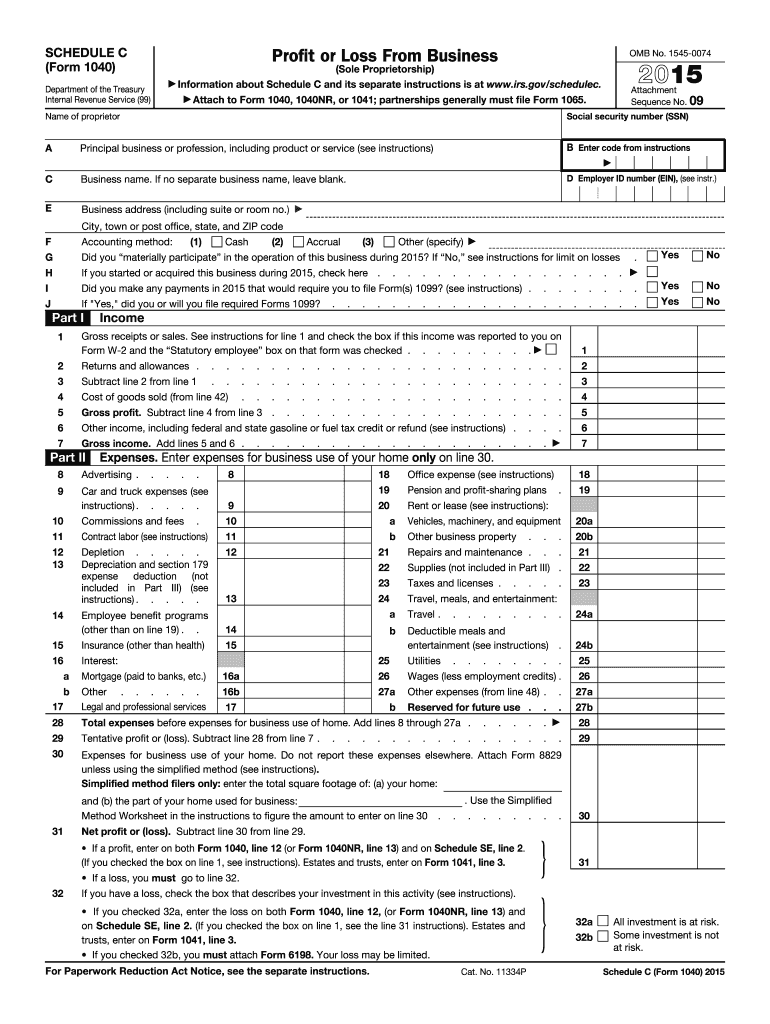







Definition and Purpose of the 2015 Schedule C Form 1040
The 2015 Schedule C (Form 1040) is a critical document used by sole proprietors to report their business income and expenses, ultimately determining their net profit or loss. This specific form is essential to tax filings as it lays out the financial details of a sole proprietorship, helping the IRS understand the financial performance of your business. The form includes sections that record income, expenses, cost of goods sold, and any business-related vehicle information. It requires details such as the proprietor's name, social security number, business address, and chosen accounting method. Understanding the purpose and sections of this form is fundamental for accurate tax reporting, preventing potential misreporting and penalties.
Steps to Complete the 2015 Schedule C Form 1040
Completing the 2015 Schedule C involves several detailed steps to ensure accuracy and compliance.
-
Gather Necessary Information: Begin by assembling all relevant financial records, including income statements, expense receipts, and any records of business use of vehicles.
-
Identify Your Gross Income: Accurately report all sources of revenue, including sales of goods or services. Include income you received in the form of service payments and recorded dividends.
-
Calculate Cost of Goods Sold (COGS): If your business involves purchasing goods for resale, calculate your COGS, including costs related to raw materials and inventory purchases.
-
Itemize Business Expenses: This section requires input of all business expenses, such as advertising, utilities, wages paid to employees, and any home office deductions.
-
Report Business Vehicle Use: Provide details about the use of vehicles for business purposes, ensuring accurate reporting of mileage and vehicle expense deductions.
-
Summarize Net Profit or Loss: Calculate the difference between total income and total expenses to determine the net profit or loss, which directly affects your taxable income.
Who Typically Uses the 2015 Schedule C Form 1040
The Schedule C is primarily utilized by sole proprietors and single-member LLCs who need to report their business income separately from personal income. This form is indispensable for freelancers, independent contractors, and small business owners who are legally considered self-employed. It is also utilized by gig economy workers, such as those providing services through platforms like Uber or Etsy, who earn income outside of traditional employment. Understanding who should file a Schedule C ensures proper tax compliance and benefits optimization that self-employment offers.


Key Elements of the 2015 Schedule C Form 1040
- Income Section: Captures all business revenue, including services rendered and goods sold.
- Expense Section: Detailed categorization of all costs incurred during the business operation.
- Cost of Goods Sold: Pertinent to those selling products, necessitating tracking from inventory to sales.
- Business Use of Home: Allows for calculating deductions if part of your home is used primarily for business.
- Part IV: Other Expenses: A section to report miscellaneous business costs not covered elsewhere on the form.
IRS Guidelines for the 2015 Schedule C Form 1040
The IRS provides crucial guidelines to assist taxpayers in accurately completing the Schedule C. These guidelines include detailed instructions on allowable deductions, proper accounting methods, and specific eligibility criteria for claiming business expenses. The IRS emphasizes the need for adequate record-keeping to substantiate claims made on the form. Taxpayers can visit the IRS website or consult the official instructions for Schedule C to gather detailed information about the proper completion of this form.
Required Documents for Filing the 2015 Schedule C Form 1040
- Profit and Loss Statement: Summarizes all income and expenses.
- Bank Statements: Tracks cash flow related to business expenditures.
- Receipts and Invoices: Documentary evidence for expenses claimed.
- Mileage Logs: If claiming vehicle expenses, maintain comprehensive mileage records.
- Inventory Records: Vital for calculating the cost of goods sold.
- Payroll Records: If paying employees, essential for collecting employment tax deductions.
Filing Deadlines and Important Dates for 2015 Schedule C
Typically, the Schedule C form is due on April 15 of the year following the tax year, aligning with the general tax filing deadline. If this date falls on a weekend or holiday, the deadline is adjusted to the next business day. Taxpayers may file for an extension using Form 4868, which grants an automatic six-month extension, pushing the deadline to October 15. It’s crucial to note that while the filing may be delayed, estimated taxes due must still be paid by the original deadline to avoid penalty and interest charges.
Penalties for Non-Compliance with the 2015 Schedule C Form 1040
Failing to accurately complete and timely submit the Form 1040 Schedule C may result in penalties. The IRS can impose fines for underpayment of taxes due to unreported income and disallowances of improper deductions. Negligence penalties may accompany even honest mistakes if proper documentation isn’t maintained. In severe cases, audits may be initiated. Ensuring diligent and precise reporting through the Schedule C eliminates risks of fines, penalties, or further legal implications by the IRS.




