What is the difference between I 140 and I-485?
The I-140 is an employer-filed petition establishing eligibility for an employment-based green card, essentially securing your spot in line, while the I-485 is your personal application to adjust status to a lawful permanent resident (green card holder) in the U.S., which can often be filed concurrently (at the same time) with the I-140 once your priority date is current. An approved I-140 doesnt grant status, but an approved I-485 results in the green card, with the I-485 review checking for admissibility and eligibility to adjust from your current visa. Form I-140 (Immigrant Petition for Alien Worker) Who Files: Your U.S. employer (or you, for certain categories like EB-1 NIW). Purpose: To show you meet the qualifications for an employment-based green card category (like EB-1, EB-2, EB-3) and that the sponsoring employer has the ability to pay you. Outcome: An approved I-140 establishes your eligibility and priority date but does not grant you legal status or work authorization in the U.S. Form I-485 (Application to Register Permanent Residence or Adjust Status) Who Files: The foreign national (you). Purpose: To apply for the green card itself, changing your status from a temporary visa (like H-1B) to permanent resident. When to File: After your I-140 is approved (or concurrently if your priority date is current). Outcome: Approval leads to getting your green card. Key Differences Relationship Sequence: I-140 comes first (establishes eligibility), followed by the I-485 (applies for the green card). Filing: Often filed together (concurrently) to speed up the process and get work authorization (EAD/AP) faster, as long as the visa quota isnt backlogged. Status: I-140 is about the job/petition; I-485 is about your personal adjustment to a green card holder. Status Maintenance: You must maintain your underlying non-immigrant status (e.g., H-1B) until the I-485 is approved, as I-140 approval alone doesnt give you the right to stay. AI can make mistakes, so double-check responsesWhat is the Difference Between Form I-140 and Form I-485?Jul 18, 2025DeelBEYOND THE LABOR CERTIFICATION: I-140 AND I-485 FORM I-485 APPLICATION TO ADJUST STATUS TO PERMANENT RESIDENT. For employment based permanent residency processes, the basis of a Younossi Law, PC
What is the purpose of the I-485 form?
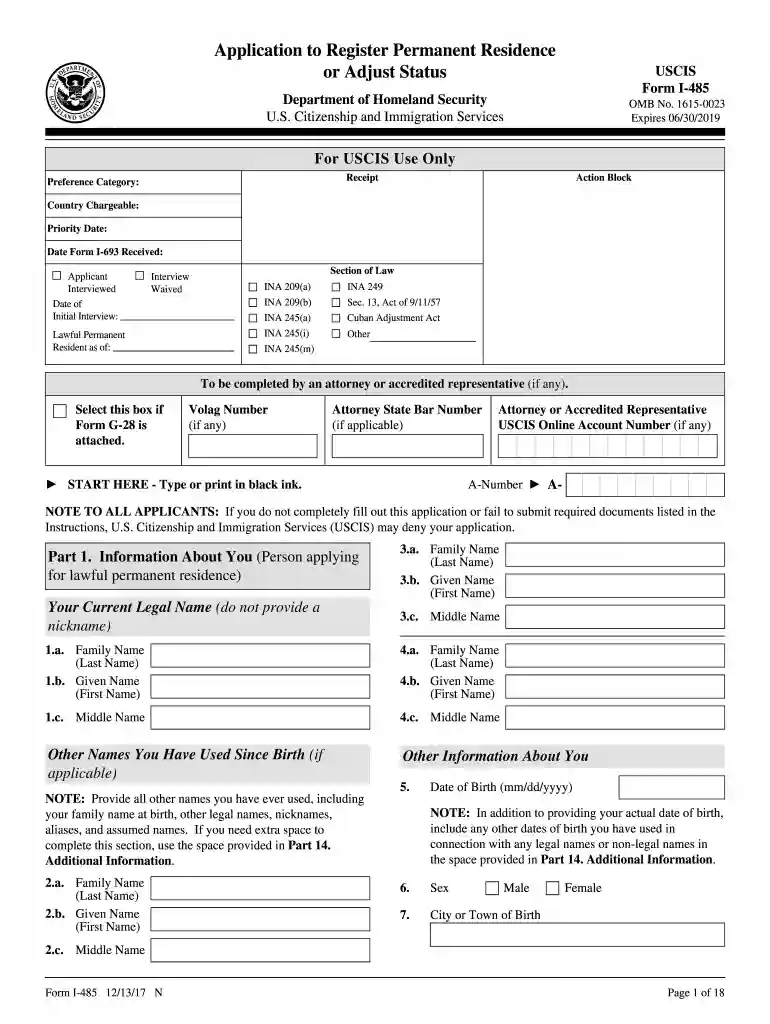
What Is the Purpose of Form I-485? Form I-485, Application to Register Permanent Residence or Adjust Status, is for a person in the United States to apply for lawful permanent resident status (often referred to as a Green Card).
How long does it take to get a green card with I-485?
The I-485 (Adjustment of Status) to Green Card timeline varies widely, from under a year to over two years (8 months to 42+ months), depending heavily on your category (family vs. employment), USCIS Service Center/Field Office, and current backlogs, with some family-based cases (immediate relatives) potentially quicker (9-15 months) than employment-based ones, but always requiring concurrent I-130/I-140 approval and visa availability. The process includes biometrics, potential interviews, and document review, with many factors like RFE responses or visa bulletin dates impacting delays. Key Factors Influencing Your Timeline: Application Type: Family-based (especially immediate relatives like spouses of U.S. citizens) can be faster than employment-based, according to this source. USCIS Service Center/Field Office: Processing times differ DocHubly by location (e.g., San Diego vs. Chicago vs. Houston). Visa Availability: For employment-based and preference-category family cases, you must wait for your priority date to become current on the monthly Visa Bulletin, notes this USCIS page. Concurrent Filing: Filing I-485 with I-130/I-140 can sometimes speed things up if a visa is immediately available. Case Complexity: Requests for Evidence (RFEs) for medicals or other documents, or issues with your background, extend the timeline. Typical Stages Times: Filing Biometrics: Receive receipt, attend biometrics (fingerprints, photo, signature) within weeks/months. Processing Review: USCIS reviews petitions, sometimes requests more evidence (medical RFE is common), and may schedule an interview. Interview (If Required): A 30-60 minute interview to confirm relationship/eligibility. Approval Card Production: After approval, the card is produced and mailed. How to Get Your Specific Estimate: USCIS Processing Times Tool: Use your form type (I-485), category, and office to check official estimates. Community Forums (e.g., Reddit r/USCIS): Search for similar timelines (e.g., your filing date, category) for real-world examples. AI can make mistakes, so double-check responsesProcessing Times - Case Status Online - USCISSelect your form, form category, and the office that is processing your case. Refer to your receipt notice to find your form, cateUSCIS (.gov)While Your Green Card Application Is Pending with USCISOct 30, 2025 Case Processing Times. You can check the average time it takes for a particular USCIS office to process a Form I-485. USCIS (.gov)
What is an I-485 form for?
Form I-485, Application to Register Permanent Residence or Adjust Status, is the primary form used by individuals already in the United States to apply for a U.S. Green Card, allowing them to become lawful permanent residents without having to apply from their home country. Its the final step for many, filed after an initial petition (like an I-130 for family or I-140 for employment) has been approved, and requires having a current priority date to be eligible. Key Uses of Form I-485: Green Card Application: Its the official request to U.S. Citizenship and Immigration Services (USCIS) to change your immigration status to a permanent resident (Green Card holder). Adjustment of Status: It allows you to adjust your nonimmigrant status (like a visa holder) to lawful permanent resident status while remaining in the U.S. Final Step in Process: For employment-based cases, its the final personal application after an employers petition (I-140). For family cases, it follows the I-130 petition. Who Files It: Individuals with family sponsorship (spouse, parent, child of a U.S. citizen/permanent resident). Employment-based immigrants (sponsored by an employer). Asylees, refugees, and others with specific humanitarian or special categories. What Happens After Filing: You receive legal status in the U.S. while its pending. You may be eligible for work authorization and travel documents (Advance Parole). After approval, you become a permanent resident and receive your physical Green Card in the mail. AI can make mistakes, so double-check responsesApplication to Register Permanent Residence or Adjust Status - USCISDec 29, 2025 Application to Register Permanent Residence or Adjust Status. I-485, Application to Register Permanent Residence or AdUSCIS (.gov)Form I-485, Instructions for Application to Register Permanent Residence What Is the Purpose of Form I-485? Form I-485, Application to Register Permanent Residence or Adjust Status, is for a person in thUSCIS (.gov)