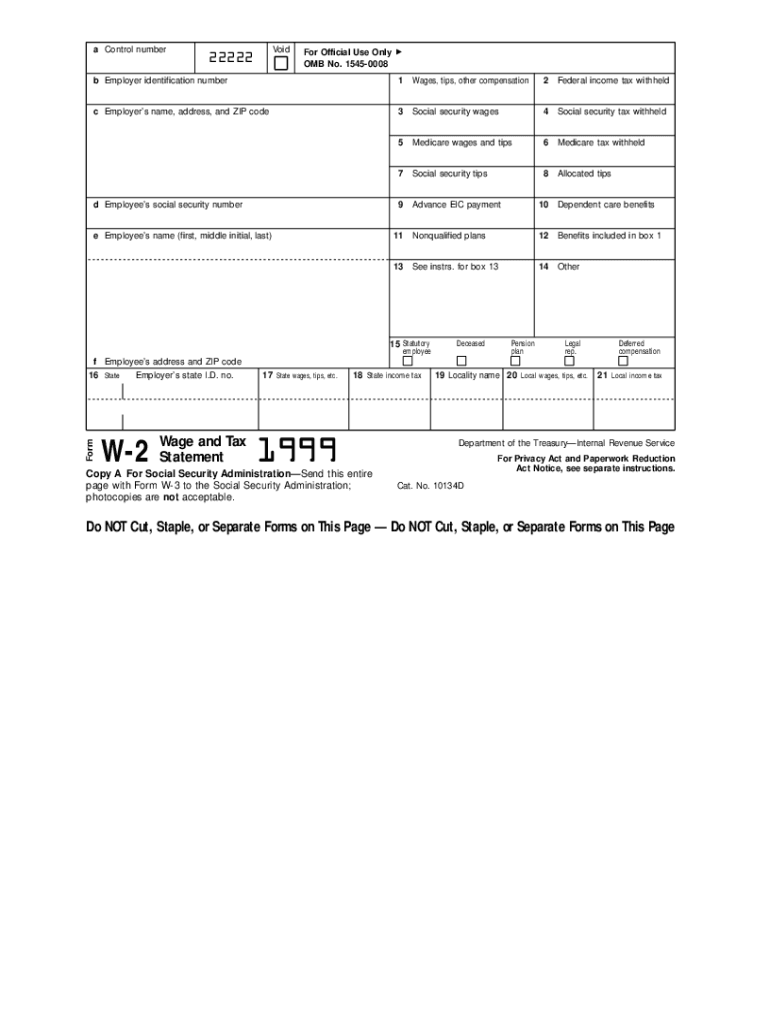







Definition and Purpose of the 1999 W-2 Form
The 1999 W-2 form, also known as the Wage and Tax Statement, is a critical document for reporting wages paid to employees and the taxes withheld for the tax year. Employers are responsible for issuing this form to each employee to report their annual income and the amount of federal, state, and other taxes withheld from their paychecks. This form is essential for employees to complete their tax returns accurately, ensuring they report their income and withholdings correctly.
How to Use the 1999 W-2 Form
The W-2 form serves multiple functions. Employees use it to file their federal and state tax returns, report earnings, and determine eligibility for various tax credits. For employers, the form communicates employee earnings and tax withholdings to the Internal Revenue Service (IRS) and corresponding state tax agencies. Additionally, the W-2 form helps verify income for purposes such as loan applications or governmental assistance programs.
How to Obtain the 1999 W-2 Form
Employees typically receive a W-2 form from their employer by the end of January following the tax year. If this is not the case, employees should contact their employer's human resources or payroll department to request a copy. Employers are also required to file W-2 forms with the Social Security Administration (SSA) and the IRS. Employees may use online services such as DocHub to safely import a scanned copy of their W-2 form for easy accessibility and management.
Steps to Complete the 1999 W-2 Form
- Employee Information: Ensure the employee’s name, address, and Social Security Number are accurate.
- Employer Information: Double-check the employer’s name, address, and Employer Identification Number (EIN).
- Wage Details: Fill in the employee's total wages, tips, and other compensation earned during the tax year.
- Tax Withholdings: Record the federal income tax withheld, as well as Social Security and Medicare withholdings.
- Additional Information: Include state and local taxes withheld, and any dependent care benefits, if applicable.
Ensure all these sections are thorough to prevent delays in tax processing or filing mistakes.
Legal Use of the 1999 W-2 Form
The legal framework around the W-2 form necessitates its accurate and timely issuance by employers. It adheres to IRS regulations on reporting employees' wage and tax information. Employers are obligated to provide this form by January 31 of the following year and submit copies to the SSA and IRS, which track individual earnings and tax contributions.
Important Terms Related to the 1999 W-2 Form
- Wages: Total income, including bonuses and other compensation.
- Withholdings: Amount taken from paychecks for taxes.
- FICA: Federal Insurance Contributions Act taxes, encompassing Social Security and Medicare.
Understanding these terms helps employees and employers manage tax responsibilities effectively.
IRS Guidelines for the 1999 W-2 Form
The IRS mandates all employers to report wages using the W-2 form. Guidance documents specify how to fill out and distribute the form, error correction procedures, and the submission process for the IRS and SSA. Compliance with these guidelines ensures proper tax reporting and helps avoid penalties.
Filing Deadlines and Important Dates for the 1999 W-2 Form
Employers must distribute W-2 forms to employees by January 31, 2000. The same deadline applies for filing copies A and D with the SSA. Missing these deadlines can result in penalties unless reasonable cause for delay is shown.
Digital vs. Paper Version of the 1999 W-2 Form
The digitization of tax forms offers numerous advantages. Digitally managed forms like those you can handle via DocHub enable easier access, faster corrections, and simplified sharing. Digital versions also reduce the risk of losing paperwork and support instant filing, enhancing efficiency for both employers and employees. However, a paper version remains available for those who prefer traditional methods or lack digital access.
Penalties for Non-Compliance with the 1999 W-2 Form Requirements
Failure to comply with W-2 form requirements can lead to significant fines. Employers may face penalties for missing the issuance deadline, providing inaccurate information, or failing to submit the necessary forms to the IRS and SSA. Timeliness and accuracy are crucial to avoiding these penalties.
Software Compatibility for Managing the 1999 W-2 Form
Software solutions like TurboTax and QuickBooks are designed to simplify tax preparation tasks. They offer functionalities for importing W-2 forms directly, calculating taxes owed, and ensuring all relevant information is included in tax submissions. Using these tools in conjunction with document management platforms like DocHub streamlines the entire process, from receiving a W-2 form to filing a tax return.
State-by-State Differences in W-2 Form Reporting
While the core W-2 form requirements remain consistent nationwide, states may impose additional obligations, such as supplementary forms or varying deadlines for state tax submissions. Employers must understand and adhere to these state-specific requirements to ensure compliance and accurate tax reporting for their employees.
Practical Examples of Using the 1999 W-2 Form
Employees can leverage their W-2 form for more than just filing taxes. For instance, it can serve as income proof when applying for mortgages or calculating eligibility for student loans. Employers can use it to analyze payroll trends, assess tax liabilities, and maintain compliance with reporting requirements.