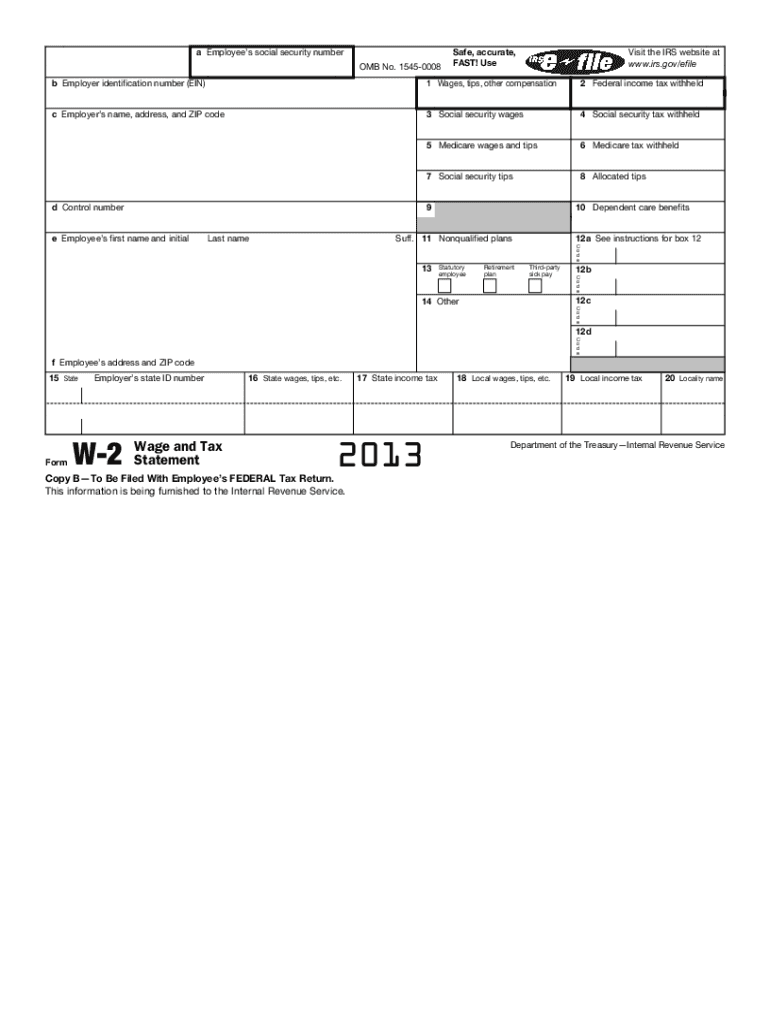







Understanding the OMB No.
The OMB No. is associated with the W-2 Form, a critical document used by employers in the United States to report wages paid to employees and the taxes withheld from their paychecks. This form serves as a wage and tax statement, providing essential information required for employees to complete their individual income tax returns.
How to Use the W-2 Form
Employers are responsible for completing and distributing W-2 Forms to their employees each year. The form includes the employee's wage information and details of taxes withheld throughout the year. Employees use this information to file their federal and state income tax returns. Accurate reporting on the W-2 is crucial, as discrepancies can lead to tax filing errors or audits.
How to Obtain the W-2 Form
Employers generate and provide W-2 Forms to employees by January 31 of each year. Employees should receive a copy of their W-2 if they had taxable income during the previous calendar year. If an employee does not receive their W-2, they should contact their employer or the IRS to resolve the issue.
Steps to Complete the W-2 Form
- Gather Employer Information: Include the employer's name, address, and Employer Identification Number (EIN).
- Employee Details: Input the employee's Social Security Number (SSN) and contact information.
- Income Reporting: Enter the total wages, tips, and other compensation paid to the employee.
- Tax Withholding: Record federal income tax withheld, Social Security tax withheld, and Medicare tax withheld.
- State and Local Taxes: If applicable, report state income tax withheld and other local taxes.
- Distribute Copies: Provide the employee with copies of the completed W-2 for filing with their tax returns.
Who Typically Uses the W-2 Form
The W-2 Form is primarily used by employers in various business structures, including corporations, partnerships, and sole proprietorships, to report earnings and tax withholdings of employees. Individual employees use the W-2 to file their taxes, making it crucial for anyone who has had income tax withheld from their salary.


Key Elements of the W-2 Form
- Part A: Contains information sent to the Social Security Administration (SSA).
- Part B: For the employee’s federal tax return filing.
- Part C: For the employee’s state tax return filing if applicable.
- Each W-2 Form section includes specific fields to accurately reflect wages, tips, compensation, and taxes withheld.
IRS Guidelines
The Internal Revenue Service (IRS) mandates employers to file W-2 Forms by January 31 each year for the previous tax year. This ensures that employees' earnings and tax withholdings are accurately reported, facilitating proper tax filing. Employers must follow these guidelines to avoid penalties and ensure compliance with federal tax laws.
Filing Deadlines and Important Dates
Employers must submit W-2 Forms to their employees and the Social Security Administration by January 31 each year. Non-compliance can result in penalties. Employees should file their W-2-based tax returns by April 15 unless a different deadline is announced by the IRS for that tax year.
Required Documents
To accurately complete the W-2, employers need the following:
- Employer Identification Number (EIN)
- Employee's Social Security Number (SSN)
- Payroll records detailing wages, tips, and taxes withheld
Form Submission Methods
Employers can submit W-2s electronically through the Social Security Administration's online system or via paper forms sent through the mail. Electronic filing is recommended as it reduces errors and expedites processing. Employees typically receive paper copies, although some employers also provide electronic copies.
Digital vs. Paper Version
Employers have the option to submit and distribute W-2 Forms electronically, provided they comply with specific IRS requirements for electronic delivery. Electronic distribution can streamline the process and ensure timely receipt by employees, but it's important to ensure employees consent to receive their W-2s in this format.
Penalties for Non-Compliance
Failure to provide accurate and timely W-2 Forms can lead to significant penalties. These penalties apply per form, increasing based on the duration of the delay or the extent of inaccuracies. Employers should prioritize accuracy and timeliness to avoid financial penalties.
Examples of Using the W-2 Form
Employers in various industries, from retail and hospitality to professional services, utilize W-2 Forms to comply with federal tax reporting requirements. An employee in the tech industry, for instance, will receive this form indicating their annual earnings and tax withholdings to file federal and state taxes accurately.