
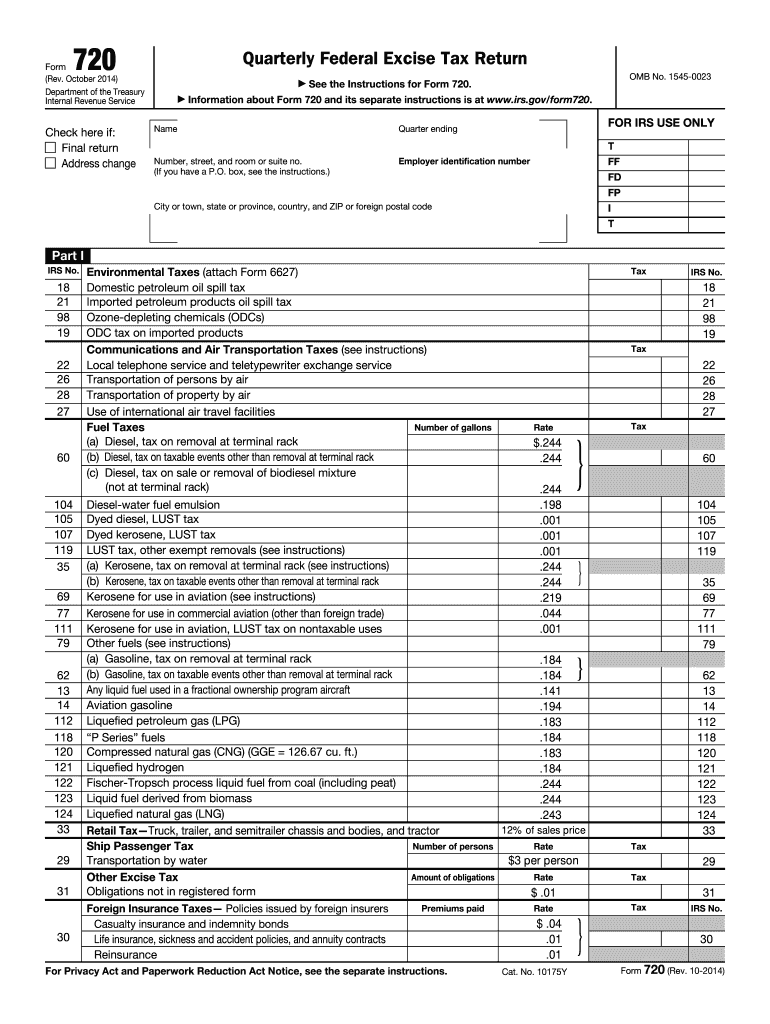







Definition and Purpose of the 2014 IRS Form 720
The 2014 IRS Form 720, known as the Quarterly Federal Excise Tax Return, is designed for businesses to report and pay federal excise taxes on specific goods and services. These taxes cover areas such as environmental taxes, fuel taxes, and communication and air transportation taxes. Businesses are required to report details like taxable amounts, applicable tax rates, and any claims for refunds or credits on this form.
Key Elements of Form 720
Form 720 comprises several sections tailored to different types of excise taxes. Key elements include:
- Tax Categories: Environmental, communications, and transportation taxes are among the various segments covered.
- Tax Credits and Refunds: Sections for reporting overpayments and claiming refunds.
- Payment Schedules: Details about the quarterly reporting and payment timelines.
Steps to Complete the 720 Form
Completing the IRS Form 720 involves several critical steps that ensure accuracy and compliance:
- Identify Tax Liabilities: Determine which excise taxes apply to your business activities during the quarter.
- Calculate Tax Amounts: Use the relevant tax rates to calculate the amounts owed for each tax category.
- Fill Out the Form: Enter the calculated amounts in the appropriate sections. Include any credits or refunds you're eligible for.
- Review and Attach Documents: Ensure all sections are completed accurately and attach any supporting documentation required.
- Submit the Form: E-filing is recommended for efficiency, but paper submissions are also acceptable.
Key Documents Needed
- Product inventories
- Previous tax returns if applicable
- Documentation of credits and claims
Filing Deadlines and Important Dates
Businesses must adhere to established deadlines to avoid penalties. The Form 720 is due quarterly, with the following submission deadlines:
- First Quarter: Due April 30
- Second Quarter: Due July 31
- Third Quarter: Due October 31
- Fourth Quarter: Due January 31 of the following year
Missing these deadlines can result in penalties or interest on outstanding amounts, so it's crucial to mark these dates on your calendar and plan ahead.
How to Obtain and Submit the 2014 Form 720
Acquiring the Form
The 2014 Form 720 can be acquired in several ways:
- IRS Website: Downloadable as a PDF from the IRS official website.
- Local IRS Office: Available in printed form from any IRS office.
- Tax Software Programs: Integrated in tax preparation programs such as TurboTax or QuickBooks for streamlined access.
Submission Methods
- Online Filing: The IRS e-filing platform allows you to submit the form electronically, which speeds up processing times.
- Mail: Forms can be mailed to the address specified by the IRS for your location.
- In-Person: Submission at a local IRS office is available but may be subject to specific guidelines or restrictions.
Legal Use and Compliance
The IRS Form 720 is legally mandated for any businesses engaged in activities subject to federal excise taxes. Compliance requires adherence to guidelines specified on the form and those outlined by the IRS.
Potential Penalties
Failing to file or incorrectly completing the form can result in:
- Monetary Fines: Financial penalties for late or incorrect filings.
- Interest Accrual: On unpaid taxes.
- Legal Consequences: In severe cases, legal action may be taken by the IRS against non-compliant entities.
Who Typically Uses the 2014 720 Form
The form is commonly used across various business sectors, including:
- Manufacturing Companies: Particularly those producing goods subject to specific excise taxes.
- Transportation Enterprises: Entities operating fleets or commercial vehicles subject to fuel taxes.
- Communication Service Providers: Such as companies offering telephone or broadcast services.
These entities must regularly complete Form 720 to remain compliant with federal tax regulations.


Examples and Scenarios Using the Form
Real-World Application
- Aviation Company: This business must report air transportation taxes based on passenger counts and ticket sales.
- Oil Distributors: Required to pay environmental taxes related to the production and distribution of oil products.
- Telecommunication Firms: They report communication taxes for services offered to customers.
These scenarios illustrate how varied the usage of Form 720 can be, depending on the industry and the specific excise tax obligations of the business.
Digital vs. Paper Version
Considerations for Choosing a Format
- Digital Advantages: E-filing offers faster processing and confirmation of receipt, minimizes errors, and is environmentally friendly.
- Paper Submission: May be preferred by businesses with limited digital access or those comfortable with traditional filing methods.
Software Compatibility for Form 720
Many businesses opt to use accounting software for easier management and submission of Form 720. Programs like TurboTax and QuickBooks offer:
- Integration: Simplified form completion through data importation from existing tax records.
- Error Checking: Reduces potential mistakes with in-built validation tools.
- Analysis Tools: Provide insights into potential tax liabilities and credits.
Employing these tools can enhance efficiency and accuracy in preparing the Form 720.




