
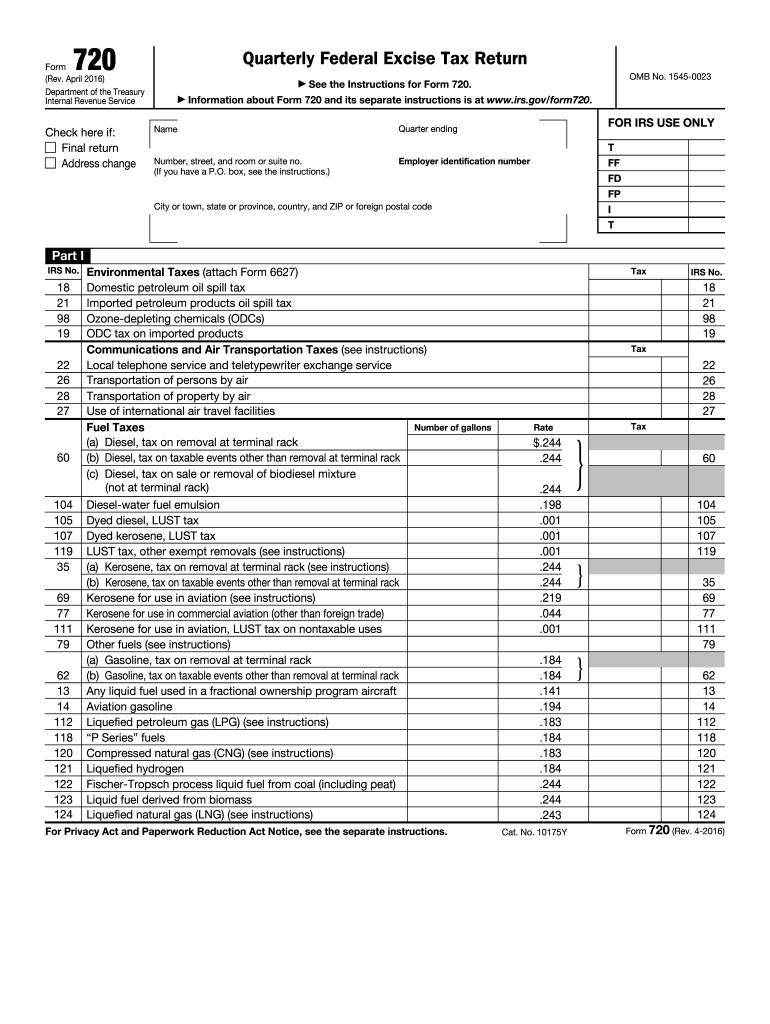







Definition & Purpose of Form 720
Form 720, the Quarterly Federal Excise Tax Return, is utilized by businesses to report and pay federal excise taxes on designated goods and services. This form is issued by the Internal Revenue Service (IRS) and applies to a range of excise taxes including environmental taxes, fuel taxes, and communication and transportation taxes. Submission of Form 720 ensures compliance with federal tax obligations specific to these categories. Understanding the purpose of Form 720 is essential for businesses involved in activities subject to federal excise taxes.
- Environmental Taxes: Applicable to businesses engaged in activities that produce significant environmental impacts.
- Fuel Taxes: Required for businesses involved in the distribution or sale of fuels subject to federal excise tax.
- Communication & Transportation Taxes: Cover taxes on certain communication services and air transportation.
How to Use Form 720
Effectively using Form 720 involves completing various sections to accurately report excise tax liabilities. The form is divided into several parts, each corresponding to a different category of taxes. Accuracy is vital to prevent discrepancies and potential penalties.
- Taxpayer Identification Details: Obtain or verify your taxpayer identification number (TIN).
- Tax Computation Schedules: Include all relevant computations for taxes owed.
- Claims for Refunds: Enter any eligible refunds or credits.
- Payment Instructions: Specify your payment method, ensuring compliance with IRS guidelines.
Steps to Complete Form 720
Accurate completion of Form 720 requires attention to detail and adherence to IRS instructions. Follow these steps for a successful submission:
- Gather Required Information: Collect all necessary data related to your excise tax obligations.
- Fill Out Identification Information: Complete the taxpayer identification section.
- Calculate Taxes Owed: Use the tax schedules on the form to compute the total taxes owed.
- File Claims for Credits: If applicable, list any claims for credits or refunds.
- Review and Submit: Double-check your entries for accuracy, sign, and submit as per instructions.
Key Elements of Form 720
- Tax Categories: Clear identification of applicable excise tax categories.
- Detailed Schedules: Accurate computation and entry of tax amounts based on business activities.
- Signature Line: Required for attesting to the accuracy of the submission.
Important Terms Related to Form 720
Understanding key terminology associated with Form 720 ensures accurate completion and compliance with the IRS.
- Excise Tax: Indirect tax on the sale or manufacturer of specific goods or services.
- Taxable Activities: Activities or transactions that trigger excise tax liability.
- TIN (Tax Identification Number): Unique number used by the IRS to track tax obligations.
IRS Guidelines for Form 720
Following IRS guidelines ensures compliance and reduces the risk of errors. These guidelines specify detailed instructions on form completion and submission.
- Quarterly Reporting: Form 720 must be filed for each quarter in which excise taxes are owed.
- Payment Methods: Includes electronic fund transfers or standard mail options.
- Record Keeping: Maintain comprehensive records of all transactions subject to excise taxes for up to six years.
Filing Deadlines and Important Dates
Adhering to filing deadlines is crucial to avoid penalties. Form 720 is due on the last day of the month following the end of the quarter for which you're reporting.
- First Quarter: Due April 30
- Second Quarter: Due July 31
- Third Quarter: Due October 31
- Fourth Quarter: Due January 31
Who Typically Uses Form 720
Form 720 is primarily utilized by businesses involved in activities subject to federal excise taxes.
- Fuel Distributors: Reporting on fuel-related excise taxes.
- Airline Companies: Complying with air transportation taxes.
- Communication Providers: Covering taxable communication services.
Penalties for Non-Compliance
Failure to correctly file Form 720 can result in significant penalties. These may include financial fines or increased scrutiny from the IRS, emphasizing the importance of timely and accurate filing.
- Late Filing Penalties: Imposed if the form is not submitted by the deadline.
- Accuracy-Related Penalties: Enforced for incorrect data entries or miscalculated tax amounts.
- Interest on Outstanding Taxes: Continual accrual until outstanding debts are settled.




