






Understanding IRS Form 720: Quarterly Federal Excise Tax Return
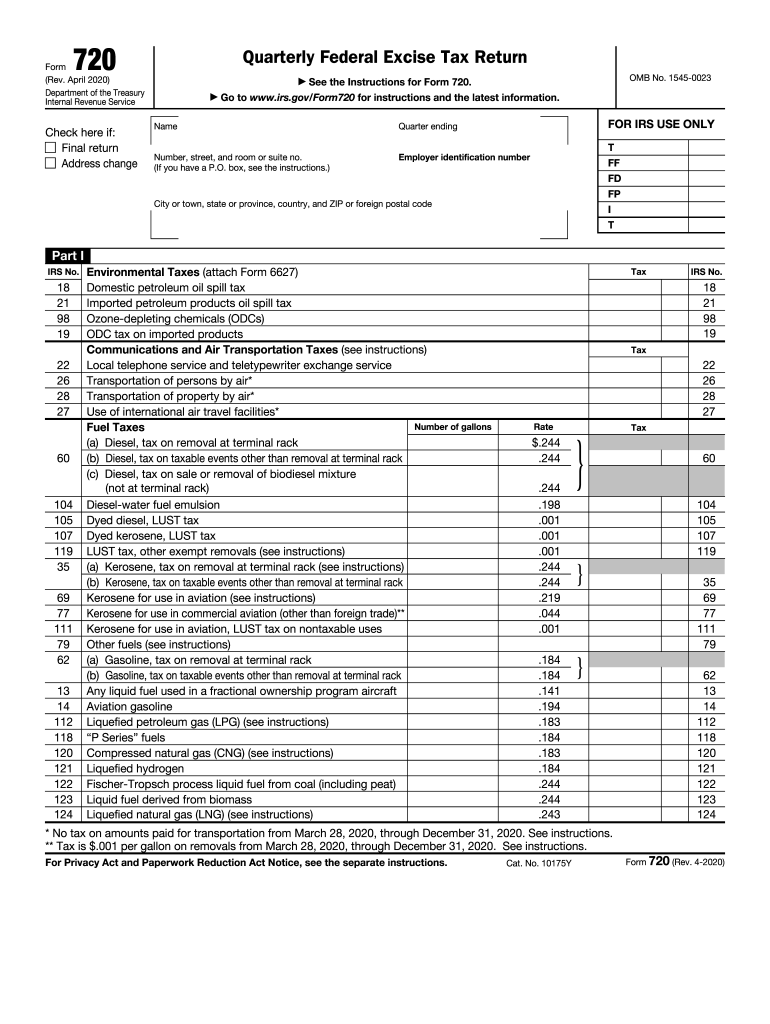
IRS Form 720, officially called the Quarterly Federal Excise Tax Return, is a critical document used by businesses to report and pay federal excise taxes. Excise taxes are special taxes imposed on specific goods and activities such as fuel, air transportation, and certain environmental taxes. This form ensures businesses remain compliant with federal tax regulations by providing detailed reporting of tax liabilities, claims for refunds, or credits.
Key Elements of IRS Form 720
The IRS Form 720 comprises various sections to accommodate diverse excise taxes. Notably, the form includes:
- Part I and II: These parts list different tax categories such as environmental taxes, communications and air transportation taxes, fuel taxes, and manufacturers' taxes. Detailed instructions within each part explain the specific tax you may be liable for.
- Schedule C: This section is used to claim refunds and indicate overpayments applied as credits towards other tax liabilities.
- Schedule T: Pertains to diesel and kerosene used in trains and other specified uses, if applicable.
How to Use IRS Form 720
Businesses fill out IRS Form 720 quarterly to report applicable excise taxes. This ensures timely payment and compliance with tax regulations. Detailed instructions and guidelines accompanying the form help businesses correctly report their excise tax liabilities.
- Determine Tax Obligations: Identify applicable taxes your business needs to report based on activities and products.
- Accurate Reporting: Fill in each relevant part with accurate tax amounts, ensuring calculations are verified.
- Claiming Refunds: Use the appropriate schedules for overpayments or adjustments, such as Schedule C.
How to Obtain IRS Form 720
IRS Form 720 can be obtained through various channels:
- IRS Website: Downloadable in PDF format from the official IRS website under the forms and publications section.
- Tax Software: Many tax preparation software options, like TurboTax and QuickBooks, integrate the form for digital filing.
- Local IRS Offices: Paper copies are available at local IRS offices for those preferring hard copies.
Steps to Complete IRS Form 720
Completing IRS Form 720 involves several key steps:
- Gather Required Documentation: Compile necessary records and documents related to excise tax liabilities.
- Fill Out the Form: Input tax amounts in the form sections, calculating taxes accurately.
- Attach Supporting Documentation: Include any necessary schedules, worksheets, and attachments that support tax entries.
- Review and Submit: Double-check entries for accuracy before submission, either electronically or via mail.
Filing Deadlines for IRS Form 720
Timely submission is crucial. IRS Form 720 must be filed quarterly by the last day of the month following the end of the calendar quarter. This means submissions are due April 30, July 31, October 31, and January 31 for the respective quarters.
Penalties for Non-Compliance
Failure to file IRS Form 720 or pay excise taxes on time can result in penalties and interest charges. Non-compliance can affect business operations, making it essential to adhere to filing deadlines and accuracy requirements.
Digital vs. Paper Version of IRS Form 720
IRS Form 720 can be filed electronically or on paper. The digital version allows for streamlined processing, enhanced accuracy through software checks, and faster confirmation of receipt. The paper version remains available for businesses preferring traditional methods.
Important Terms Related to IRS Form 720
Understanding excise tax terminology is crucial for accurate reporting:
- Excise Tax: Levied on specific goods, activities, or services.
- Taxpayer Identification Number (TIN): Required for filing any federal tax form.
- Quarterly Reporting: Periodic reporting required every three months.
By comprehending these terms and carefully following the guidelines, businesses can efficiently manage their tax responsibilities, avoiding penalties and ensuring smooth operational continuity.