







Definition and Meaning
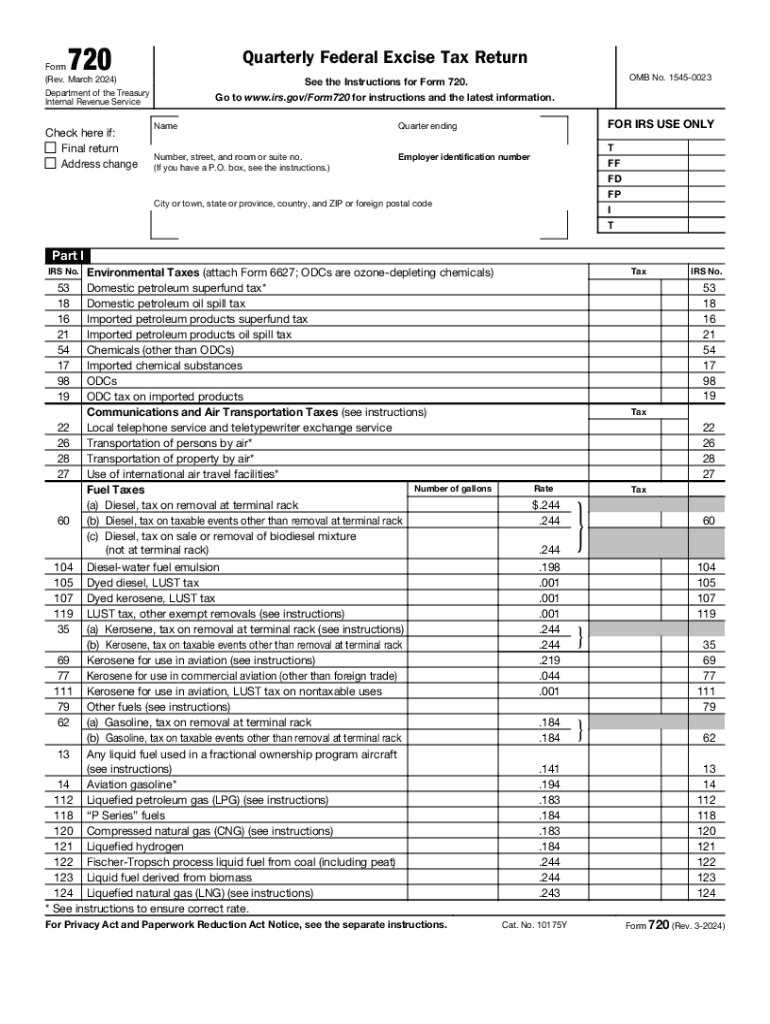
Form 720, officially known as the Quarterly Federal Excise Tax Return, is utilized by businesses in the United States to report and pay federal excise taxes. The March 2024 revision of Form 720 introduces comprehensive updates reflecting changes in tax laws and applicable rates. This form covers various excise taxes including environmental, fuel, and certain luxury services such as air transportation. By filing Form 720, businesses ensure compliance with federal tax obligations that apply to specific categories of goods and services.
How to Use the Form 720 (Rev March 2024)
Businesses use Form 720 on a quarterly basis to report and pay excise taxes owed from specified activities. The form is broken down into multiple parts, each designed to capture different tax categories. For example, Part I covers environmental taxes, whereas Part II focuses on communications and air transportation taxes. Businesses typically fill out only the sections applicable to their operations. It is crucial to follow the instructions that accompany Form 720 closely to ensure accurate reporting.
Steps to Complete the Form 720 (Rev March 2024)
- Gather Necessary Documents: Collect all relevant business records, including sales receipts, purchase invoices, and prior tax returns related to excise tax activities.
- Determine Applicable Taxes: Review the activities and ensure you understand which excise taxes apply to your company.
- Complete Part I and II: Utilize these sections to report environmental taxes and other specific taxes such as communication or transportation-related.
- Calculate Total Taxes Due: Sum the taxes from all applicable sections to determine the total excise tax liability for the quarter.
- Fill Out Payment Details: Enter how you plan to pay the taxes, either through electronic funds transfer, check, or money order.
- Review and Submit: Double-check all entries for accuracy and completeness before submitting the form to the IRS or through preferred submission protocols.
IRS Guidelines
The IRS provides specific guidelines to ensure precise compliance when filing Form 720. Taxpayers should adhere to these requirements to avoid errors and potential penalties. The guidelines include detailed instructions on calculating each type of excise tax, setting tax payment schedules, and ensuring correct use of tax codes. IRS guidelines also cover documentation requirements, how to handle special cases such as tax credits, and information on how to seek assistance when necessary.
Filing Deadlines and Important Dates
Form 720 must be filed quarterly, with deadlines on the last day of the month following the end of the previous calendar quarter: April 30 for Q1, July 31 for Q2, October 31 for Q3, and January 31 for Q4. Missing these deadlines can result in late payment penalties and interest charges on unpaid taxes. It is important for businesses to mark these dates and file well in advance to avoid last-minute issues or technical problems with submissions.
Form Submission Methods
Form 720 can be submitted via multiple methods to accommodate different business needs:
- Electronic Submission: The IRS provides e-filing services through its Modernized e-File (MeF) system for faster processing and confirmations.
- Mail: Physical copies can be mailed to designated IRS addresses. Ensure tracking the shipment to confirm receipt.
- In-Person: Although less common, direct delivery to local IRS offices may be an option for businesses requiring immediate submission verification.
Penalties for Non-Compliance
Failure to submit Form 720 by the deadlines, or inaccuracies in tax reporting, can lead to significant penalties. These penalties may include a percentage of the unpaid taxes as interest, or additional fines if non-compliance is deemed intentional. It is critical for businesses to maintain accuracy and timeliness in their filings to avoid these additional costs.
Digital vs. Paper Version
The digital version of Form 720 offers several advantages over the traditional paper method. Electronic filing is generally faster, reduces errors through automated checks, and provides immediate confirmation upon successful submission. Moreover, using digital formats for records management enhances organizational efficiency by enabling easier access and storage of tax documents. However, the paper version remains useful for those with limited digital access or for retaining original signed documentation.
Who Issues the Form
The Internal Revenue Service (IRS) is responsible for issuing Form 720. This governmental body oversees the management of federal taxes and ensures compliance through regular updates to tax forms and instructions. The IRS is not only the issuer but also the primary authority for assistance, amendments, and resolving disputes related to this form.




