
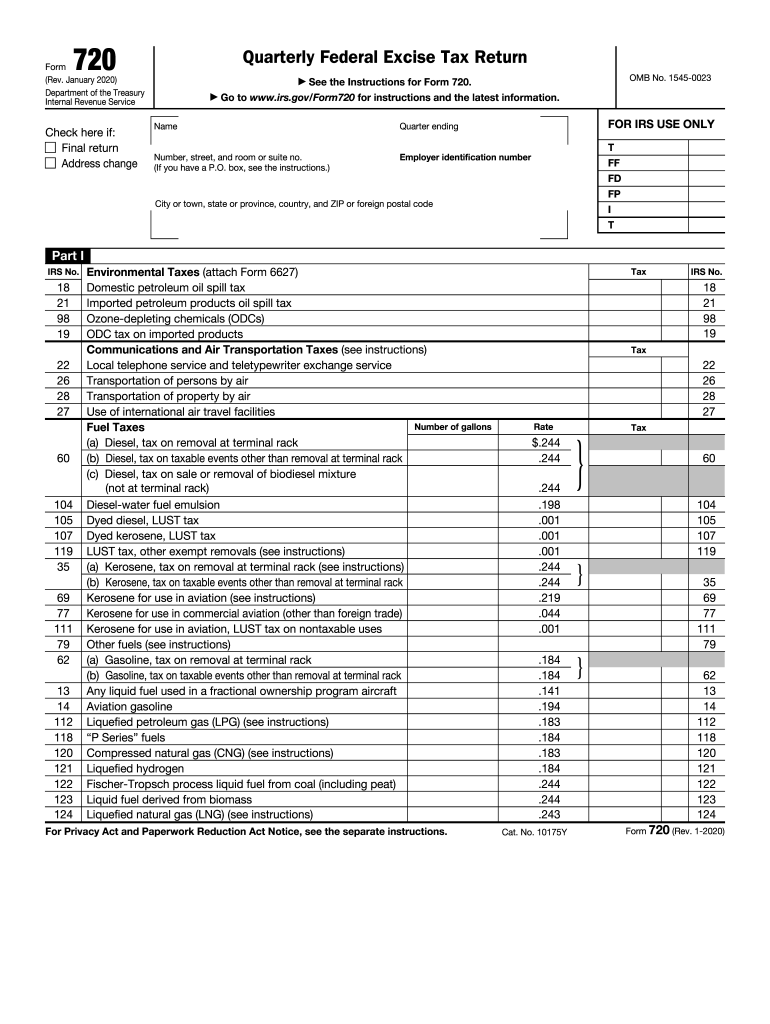







Definition and Purpose of Form 720
The IRS Form 720, also known as the Quarterly Federal Excise Tax Return, is primarily used by businesses in the United States to report and pay federal excise taxes. These taxes apply to a variety of goods and services including those related to environmental, fuel, communications, and transportation sectors. The main purpose of the form is to provide a standardized method for calculating and reporting excise taxes that companies owe to the federal government. It helps ensure compliance with tax regulations and supports the collection of government revenue needed for maintaining public services.
Key Sections of Form 720
Form 720 consists of multiple sections, each tailored to specific types of excise taxes:
- Environmental Taxes: This section deals with taxes imposed on products and activities that may harm the environment, such as chemicals, ozone-depleting substances, and certain fuels.
- Communications and Air Transportation Taxes: Businesses involved in providing communication services and air travel must report taxes in this section.
- Fuel Taxes: This involves reporting on the use and sale of fuels like gasoline, diesel, kerosene, and other specialized fuels which are subject to excise taxes.
- Manufacturers Taxes: Certain manufacturers, producers, or importers of specified goods need to report these taxes under Form 720.
Steps to Complete Form 720
Completing Form 720 involves a series of methodical steps to ensure accurate and compliant submission:
- Gather Required Information: Collect documents related to sales and services that are subject to federal excise taxes.
- Identify Liabilities: Determine which excise taxes apply to your business operations. Use Part I and Part II of the form to report the applicable taxes.
- Calculate Taxable Amounts: Based on the goods or services provided, calculate the total taxable amounts and use the instructions provided by the IRS for computing the taxes.
- Complete the Form: Fill in all required lines and sections of Form 720, ensuring that each tax type is accurately reported.
- Review and Submit: Double-check the form for accuracy before submission. You may file the form electronically or mail it to the IRS.
Filing Options
- Electronic Filing: Form 720 can be filed electronically using the IRS’s e-file system, which is efficient and fast.
- Paper Filing: Businesses can also choose to file by mail, sending completed forms to the IRS according to the instructions provided.
Who Should Use Form 720
Form 720 should be used by various business entities that are subject to federal excise taxes in the U.S. These include:
- Corporations and LLCs: Companies manufacturing, importing, or selling regulated goods.
- Partnerships and Sole Proprietorships: Small businesses and self-employed individuals with excise tax liabilities.
- Non-Profit Organizations: Certain non-profit operations required to file for specific activities subject to excise taxes.
It’s important for businesses to determine their filing obligation based on the nature of their business activities and confirm whether they are liable for any excise taxes.
Important Terms Related to Form 720
Understanding some important terms can help navigate Form 720:
- Excise Tax: A tax imposed on the sale of specific goods and services.
- Tax Period: The period over which taxes are calculated, usually quarterly.
- Liability: The amount of tax a business is obligated to pay for specific products or services.
- Exemptions: Circumstances where certain goods or services may be exempt from taxes.
IRS Guidelines and Regulations
The IRS provides comprehensive guidelines to ensure the correct filing of Form 720:
- Instructions for Form 720: These can be accessed on the IRS website or in printed form and detail each section of the form, the types of excise taxes, and how they should be computed.
- Payment Schedules: Guidelines specify when payments are due based on the filing period.
- Recordkeeping Requirements: Retain records of transactions and calculations used for preparing the form.
Penalties for Non-Compliance
Failing to file Form 720 accurately and on time may result in penalties. These include fines for late submission, underpayment of taxes, and errors in reporting. Businesses are encouraged to adhere strictly to IRS guidelines to avoid these penalties.
Application Process and Approval Time
Filing Form 720 does not require an approval process, but it involves a straightforward submission of accurate and complete information to the IRS:
- Quarterly Filing: Schedules are based on the calendar year, with specific deadlines for each quarter.
- Timely Submission: Forms must be submitted by the last day of the month following the end of each quarter (e.g., April 30 for Q1).
- Acknowledgment: Upon successful submission of the form, businesses may receive acknowledgment from the IRS.
Businesses should ensure they understand all aspects of Form 720 to comply effectively with federal tax obligations. Comprehensive steps, timely filing, and accurate reporting are crucial for businesses to maintain compliance and avoid penalties.




