






Definition & Meaning
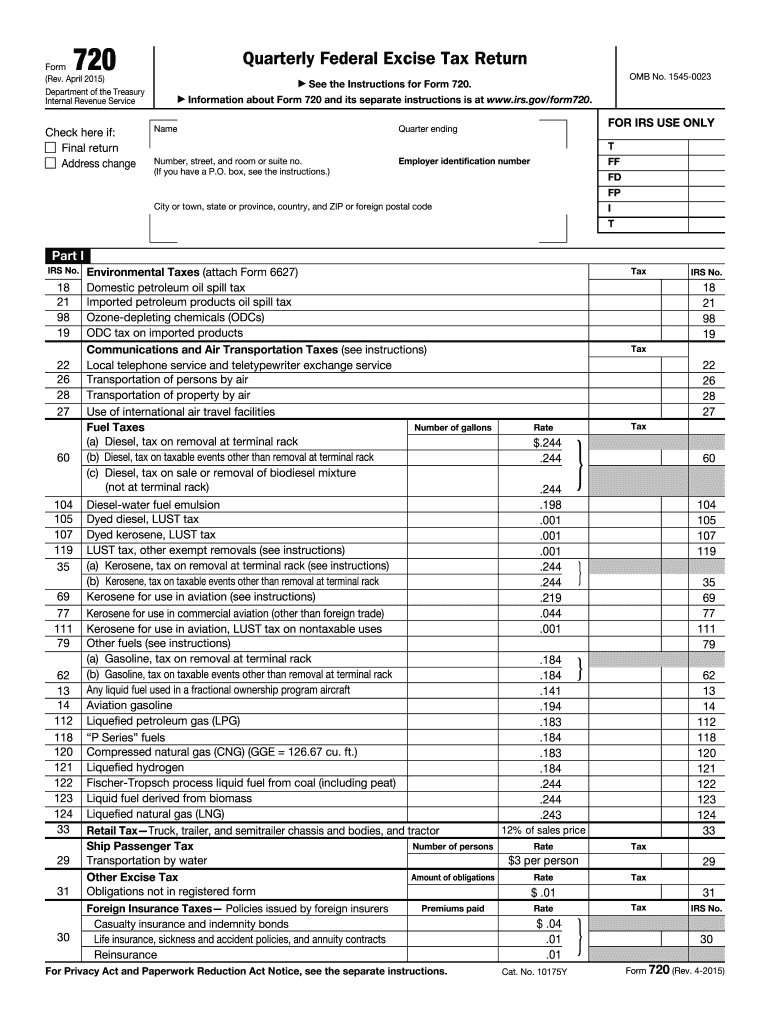
The IRS Form 720, known as the Quarterly Federal Excise Tax Return, is a crucial document used to report and pay various federal excise taxes. These taxes can include environmental taxes, communications taxes, fuel taxes, and other specific excise taxes applicable to businesses operating within the United States. The form comprises different sections where businesses can detail their tax liabilities and claim any applicable credits or refunds. Each tax type reported on the form corresponds to specific IRS codes for accurate processing.
How to Use the Form
Businesses need to report their excise taxes using the most current version of Form 720. For the 2015 tax year, the process involves identifying applicable tax categories, calculating dues, and completing the necessary schedules within the form. After calculating totals for each section, consolidate the figures on page one, which reflects the overall tax obligation. Use this summarized figure when making payments to the IRS. Retain copies of the completed form for record-keeping and potential future audit requirements.
Steps to Complete the Form
- Obtain the Form: Access the form from the official IRS website or a trusted tax software.
- Enter Business Information: Include essential details like business name, employer identification number (EIN), and address.
- Select Applicable Taxes: Review available tax categories and select those pertinent to your business activities.
- Calculate Taxes Due: Follow IRS guidelines to determine the tax amounts owed for each category. Use schedules found within the form for detailed calculations.
- Summarize Tax Liabilities: Add all tax amounts and input the total in the designated area on page one.
- Sign and Date the Form: An authorized person must complete the signature requirement to validate the form.
- Submit the Form & Payment: Send via preferred method (mail, electronic submission) along with any payments due.
Important Terms Related to Form
Federal Excise Tax
This tax includes duties on specific goods and services, often hidden in the price of the product or service. Understanding which excise taxes apply to your business operations can ensure compliance and avoid penalties.
Claims and Refunds
These involve claiming a return on taxes previously paid through the 720 form. Specific criteria must be met and documented within the form to process such claims.
Filing Deadlines / Important Dates
- Quarterly Due Dates: Form 720 is due by the last day of the month following the end of each quarter. For instance, for the first quarter ending March 31, the form is due by April 30.
- Extension Requests: While uncommon for excise taxes, if possible, file Form 7004 for any required extensions, ensuring deadlines are current to prevent penalties.
Key Elements of the Form
Taxpayer Information
Accurate completion of this section includes the business's EIN and contact details, critical for IRS communications and record linkage.
Schedule T
A detailed component for telecommunication taxes, which requires specific attention for businesses in this sector.
Software Compatibility
Form 720 is compatible with numerous tax software solutions, such as TurboTax or QuickBooks. This compatibility eases the completion process and aids accurate calculations, especially for businesses with multiple tax obligations. The software can assist in automating calculations and form submissions.
Penalties for Non-Compliance
Failing to submit Form 720 or incorrectly reporting taxes can result in penalties. These may include fines, interest on unpaid taxes, and potential audits. Correct and timely submission remains crucial for businesses to avoid these outcomes.
IRS Guidelines
The IRS provides comprehensive instructions for completing Form 720. Engage with these guidelines for specific tax types covered and compliance tips. Understanding these instructions ensures accurate filing and minimizes errors in reporting excise taxes.
Examples of Using the Form
Fuel Taxes
A transport company calculating the excise taxes on fuels like gasoline or diesel must use this form quarterly for precise tax reporting.
Communication Services
Entities providing long-distance telephone services will utilize this form to account for and remit applicable excise taxes accurately.
Environmental Taxes
Firms importing or producing goods liable for environmental taxes need to use this form to comply with IRS criteria, ensuring all environmental tax dues are properly calculated and paid.