




01. Edit your form 720 2019 online
Type text, add images, blackout confidential details, add comments, highlights and more.

Type text, add images, blackout confidential details, add comments, highlights and more.

Draw your signature, type it, upload its image, or use your mobile device as a signature pad.

Send 2019 form 720 via email, link, or fax. You can also download it, export it or print it out.
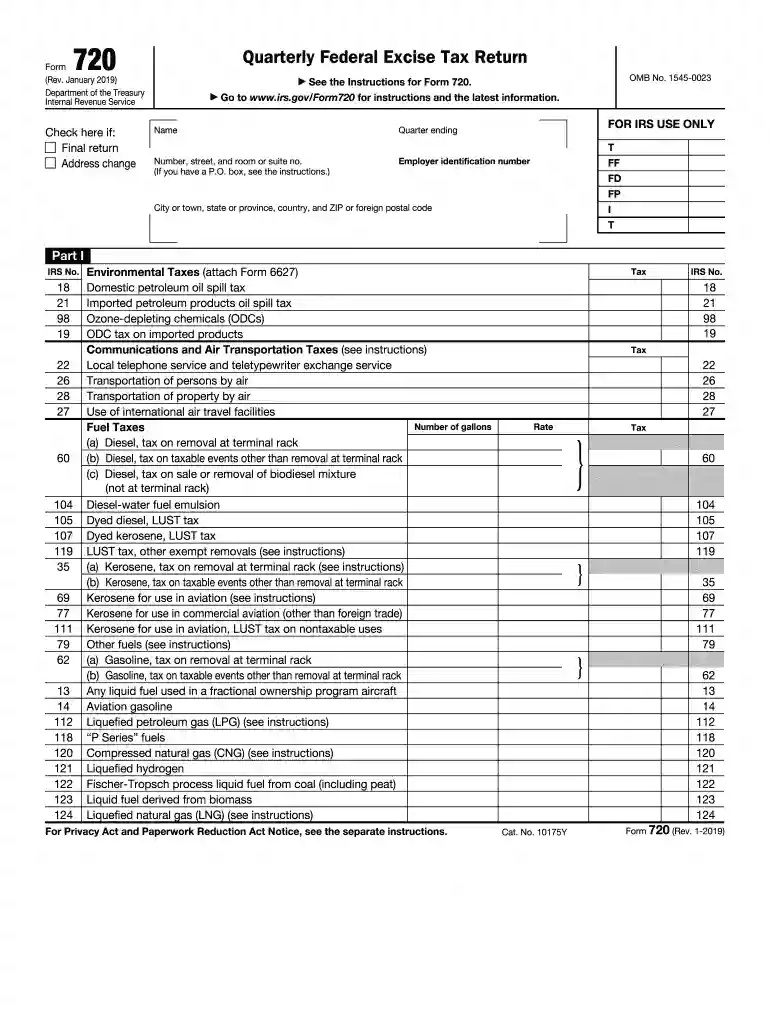
Form 720, officially known as the Quarterly Federal Excise Tax Return, is a critical document required for businesses in the United States to report and pay federal excise taxes. This form is utilized for taxes on specific types of goods and services including environmental and fuel taxes, among others. Understanding its purpose and application is essential for ensuring compliance with federal tax obligations.
Gather Relevant Information: Before filling out Form 720, collect all necessary documentation related to the goods and services subject to excise taxes. This includes records of sales, inventories, and expenditures related to taxable activities.
Select the Correct Part of the Form: Form 720 is divided into sections, each corresponding to different types of excise taxes. Identify and complete the sections relevant to your business activities. For example, fuel taxes have a distinct section from environmental taxes.
Calculate the Tax Amount: Use the provided instructions to accurately calculate the tax liabilities for each category of goods and services. This involves understanding the applicable tax rates and any potential exemptions.
Complete the Form: Fill out the form using the gathered data and calculations. Ensure all information is accurate to avoid complications during processing.
Review and Submit: Double-check all entered information for accuracy, sign the form, and choose your submission method. Submissions can be made electronically or by mail, depending on preference and convenience.
Tax Categories: Form 720 encompasses a broad range of tax categories, each with its specific reporting requirements. Key examples include:
Form Layout: The format of Form 720 is designed to facilitate straightforward reporting, with each tax category clearly delineated, allowing taxpayers to easily identify sections they need to complete.
Form 720 is required to be filed quarterly, aligning with the calendar quarters. It must be submitted by the end of the month following the quarter-end:
Adherence to these deadlines is critical to avoid penalties and ensure timely tax compliance.
Non-compliance with Form 720 obligations can result in significant penalties. If you fail to file by the due date, the IRS may impose a penalty proportional to the unpaid taxes. Additionally, interest on any unpaid tax further increases the liability. Businesses should prioritize accurate and timely filing to avoid these financial repercussions.
Form 720 is primarily used by businesses that produce, sell, or deal with goods and services subject to federal excise taxes. This includes industries such as:
Businesses from these sectors must regularly verify their activities against tax liabilities applicable to ensure compliance.
Excise Tax: A form of tax imposed on specific goods, services, or activities. It is distinct from other taxes such as income tax and is directly related to consumption.
Taxable Activities: Activities or transactions that involve goods or services subject to federal excise taxes.
Understanding these terms is essential for businesses to accurately complete the tax return and avoid misunderstanding their tax obligations.
The IRS provides comprehensive guidelines detailing the completion, submission, and correction processes for Form 720. Key dictates cover:
Consulting these guidelines regularly ensures up-to-date compliance with federal tax regulations.
Businesses can choose between filing Form 720 digitally or in paper form. The digital version offers several advantages:
Utilizing digital filing can enhance the efficiency and reliability of the tax-reporting process.
By providing comprehensive insights into Form 720, businesses can ensure they meet federal requirements effectively, thus avoiding potential penalties while managing their excise tax obligations with accuracy and confidence.
We've got more versions of the form 720 2019 form. Select the right form 720 2019 version from the list and start editing it straight away!
| Versions | Form popularity | Fillable & printable |
|---|---|---|
| 2025 | 4.5 Satisfied (21 Votes) | |
| 2025 | 4.5 Satisfied (23 Votes) | |
| 2024 | 4.2 Satisfied (28 Votes) | |
| 2024 | 4.3 Satisfied (26 Votes) | |
| 2023 | 4.6 Satisfied (31 Votes) | |
| 2023 | 4.4 Satisfied (58 Votes) | |
| 2022 | 4.1 Satisfied (22 Votes) | |
| 2022 | 4.8 Satisfied (140 Votes) | |
| 2021 | 4.3 Satisfied (170 Votes) | |
| 2021 | 4.4 Satisfied (97 Votes) | |
| 2020 | 4.2 Satisfied (117 Votes) | |
| 2020 | 4.4 Satisfied (333 Votes) | |
| 2019 | 4.3 Satisfied (79 Votes) | |
| 2018 | 4.3 Satisfied (189 Votes) | |
| 2017 | 4.3 Satisfied (128 Votes) |
At DocHub, your data security is our priority. We follow HIPAA, SOC2, GDPR, and other standards, so you can work on your documents with confidence.
The University currently files form 720, federal excise tax return, on a quarterly basis. The return is filed to report excise tax on foreign insuranceRead more
Aug 27, 2025 Complete Form 720-V if youre making a payment by check or money order with Form 720, Quarterly Federal. Excise Tax Return. We will use theRead more
List the organizations five current highest compensated employees (other than an officer, director, trustee, or key employee) who received reportableRead more


