




01. Edit your 2016 form 1040 schedule se online
Type text, add images, blackout confidential details, add comments, highlights and more.

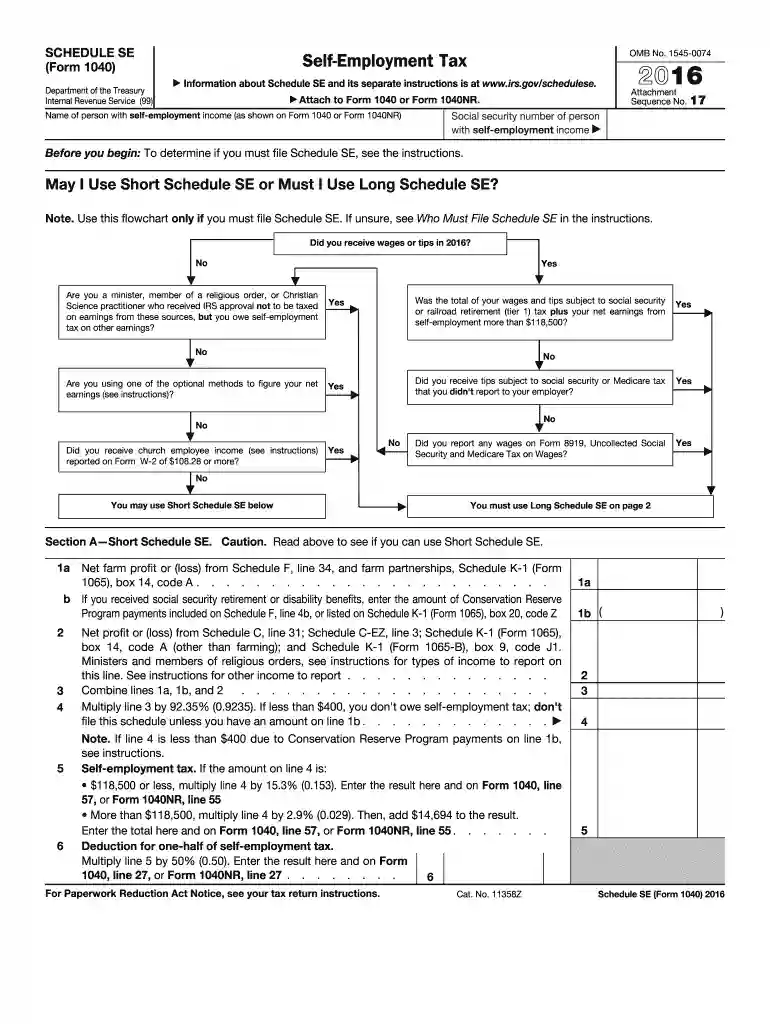
Type text, add images, blackout confidential details, add comments, highlights and more.

Draw your signature, type it, upload its image, or use your mobile device as a signature pad.

Send schedule se 2016 via email, link, or fax. You can also download it, export it or print it out.
The "2 printable form" is the standard IRS tax form used by individuals to file their federal income tax returns for the year 2016. It is essential for reporting income, claiming tax deductions and credits, and determining the amount of tax owed or the size of a refund. This form serves as the primary document for many taxpayers in the United States, providing a structured way to calculate and report earnings from various sources such as wages, salaries, dividends, and other forms of income.
To accurately use the 2 printable form, taxpayers need to gather all necessary documentation of income and expenditures related to deductions and credits they wish to claim. It’s critical to follow the IRS instructions specific to this form for 2016, ensuring compliance with that year's tax laws.
Completing the form 1040 requires careful attention to detail and proper documentation. Follow these structured steps to ensure accuracy:
The 2 printable form is utilized by a broad range of taxpayers in the United States:


Understanding key terms is crucial when dealing with tax documentation:
The filing deadline for the 2016 tax return using the 1040 form was typically due on or around April 15, 2017. However, due changes in weekends or holidays, the deadline may shift slightly.
Failing to file the 2 printable form by the stipulated deadline can result in financial repercussions:
Practically applying the 2 printable form can aid various taxpayers. For instance:
We've got more versions of the 2016 form 1040 schedule se form. Select the right 2016 form 1040 schedule se version from the list and start editing it straight away!
| Versions | Form popularity | Fillable & printable |
|---|---|---|
| 2025 | 4.8 Satisfied (20 Votes) | |
| 2024 | 4.9 Satisfied (51 Votes) | |
| 2023 | 4.3 Satisfied (45 Votes) | |
| 2022 | 4.2 Satisfied (48 Votes) | |
| 2021 | 4.9 Satisfied (38 Votes) | |
| 2020 | 4.3 Satisfied (211 Votes) | |
| 2019 | 4.2 Satisfied (61 Votes) | |
| 2018 | 4.3 Satisfied (80 Votes) | |
| 2017 | 4.4 Satisfied (106 Votes) | |
| 2016 | 4.4 Satisfied (445 Votes) | |
| 2015 | 4.3 Satisfied (54 Votes) | |
| 2014 | 3.9 Satisfied (32 Votes) | |
| 2013 | 4.3 Satisfied (48 Votes) | |
| 2012 | 4.2 Satisfied (52 Votes) | |
| 2011 | 4 Satisfied (40 Votes) |
At DocHub, your data security is our priority. We follow HIPAA, SOC2, GDPR, and other standards, so you can work on your documents with confidence.
U.S. Individual Income Tax Return 2017 OMB No. 1545-0074 IRS Use OnlyDo not write or staple in this space. For the year Jan. 1Dec. 31Read more
by PE Campaign Cited by 1 U.S. Individual Income Tax Return 2016 OMB No. 1545-0074 IRS Use OnlyDo not write or staple in this space. For the year Jan. 1Dec. 31Read more
Jan 19, 2017 If you do not file Form 1045, you can file Form 1040X to get a refund of tax be- cause of an NOL carryback. Generally, file. Form 1040X for theRead more


