01. Edit your form online
Type text, add images, blackout confidential details, add comments, highlights and more.

Type text, add images, blackout confidential details, add comments, highlights and more.

Draw your signature, type it, upload its image, or use your mobile device as a signature pad.

Send it via email, link, or fax. You can also download it, export it or print it out.
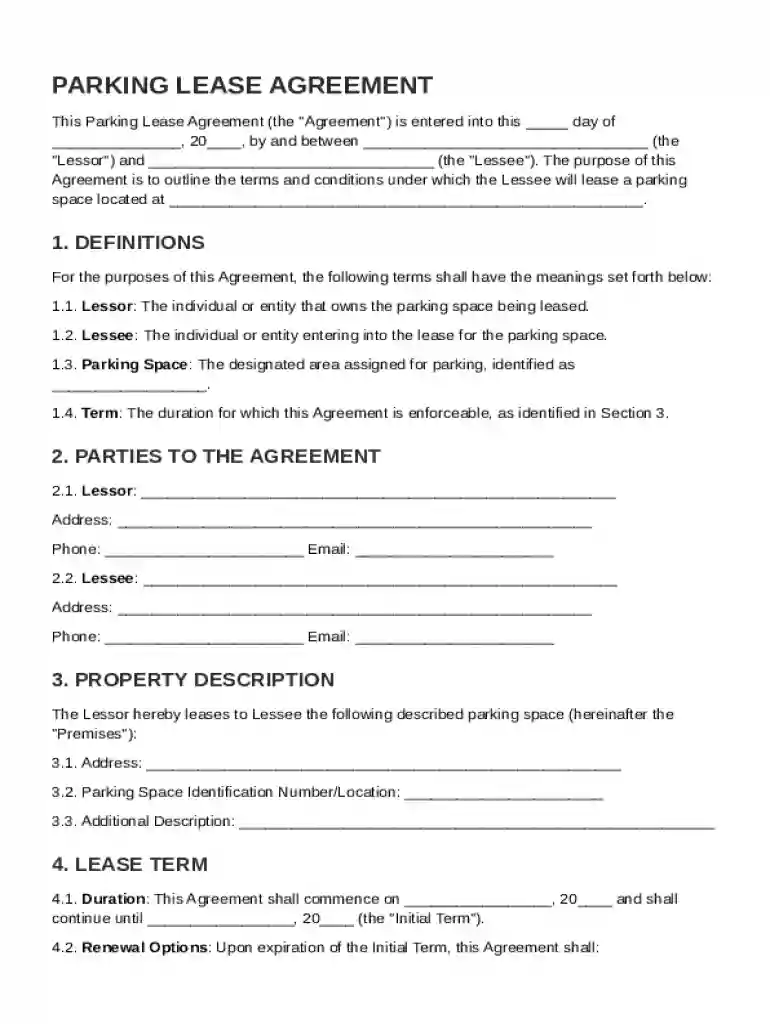
A Parking Lease Agreement Template is a legal document used to formalize the rental arrangement between a lessor, who owns or controls a parking space, and a lessee, who wishes to lease it. This agreement outlines the rights and responsibilities of each party, detailing aspects such as the duration of the lease, payment terms, and the allowed uses of the parking space. Such agreements can cover various types of parking spaces, including commercial, residential, and event spaces. Understanding the core components and terms of this agreement ensures compliance with legal requirements and helps prevent potential disputes.
The template includes several critical elements that must be correctly filled out to ensure its enforceability. These elements consist of:
Including these elements ensures a comprehensive and clear agreement between the parties.
Filling out a parking lease agreement involves several steps designed to ensure accuracy and comprehensiveness:
Ensure that all fields are completed and relevant information is included before finalizing the document.
The template serves to legally bind both the lessor and lessee to the terms specified within it. Adherence to the agreement is essential to mitigate disputes relating to payment default, unauthorized use of the space, or damages. The legal framework within which the contract operates typically aligns with state-specific leasing laws, making it adaptable to different jurisdictions in the United States. Ensuring compliance with state and local regulations is crucial for the agreement's validity and enforceability.
Utilizing a Parking Lease Agreement Template provides several advantages. It standardizes the lease process, ensuring all necessary legal protections and provisions are included. The template acts as a preventative measure against future misunderstandings regarding the lease terms.
These benefits collectively enhance the leasing experience by providing a structured and legally sound framework.
While the template provides a generalized framework, it's essential to account for state-specific regulations and requirements. These can vary widely and affect different aspects of the agreement, such as lease termination rights and security deposit limits.
Understanding and incorporating these state-specific provisions ensures compliance and can prevent legal issues down the line.
This template can be applied in various scenarios, ranging from individual parking space rental to large-scale parking facilities. For example, a commercial building owner may use the template to lease spaces to tenants, ensuring consistent terms across all agreements. Meanwhile, an event organizer may lease parking spaces for a limited time to accommodate attendees. Different situations may dictate variations in terms, such as for short-term events versus long-term residential parking.
Understanding specific terms related to the lease agreement helps all parties accurately execute and adhere to the document:
These terms form the foundation of the lease and clarify expectations and responsibilities for both parties involved.
At DocHub, your data security is our priority. We follow HIPAA, SOC2, GDPR, and other standards, so you can work on your documents with confidence.