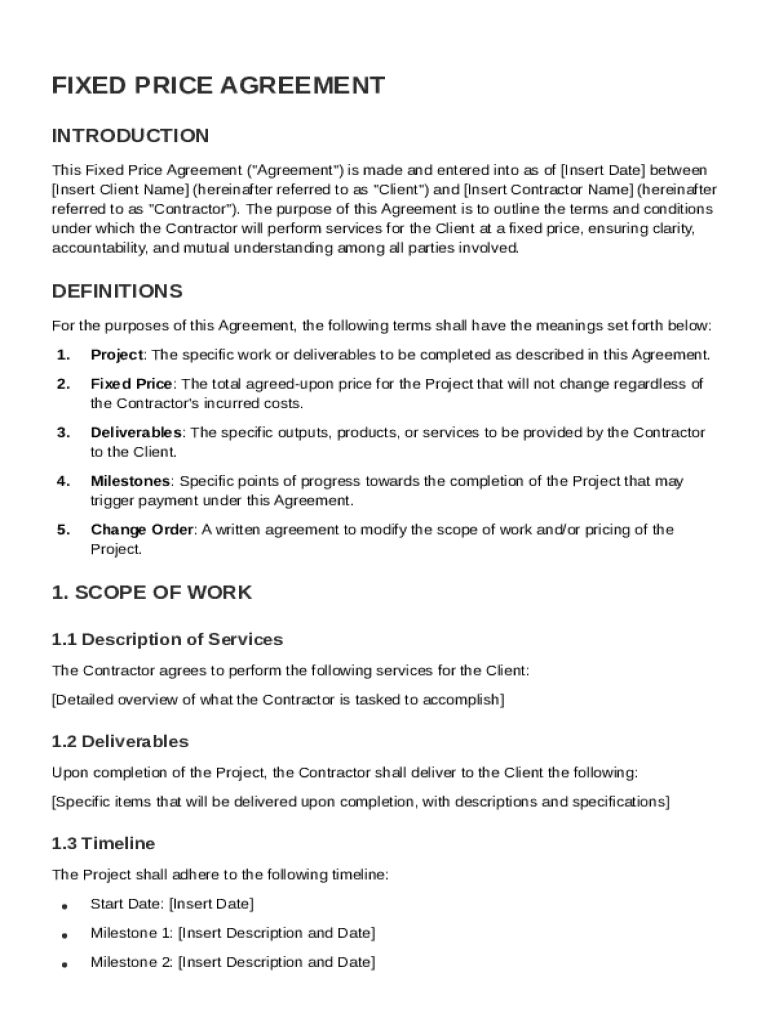







Definition and Purpose of a Fixed Price Agreement Template
The Fixed Price Agreement Template is a legally binding document that establishes the terms under which a Client and a Contractor agree to complete a project at a predefined and fixed cost. It outlines specific details, including the scope of work, payment schedules, and responsibilities of each party, ensuring clarity and minimizing the potential for misunderstandings. This type of agreement is particularly beneficial for projects where the deliverables and costs can be precisely determined in advance. By utilizing this template, both parties can protect their interests and have a clear understanding of their obligations and expectations.
Key Elements of the Fixed Price Agreement Template
The template includes several critical components to ensure comprehensive coverage of the agreed terms:
- Scope of Work: Clearly defines the tasks and deliverables the Contractor is expected to complete. This section is crucial for setting expectations and accountability.
- Pricing and Payment Terms: Details the fixed price for the project and the payment schedule. It may include milestones or deadlines tied to specific payments.
- Responsibilities: Outlines the duties and obligations of both the Client and the Contractor to ensure that both parties fulfill their commitments.
- Confidentiality Obligations: Specifies any nondisclosure agreements and confidentiality requirements to protect sensitive information exchanged during the project.
- Termination Clauses: Provides conditions under which the agreement can be terminated, including notice periods and any penalties for breach of contract.
Steps to Complete the Fixed Price Agreement Template
Completing this template involves several steps to ensure all necessary information is captured:
- Identify the Parties: Include names and contact information for both the Client and the Contractor.
- Define the Project Scope: Clearly outline all project deliverables and any specific standards or requirements.
- Set Pricing: Agree on a fixed price for the completion of the project, including any conditions that might affect the payment.
- Detail Payment Terms: Specify the payment schedule, including any advance payments, installments, or final payments upon completion.
- Outline Duties and Responsibilities: Document the specific roles and responsibilities of each party involved.
- Include Legal Clauses: Address confidentiality, dispute resolution, and termination terms to protect both parties legally.
How to Use the Fixed Price Agreement Template
Using the template effectively requires understanding its structure and how each section contributes to a clear and enforceable agreement.
- Customization: Tailor the template to fit the specific needs of the project and parties involved. This includes adjusting language and details to reflect the particularities of the project.
- Review: Both parties should review the document thoroughly to ensure complete understanding and agreement. Consulting with legal professionals may also be beneficial.
- Execution: Once finalized, both parties should sign the agreement. It may be beneficial to include witnesses or notarization for added legal weight.
Legal Use and Compliance
The use of a Fixed Price Agreement Template involves adhering to U.S. contract law to ensure its enforceability.
- Legally Binding Nature: These agreements, when correctly executed, are legally binding. They allow for legal recourse if one party fails to comply with the terms.
- Compliance with Laws: Ensure that the agreement complies with federal and state laws, which can vary significantly. Terms related to payment, employment status, and disclosure should meet any regional statutory requirements.
Examples of Using the Fixed Price Agreement Template
This template is versatile and can be applied in numerous scenarios:
- Construction Projects: When hiring contractors for a building or renovation project, a fixed price can prevent overruns or disputes about costs.
- Software Development: For predefined deliverables and timelines, this agreement helps in managing expectations and mitigating risks.
- Consulting Services: Use for engagements where the scope and deliverables are well-defined upfront.
Important Terms and Conditions
Understanding the terminology used in these agreements is vital:
- Force Majeure: Clauses that relieve parties from obligations due to extraordinary events beyond their control.
- Indemnification: Provisions where one party agrees to compensate the other for certain costs and damages.
- Governing Law: Specifies which jurisdiction’s laws will apply to the agreement, which is crucial in resolving disputes.
Who Typically Uses the Fixed Price Agreement Template
The template is widely used across various industries and business sizes:
- Small Businesses and Startups: It provides predictability in budgeting and cash flow management for new and smaller ventures.
- Freelancers and Independent Contractors: Offers protection and clarity in engagements with clients.
- Corporations and Large Enterprises: Utilized for vendor contracts where fixed deliverables are required at a set cost.