







Definition and Meaning
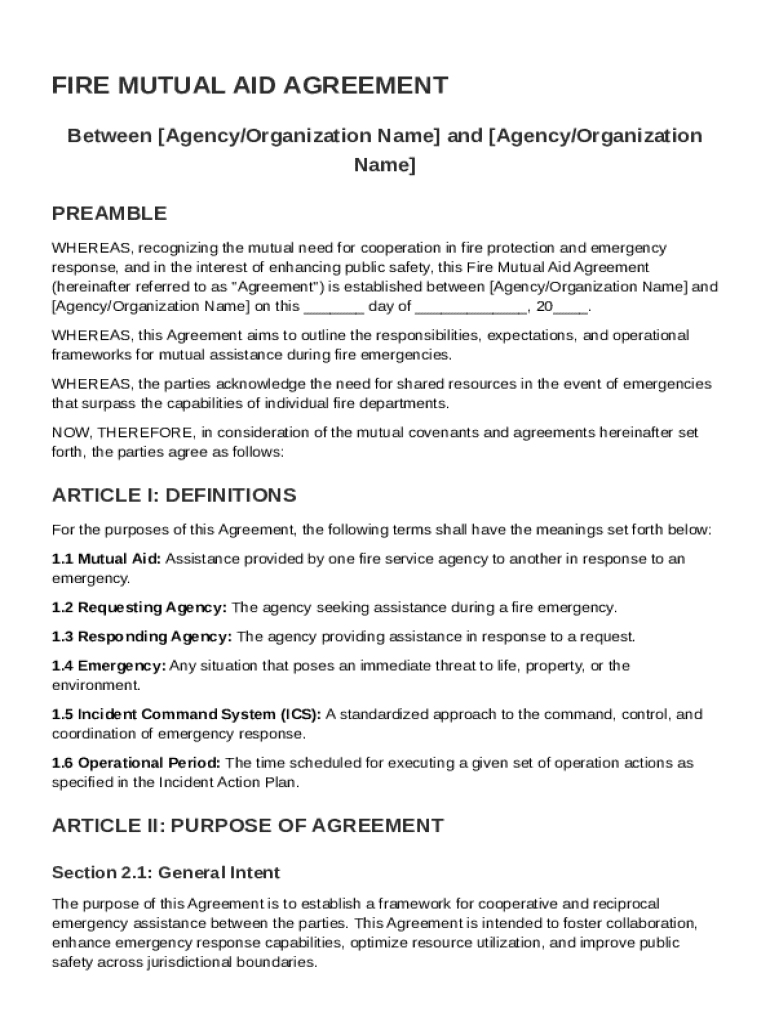
The Fire Mutual Aid Agreement Template is a structured document that establishes a collaborative framework between two or more fire service agencies. It focuses on enhancing public safety and improving emergency response capabilities during fire-related situations. The agreement includes definitions, roles of the participating agencies, and outlines the types of emergencies covered. It serves as a guide for resource sharing, cost recovery methods, and strategies for resolving disputes that may arise during joint operations.
Key Definitions
- Requesting Agency: The fire service agency that initiates the request for assistance.
- Responding Agency: The agency that provides support in line with the agreement.
- Emergency Types: Fire incidents, natural disasters, hazardous materials spills, and other situations requiring joint efforts.
How to Use the Fire Mutual Aid Agreement Template
To effectively use the Fire Mutual Aid Agreement Template, follow these structured steps:
- Collaboration Initiation: Identify potential partner agencies and discuss the need for a mutual aid agreement.
- Customization of Terms: Tailor the template to meet specific needs, such as local emergency types, resource allocation, and response strategies.
- Approval and Signatures: Obtain necessary approvals from relevant authorities within the participating agencies and ensure that authorized representatives sign the document.
Practical Considerations
- Ensure all parties have clear understanding of their roles and responsibilities within the agreement.
- Regular reviews and updates should be conducted to keep the agreement relevant.
Key Elements of the Fire Mutual Aid Agreement Template
The agreement includes several essential components designed to provide clarity and structure to inter-agency collaboration:
- Resource Sharing Protocols: Guidelines on how agencies will share personnel, equipment, and facilities.
- Cost Recovery Procedures: Details on how costs are allocated and reimbursed among agencies.
- Dispute Resolution: Mechanisms for addressing disagreements that may arise during or after emergency responses.
Additional Considerations
- Provisions for training and joint exercises to ensure operational readiness.
- Communication protocols to enhance efficiency during activations.
Steps to Complete the Fire Mutual Aid Agreement Template
Completing the Fire Mutual Aid Agreement Template requires thorough attention to ensure that all necessary elements are included and agreed upon:
- Review the Template: Understand all sections and ensure alignment with agency goals.
- Input Specific Information: Populate fields with relevant details specific to the agencies involved.
- Collaborative Discussions: Engage in dialogue with partner agencies to resolve any issues or adjustments needed.
Common Challenges
- Aligning protocols between agencies with differing policies or resources.
- Ensuring all stakeholders are adequately informed and involved in the process.
Legal Use of the Fire Mutual Aid Agreement Template
The Fire Mutual Aid Agreement Template is a legally binding document that outlines obligations and rights for participating agencies. It must comply with federal, state, and local legal requirements related to emergency services.
Compliance Considerations
- All signatories should review local laws and obtain legal counsel if necessary to ensure full compliance.
- Regular audits and legal reviews can help maintain adherence to applicable regulations.
Important Terms Related to Fire Mutual Aid Agreement Template
Understanding the specific terminology used in the template is crucial for effective implementation:
- Automatic Aid: Immediate response as dictated by predefined criteria.
- Mutual Aid Activation: A formal request process initiating response under the agreement.
Terms in Context
- Utilize terms like "Activation Criteria" to outline conditions under which mutual aid is triggered.
- Clearly define roles using terms such as "Incident Commander" to assign leadership during events.
State-Specific Rules for the Fire Mutual Aid Agreement Template
Each U.S. state may have its unique regulations and requirements that influence the structure and execution of a fire mutual aid agreement. Agencies should research state-specific laws that may affect operational mandates and cooperative agreements.
Regional Variations
- In states prone to specific disasters, such as wildfires or hurricanes, the agreement should address these scenarios to reflect regional challenges effectively.
- Consult state emergency management agencies for additional guidance and compliance standards.
Examples of Using the Fire Mutual Aid Agreement Template
Utilizing the template can streamline coordinated responses in various real-world scenarios, improving outcomes during emergencies:
- Natural Disaster Response: Agencies in tornado-prone areas can collaborate to pool resources and expertise.
- Large-Scale Fire Containment: Urban and rural agencies can unite to manage forest fires that threaten urban interfaces.
Case Study
- A joint operation between two counties in California successfully minimized property and environmental damage during a wildfire, showcasing the utility of a well-crafted mutual aid agreement.
This comprehensive exploration of the "Fire Mutual Aid Agreement Template" provides invaluable insights, processes, and guidelines critical for optimizing inter-agency collaboration in response to fire-related emergencies.




