
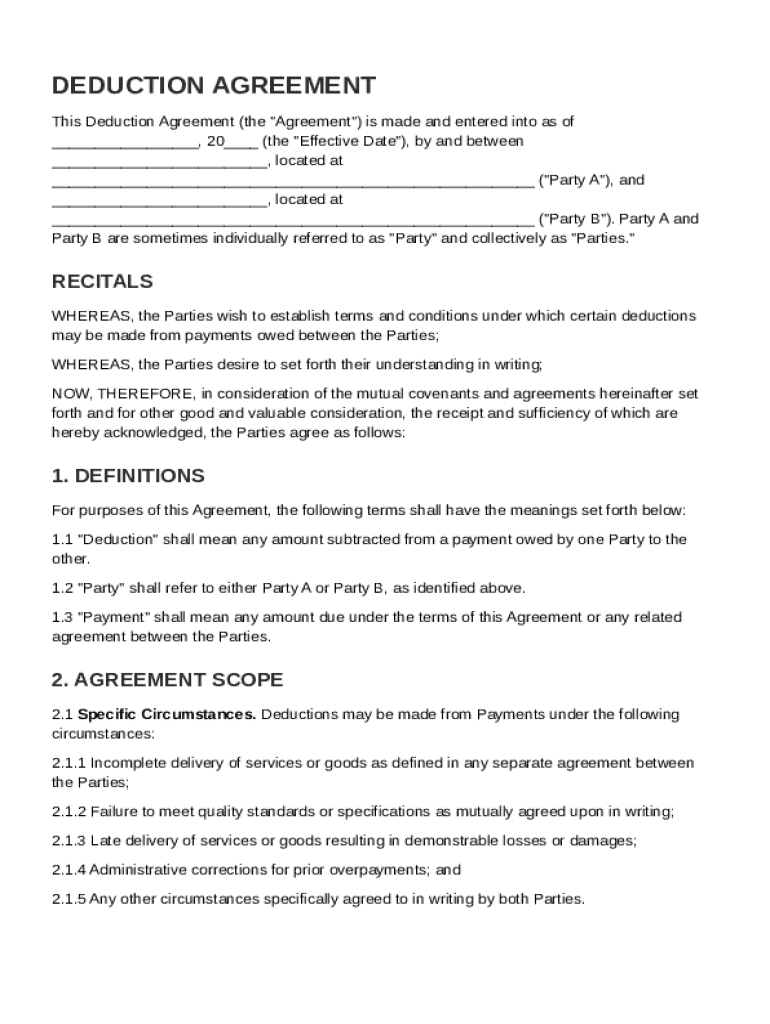







Definition & Meaning
A Deduction Agreement Template is a formal document outlining the conditions under which deductions can be made from payments between two parties. It includes important details such as defining who the parties involved are, specifying what constitutes a valid deduction, and detailing how deductions should be calculated and applied. The agreement also serves as a framework for resolving disputes, specifying how mediation or arbitration should be pursued in the event of disagreements. It is legally binding, thereby providing protection and clarity to both parties involved.
Practical Examples
- Business-to-Business Agreements: Companies often engage in transactions where one may owe the other for services rendered. A Deduction Agreement can specify terms for deducting funds in case of issues like late deliveries or unmet service expectations.
- Employee Reimbursements: Employers might have agreements with employees that allow for deductions on wages for reasons like equipment damages or unreturned company property.
Important Terms Related to Deduction Agreement Template
Understanding the key terms associated with a Deduction Agreement Template can aid in its effective use.
Key Terms
- Parties Involved: Refers to the entities entering into the agreement, typically identified as Party A and Party B.
- Deduction Circumstances: Specific conditions under which deductions from payments are permissible.
- Notification and Calculation: Procedures detailing how deductions are communicated and calculated.
- Dispute Resolution: Methods such as mediation or arbitration outlined for resolving conflicts related to deductions.
Use Cases
- Business Partnerships: Where real-time budget adjustments are necessary to maintain healthy cash flow.
- Supply Agreements: When working with vendors or suppliers who may need to apply deductions for damaged goods.
How to Use the Deduction Agreement Template
Using a Deduction Agreement Template involves several steps to ensure its relevance and compliance.
Step-by-Step Instructions
- Download the Template: Obtain the template from a reputable source or document management platform.
- Review Key Clauses: Thoroughly read through the template to ensure it covers all necessary aspects specific to your needs.
- Customize for Specific Use: Adjust terms and conditions to match your specific business or personal needs, ensuring all deductions and potential scenarios are accounted for.
- Consult with Legal Counsel: Before finalizing, it's advisable to have legal experts review the document to avoid potential disputes or compliance issues.
Variations
- Administrative Adjustments: Adapting to changes in company policy or procedural updates.
- Industry-Specific Clauses: Customizing clauses pertinent to specific industries or operational models.
Key Elements of the Deduction Agreement Template
A well-structured Deduction Agreement Template includes several core components that ensure its effectiveness.
Crucial Components
- Purpose Statement: Explains the overall objective of the agreement.
- Detailed Instructions: Clearly outlines the process for making deductions, including how and when they should occur.
- Legal Compliance: References relevant laws and statutes that govern deductions, ensuring compliance.
- Amendment Procedures: Provides a method for modifying the agreement when necessary.
Additional Elements
- Counterpart Executions: Allows the document to be signed in multiple copies, each considered an original.
- Endorsements by Both Parties: Formal signatures from authorized representatives of both parties.
Legal Use of the Deduction Agreement Template
The legal application of a Deduction Agreement Template is essential to ensure it holds up under scrutiny.
Legal Considerations
- State Laws: Compliance with state-specific regulations governing deduction practices.
- Enforceability: Ensures that each clause of the agreement is legally binding and enforceable in a court of law.
- Severability Clause: Ensures that if one part of the agreement is deemed invalid, the rest still applies.
Scenarios and Outcomes
- Expected Disputes: Common disputes relating to deductions might include disagreements over calculation methods or validity of deductions claimed.
Who Typically Uses the Deduction Agreement Template
This type of agreement is utilized by a variety of parties for different purposes.


Primary Users
- Businesses: Utilize deduction agreements to manage payment adjustments with suppliers or contractors.
- Employees: May use such agreements for wage deduction authorizations.
- Legal Advisors: Draft and review these agreements to safeguard the interests of their clients.
Scenarios and Examples
- Freelancers and Contractors: Protects their payment terms when engaging with larger corporations.
- Service Providers: Establishes clear terms for service payment deductions based on performance metrics.
State-Specific Rules for the Deduction Agreement Template
Deduction agreements may be subject to variations based on state regulations.
State Variations
- Local Laws: Certain states might have unique statutes affecting how deductions can be made legally.
- Required Provisions: States like California might have specific clauses that must be included to comply with local labor laws.
Importance
- Risk Mitigation: Knowing state-specific rules can prevent legal disputes and ensure smoother transactions.
- Legal Consistency: Maintaining uniformity with state laws ensures the enforceability of the agreement.
Software Compatibility (TurboTax, QuickBooks, etc.)
Efficient use of a Deduction Agreement Template can be aided by compatible software solutions.
Compatible Software
- TurboTax: Assists in the calculation and reporting of deductions for tax purposes.
- QuickBooks: Facilitates tracking of deductions within business transactions, aiding in financial audits.
Benefits
- Automation: Significantly reduces the manual effort required to apply and process deductions.
- Accuracy: Ensures precise calculations, reducing errors associated with manual entries.




