
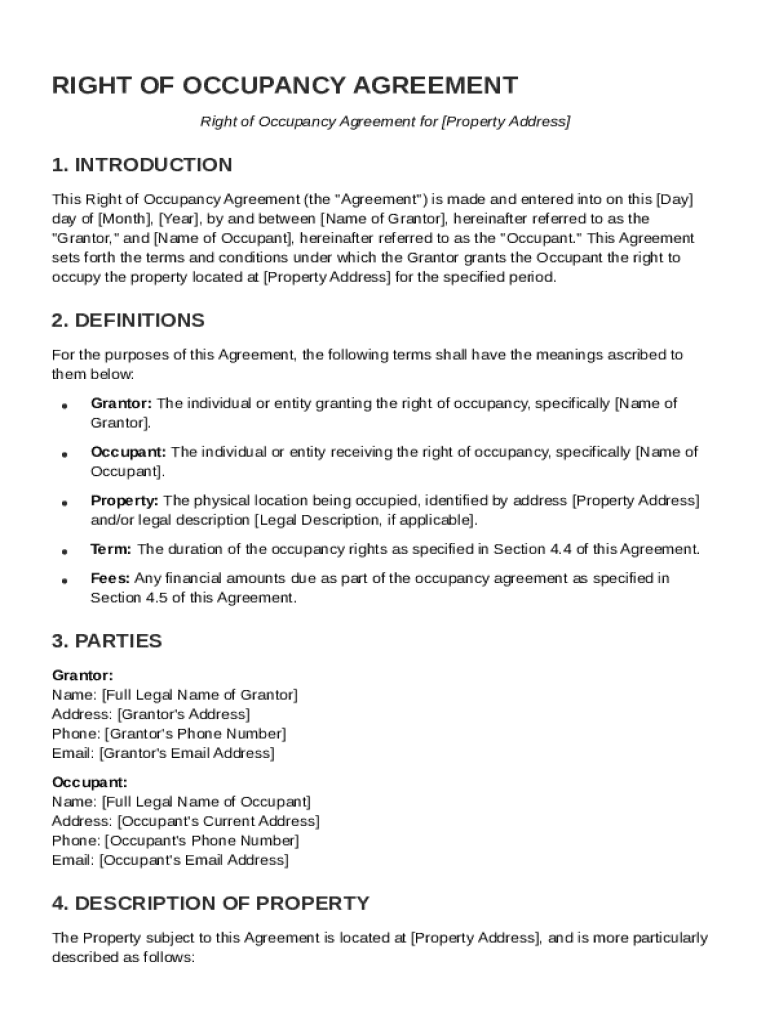







Definition and Meaning
The Right of Occupancy Agreement Template is a crucial legal document that outlines the terms under which an individual, referred to as the Occupant, is granted the right to occupy a particular property owned by another party, known as the Grantor. This agreement typically includes detailed definitions of the roles and responsibilities of each party involved, specifying how different scenarios should be managed. It serves as a framework to ensure that both parties are aware of and agree to the operational rules and regulations governing the use of the property, thereby minimizing potential conflicts and misunderstandings.
Key Components Included
- Details of Parties Involved: Names, addresses, and contact information for the Grantor and the Occupant.
- Property Description: A precise definition of the property or space to be occupied.
- Term of Occupancy: The start and end dates, including any provisions for extensions or renewals.
- Fees and Payments: Clearly outlined financial obligations, including rent, deposit, and any other applicable charges.
- Maintenance and Repairs: Responsibilities for property upkeep and the protocol for addressing necessary repairs.
How to Use the Right of Occupancy Agreement Template
Utilizing the Right of Occupancy Agreement Template involves specific steps to ensure all necessary information is accurately captured and legally binding. It starts with downloading the template from DocHub and tailoring it to fit the specific needs of the involved parties. The template acts as a practical guide to ensure clarity and completeness in the creation of a personalized agreement.
Steps to Tailor the Template
- Download and Review: Obtain the template and read through it to familiarize yourself with the sections and clauses.
- Edit Relevant Sections: Modify placeholder text with specific data pertinent to the occupants and property.
- Consult Legal Expertise: Engage a legal professional to ensure all clauses comply with state-specific laws.
Key Elements of the Right of Occupancy Agreement Template
Ensuring a comprehensive Right of Occupancy Agreement involves incorporating certain key elements, each vital to the document's completeness and effectiveness.
Main Components
- Termination Clauses: Define conditions under which the agreement may be concluded prematurely.
- Dispute Resolution Procedures: Outline methods for resolving potential disagreements, such as mediation or arbitration.
- Rights and Obligations: Set forth the respective rights and duties of the Grantor and Occupant, fostering a clear understanding.
Who Typically Uses the Right of Occupancy Agreement Template
This template is widely used by a range of individuals and entities, largely owing to the universal need for clearly defined property usage terms.


Common Users
- Landlords and Property Managers: Use templates for managing multiple properties.
- Tenants: Individuals looking for formal agreements to safeguard their occupancy rights.
- Legal Professionals: Draft agreements for clients involved in real estate or rental markets.

Steps to Complete the Right of Occupancy Agreement Template
Filling out the Right of Occupancy Agreement Template requires following a sequential process to ensure accuracy and legality.
Detailed Instructions
- Enter Personal and Property Information: Begin by completing sections with detailed personal data of the Grantor and Occupant, alongside property specifics.
- Define Occupancy Terms: Enter agreed dates, terms, and any potential extensions.
- Financial Considerations: Clearly list all financial obligations and procedures for their fulfillment.
- Final Review and Signature: Review the completed document for accuracy and obtain signatures from all parties involved.
Important Terms Related to Right of Occupancy Agreement Template
Understanding critical terms related to occupancy agreements aids in creating a comprehensive document.
Notable Terms
- Grantor: The individual or entity granting occupancy rights.
- Occupant: The individual or entity receiving the rights to occupy the property.
- Premises: The specific property or area defined in the agreement for occupancy.
- Leasehold Improvements: Additions or changes to the property made by the Occupant during the term.
State-Specific Rules for the Right of Occupancy Agreement Template
While the template provides general guidelines, certain state-specific rules and regulations may impact its execution and legality.
Key Considerations
- Local Laws: Awareness of local real estate laws that might affect agreement terms.
- Rental Caps and Rent Control: Particular states may have legislation limiting the amount of rent chargeable.
- Tenant Rights: Known protections that state laws provide to tenants need to be incorporated.
Legal Use of the Right of Occupancy Agreement Template
Using this template in a legally compliant way can safeguard both parties from future disputes and complications.
Legal Compliance Tips
- Legal Review: Always have a legal professional review the document to ensure compliance with specific jurisdictional requirements.
- Recognition of Updates: Remain informed of any changes in local laws that may necessitate updates to existing agreements.
This in-depth approach ensures that readers fully understand the "Right of Occupancy Agreement Template," its uses, and its critical elements within a U.S. context.




