01. Edit your form online
Type text, add images, blackout confidential details, add comments, highlights and more.

Type text, add images, blackout confidential details, add comments, highlights and more.

Draw your signature, type it, upload its image, or use your mobile device as a signature pad.

Send it via email, link, or fax. You can also download it, export it or print it out.
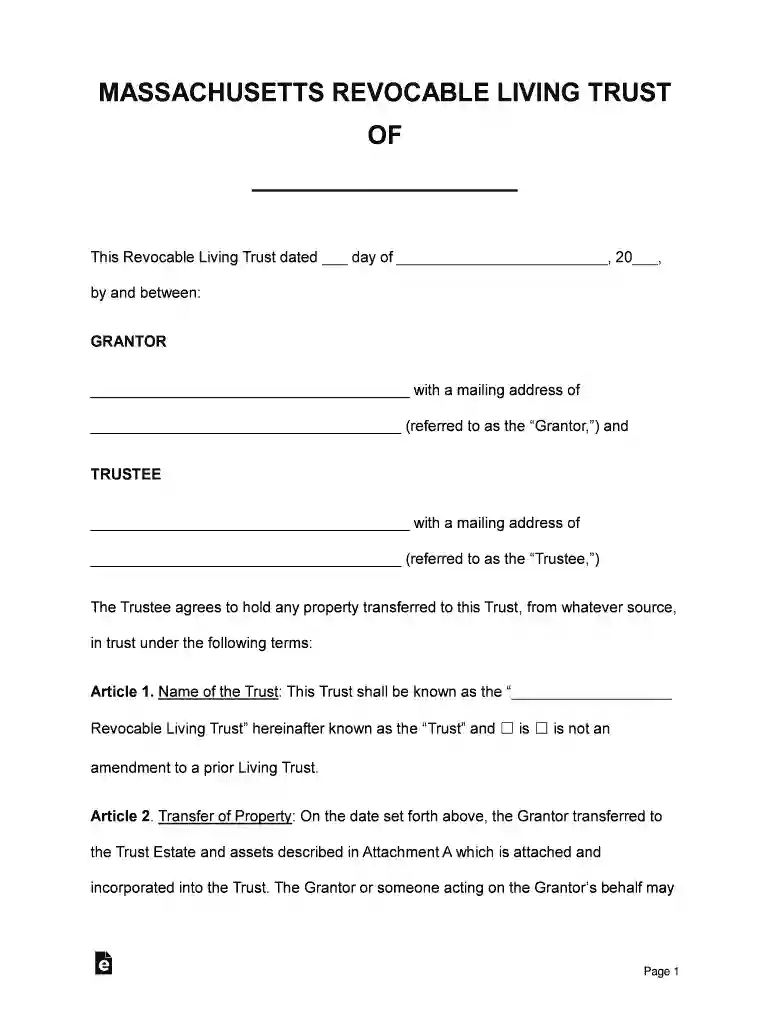
A Living Trust in Massachusetts is a legal arrangement that allows an individual, known as the Grantor, to place their assets into a trust during their lifetime. A Trustee, appointed by the Grantor, manages these assets for the benefit of the beneficiaries, who may include the Grantor during their lifetime. Unlike a will, a living trust can help avoid the probate process after the Grantor's death, allowing for a quicker and potentially less costly distribution of assets.
Determine the Type of Trust: Consider whether a revocable or irrevocable trust best suits your needs. In most cases, a revocable living trust is appropriate as it allows for modifications.
Draft the Trust Agreement: Work with an attorney to create a comprehensive trust agreement. This document must clearly outline the roles of the Grantor, Trustee, and beneficiaries, as well as the assets included.
Choose a Trustee: Select an individual or institution to manage the trust. The Grantor can act as Trustee initially, with a successor Trustee designated for after the Grantor’s passing or incapacitation.
Fund the Trust: Transfer ownership of the chosen assets into the trust. This often includes real estate, financial accounts, and personal property. Ensure titles and deeds are updated to reflect the trust's ownership.
Sign and Notarize the Agreement: Formalize the trust by signing the document in front of a notary public. This step is crucial for legal validity.
Grantor: The person creating the trust, who initially owns the assets and outlines the terms of management and distribution.
Trustee: The individual or entity responsible for managing the trust's assets according to the trust agreement. May include provisions for a successor Trustee.
Beneficiaries: Those who will benefit from the trust's assets, which can include the Grantor during their lifetime.
Trust Property: Assets included within the trust. These must be clearly listed and transferred into the trust’s name.
Terms of Distribution: Guidelines on how the assets should be distributed to beneficiaries, either during the Grantor’s lifetime or after their death.
Legal Requirements: Massachusetts law requires the notarization of the trust document to ensure its enforceability. The trust should comply with both state and federal regulations.
Probate Avoidance: A key benefit in Massachusetts, where probate can be a lengthy and expensive process. Properly administered trusts typically bypass this process.
Estate Tax Considerations: Massachusetts imposes an estate tax, with thresholds and deductions that can impact estate planning decisions.
Revocation: The process by which a Grantor can amend or dissolve the trust.
Funding: The act of transferring assets into the trust's ownership.
Successor Trustee: A designated person or institution who assumes control of the trust upon the current Trustee’s inability to serve.
Irrevocable Trust: A type of trust that, unlike a revocable trust, cannot be easily modified or dissolved once established, typically used for specific tax or financial planning purposes.
Living trusts are used to manage and distribute property effectively both during life and after death. They provide a mechanism for safeguarding valuable assets, ensuring they are managed and distributed according to the Grantor's wishes. Trusts also serve as an essential component of comprehensive estate planning, particularly in addressing uncertainty related to incapacity or death.
Incapacity Planning: If a Grantor becomes incapacitated, the Trustee can manage the assets without court intervention, maintaining financial stability and following predetermined guidelines.
Blended Families: A living trust can provide for current spouses while ensuring children from previous marriages receive specific inheritance.
Special Needs Beneficiaries: Trusts can be structured to support beneficiaries with special needs without affecting eligibility for government assistance programs.
Living trusts are beneficial for individuals who:
This structured approach is favored by those seeking a tailored solution for complex family or financial circumstances, allowing flexibility and continuity in asset management.
We've got more versions of the How to Create a Living Trust in Massachusetts form. Select the right How to Create a Living Trust in Massachusetts version from the list and start editing it straight away!
| Versions | Form popularity | Fillable & printable |
|---|---|---|
| 2017 | 4.8 Satisfied (127 Votes) |
At DocHub, your data security is our priority. We follow HIPAA, SOC2, GDPR, and other standards, so you can work on your documents with confidence.