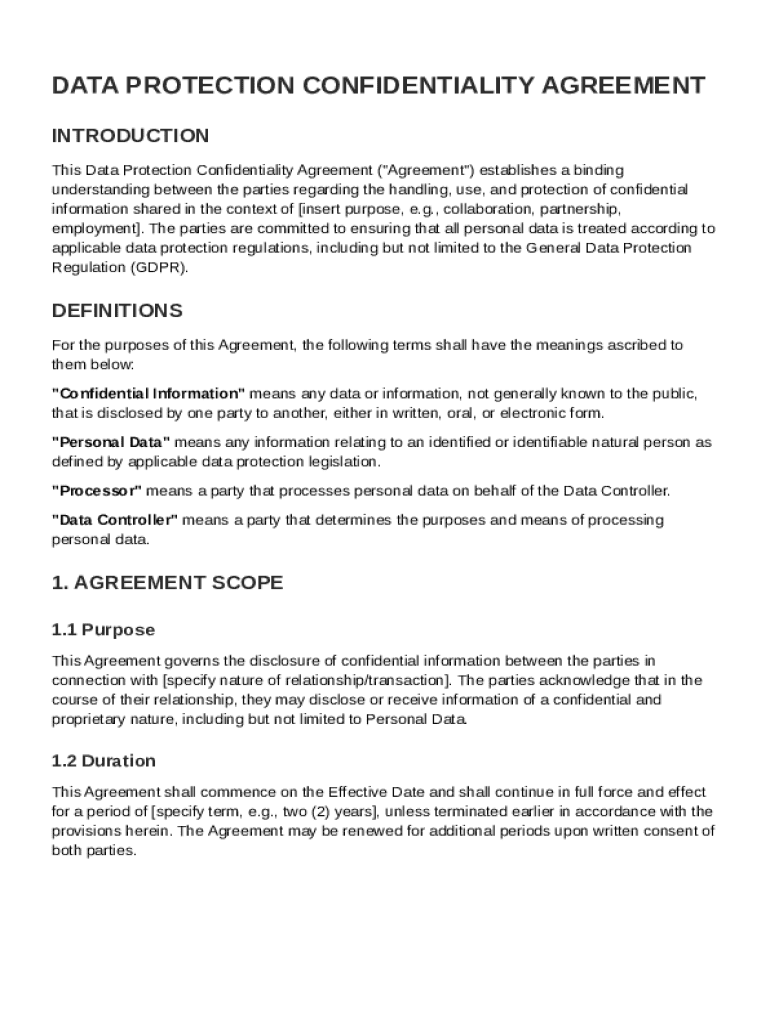







Definition and Meaning
The Data Protection Confidentiality Agreement Template is a legal document designed to safeguard sensitive information by outlining the responsibilities and obligations of parties involved. It primarily focuses on protecting personal data, ensuring compliance with relevant data protection laws, such as the General Data Protection Regulation (GDPR) and other U.S.-specific data protection laws. This agreement establishes clear definitions and expectations regarding the handling of confidential information, providing a framework for both disclosing and receiving parties to operate within.
Key Elements of the Data Protection Confidentiality Agreement Template
A comprehensive Data Protection Confidentiality Agreement Template encompasses several critical elements that ensure its effectiveness. These include:
- Definitions and Scope: Clearly defines key terms used throughout the agreement, such as "confidential information" and "personal data." It outlines the scope of the agreement, specifying what information is considered confidential.
- Obligations of the Parties: Describes the responsibilities of both the disclosing and receiving parties in handling, storing, and transferring confidential information.
- Security Measures: Emphasizes strategies and protocols to protect the confidentiality and integrity of the data, often including encryption and access control measures.
- Permitted Disclosures: Identifies situations where confidential information can be shared with third parties, if necessary, while maintaining compliance with applicable laws.
- Data Subject Rights: Ensures compliance with data protection laws that grant individuals certain rights over their personal data.
How to Use the Data Protection Confidentiality Agreement Template
To effectively use the Data Protection Confidentiality Agreement Template, follow these steps:
- Download the Template: Obtain the template from a reliable source such as a legal document service provider or your legal department.
- Review and Customize: Carefully review the standard provisions within the template. Customize the agreement to reflect the specific needs of your transaction or partnership, ensuring that the language aligns with your organization's policies and state regulations.
- Consult Legal Counsel: Engage with legal professionals to confirm that the agreement complies with relevant laws and adequately protects your interests.
- Seek Mutual Agreement: Present the customized agreement to the other party, allowing for any necessary negotiations or revisions before reaching a mutual consensus.
- Sign and Store Securely: Once agreed upon, ensure that all involved parties sign the document. Store the signed agreement securely, maintaining confidentiality and ensuring easy retrieval if needed.
Legal Use of the Data Protection Confidentiality Agreement Template
The legal validity of a Data Protection Confidentiality Agreement Template depends on several factors:
- Compliance with Laws: Ensure the agreement adheres to relevant data protection laws, including federal and state legislation in the U.S.
- Clear Intent: The agreement must clearly express the intent to enter a legally binding arrangement, with explicit consent from all parties involved.
- Specificity and Completeness: An effective agreement is detailed and complete, covering all potential scenarios and requirements for data protection.
- Consideration: As with all contracts, there must be a consideration - an exchange of value - which can be services, access to information, or other benefits.
Steps to Complete the Data Protection Confidentiality Agreement Template
Completing the Data Protection Confidentiality Agreement Template involves several key actions:
- Identify the Parties: Clearly specify the names of all parties involved in the agreement.
- Detail the Confidential Information: Enumerate the specific types of information considered confidential within the scope of the agreement.
- Agree on Obligations: Outline the responsibilities of each party in ensuring data protection, including security measures and protocols.
- Establish Terms: Define the duration of the agreement and any conditions for its termination or amendment.
- Finalize with Signatures: Obtain signatures from all parties to signify acceptance and understanding of the terms.
Important Terms Related to the Data Protection Confidentiality Agreement Template
Several crucial terms are associated with this agreement:
- Confidential Information: Any data or information that is not public and requires protection from unauthorized access or disclosure.
- Data Controller and Data Processor: In many legal contexts, these roles involve parties responsible for determining and processing data usage.
- Encryption: The method of converting information or data into a code to prevent unauthorized access.
- Governing Law: The jurisdiction whose laws will be applied in interpreting the agreement.
Who Typically Uses the Data Protection Confidentiality Agreement Template
The template is widely used by various individuals and organizations, such as:
- Businesses: Companies across sectors use these agreements to protect trade secrets and sensitive client information.
- Healthcare Providers: To ensure compliance with HIPAA (Health Insurance Portability and Accountability Act) when handling patient data.
- Legal and Financial Institutions: To secure private financial data or legal documents, ensuring confidentiality.
- Educational Institutions: For safeguarding student and faculty data.
- Technology Firms: Particularly those dealing with customer data and proprietary technology.


State-Specific Rules for the Data Protection Confidentiality Agreement Template
While many principles are universally applicable, specific states may have additional requirements:
- California: The California Consumer Privacy Act (CCPA) imposes extra obligations on businesses dealing with Californian residents' data.
- New York: The New York SHIELD Act requires additional data security protections for residents' personal information.
- Other States: Variations in state laws can affect how agreements are drafted and enforced, so understanding local regulations is crucial.
Software Compatibility and Integration
The modern approach to handling agreements includes compatibility with various software platforms:
- Document Management Systems: Tools like DocHub allow for editing, signing, and managing documents online, offering enhanced security features.
- Cloud Services: Compatibility with cloud storage (Google Drive, Dropbox) facilitates secure and efficient data management.
- Collaboration Tools: Many templates integrate seamlessly with platforms that support real-time collaboration.
Each block is designed to provide in-depth understanding and actionable insights for effectively utilizing a Data Protection Confidentiality Agreement Template, ensuring comprehensive coverage in alignment with specific U.S. legal standards and practices.