






Definition and Purpose of the Nik Form
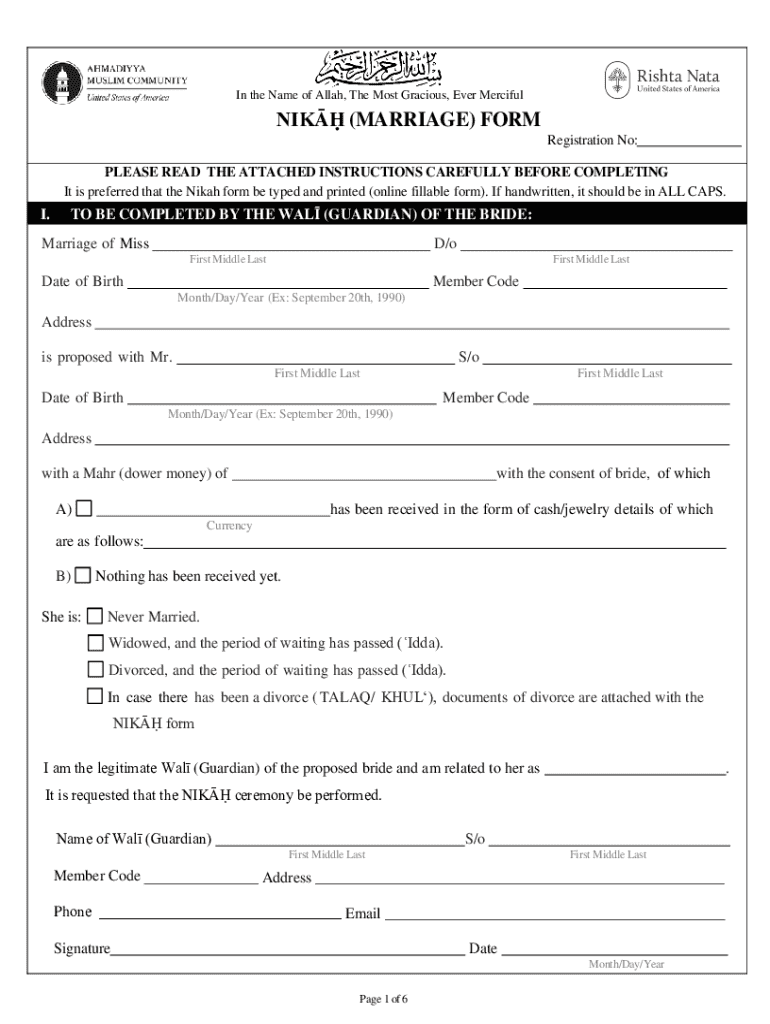
The Nik Form is an essential document governed by the Ahmadiyya Muslim Community, specifically used for the Nikāḥ or marriage process. It facilitates the proper documentation of a marriage, ensuring all necessary legal and religious aspects are met. The form includes detailed instructions, captures essential agreements like the Haq Mahr (dower), and documents the parties involved in the union. Legal compliance and cultural adherence are focus points, as the form ensures that all involved parties and procedures align with the community's standards and U.S. legal requirements.
Steps to Complete the Nik Form
-
Gather Required Information: Before starting, collect all necessary details, including personal information of the bride and groom, their consent, details of the Haq Mahr, and witnesses’ information.
-
Document Personal Details: Accurately fill in personal information such as names, addresses, and contact details of both parties.
-
Haq Mahr Agreement: Clearly specify the Haq Mahr agreed upon, ensuring both parties understand and consent to the terms.
-
Witness Details: Provide information about the required witnesses, ensuring they meet any specified eligibility criteria.
-
Signatures and Authentication: Obtain signatures from the bride, groom, witnesses, and any religious or legal officials, ensuring authentication of the document.
-
Review and Submission: Double-check all entries for accuracy before submitting the form to the relevant authorities within the Ahmadiyya Community for processing and approval.
Important Terms Related to the Nik Form
-
Nikāḥ: The Islamic marriage contract, signifying a formal marriage agreement between two parties.
-
Haq Mahr: A mandatory payment, in the form of money or possessions, provided by the groom to the bride at the time of marriage.
-
Qadha’a Board: The body responsible for arbitration in case of disputes concerning the marriage contract or dower.
By understanding these terms, you ensure compliance and proper execution of the marriage process.
Why Use the Nik Form
The Nik Form is vital for several reasons. It provides a documented proof of marriage, which is legally sound and culturally appropriate for members of the Ahmadiyya Community. It also serves as a preventive tool against disputes, ensuring that any agreements, such as the Haq Mahr, are pre-documented and agreed upon by both parties. This form acts as a binding legal document, thereby providing both security and clarity in the marriage process.
Key Elements of the Nik Form
-
Personal Details: Information such as full names and addresses of the bride and groom.
-
Marriage Agreement: Details regarding the terms of the Nikāḥ, including any conditions or agreements made prior to the marriage ceremony.
-
Haq Mahr Specification: A clear statement of the dower amount and the conditions under which it will be paid.
-
Witness Declarations: Signed attestations from witnesses acknowledging the correctness of the information and the legitimacy of the marriage.
-
Signatures and Dates: Essential for validating the form, ensuring all parties involved in the marriage have signed it.
Understanding these elements is crucial for a valid and recognized marriage within both the community and legal frameworks.
Legal Use of the Nik Form
The Nik Form is recognized as a legal document that fulfills both state and federal requirements for marriage documentation. It is critical for ensuring that all aspects of the marriage adhere to the legal standards of the United States. Additionally, it addresses religious needs by including provisions specifically designed for the Ahmadiyya Community. In cases where state law requires specific marriage documentation, the Nik Form must be carefully completed and submitted according to those guidelines to ensure full legal compliance.
State-Specific Rules for the Nik Form
Rules and requirements for marriage forms like the Nik Form can vary by state. Some states may have specific guidelines regarding the number and identity of witnesses, the validity of personal identifications, and the registration process with religious organizations. Therefore, it's advisable to review the state-specific rules where the marriage is taking place, ensuring the Nik Form aligns with both local protocols and broader legal statutes.
Examples of Using the Nik Form
-
Legal Marriage Registration: Utilized by couples within the Ahmadiyya Community to legally register their marriage in a way that respects both religious and legal obligations.
-
Dispute Resolution: In cases of disputes over the Haq Mahr, the form serves as a reference point for arbitration by the Qadha’a Board.
-
Documentation Proof for Immigration: When members of the community apply for visas or immigration, the Nik Form serves as verifiable proof of marriage, aligning with both religious and legal standards required by immigration authorities.