




01. Edit your form online
Type text, add images, blackout confidential details, add comments, highlights and more.

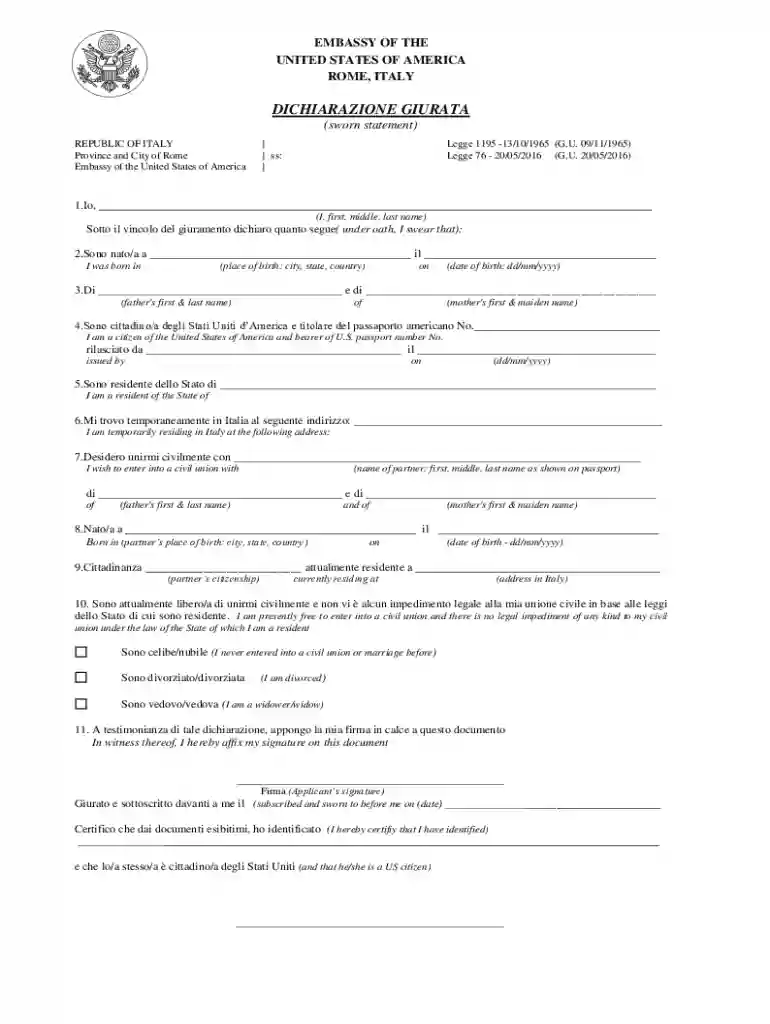
Type text, add images, blackout confidential details, add comments, highlights and more.

Draw your signature, type it, upload its image, or use your mobile device as a signature pad.

Send it via email, link, or fax. You can also download it, export it or print it out.
A marriage certificate in Italy is an official document that confirms the legal union between two individuals. This certificate serves as proof of marriage and is necessary for a variety of legal, administrative, and personal purposes. It is issued by the local civil registrar's office (Ufficio Anagrafe) of the municipality where the marriage takes place. The certificate typically includes essential details such as the full names of the spouses, the date and location of the marriage, and the officiant's details. In certain instances, additional information like marital status prior to the marriage or the regime of property (community or separate) might be included.
These variations accommodate different needs, ranging from simple proof of marriage to more detailed documentation for legal proceedings.
Marriage certificates have diverse applications depending on the context in which they are required. In legal terms, they are often used to validate a marriage for inheritance claims, to update marital status in identification documents, or to facilitate name changes. Financial institutions may require them to change beneficiary information or joint account statuses. Internationally, an Italian marriage certificate might be necessary for visa applications or to assert marital status in a foreign country.
Before using a marriage certificate, ensure it is an official copy from the issuing office, as unofficial copies might not be accepted for all purposes. Some scenarios may require an apostille or a sworn translation if the document is to be used outside Italy.
The process of obtaining a marriage certificate in Italy involves submitting a request to the Ufficio Anagrafe in the municipality where the marriage occurred. Depending on your location, requests can be made in person, by mail, or online. Identification documents are usually required to process the request, and fees vary depending on the type of certificate requested.
Successfully acquiring a marriage certificate involves detailed attention to the application process.
An Italian marriage certificate includes several critical components, each serving a specific purpose in legal and personal contexts.
This certificate plays a vital role in updating personal records and asserting marital rights and obligations. It's crucial to ensure information accuracy, as errors might lead to legal complications.
Familiarity with specific terms can be essential for understanding the full extent and utility of a marriage certificate.
While the general process of obtaining a marriage certificate is similar across Italy, regional variations may exist.
The marriage certificate provides legal proof of marital status, essential for a variety of administrative and personal purposes. It facilitates spousal rights to inheritance, informs next-of-kin status, and supports applications for family visas.
Understanding how these elements interrelate with the legal framework is crucial for fully leveraging the certificate's potential.
We've got more versions of the marriage certificate italy form. Select the right marriage certificate italy version from the list and start editing it straight away!
| Versions | Form popularity | Fillable & printable |
|---|---|---|
| 2025 | 4 Satisfied (34 Votes) | |
| 2025 | 4.8 Satisfied (31 Votes) | |
| 2025 | 4.3 Satisfied (34 Votes) | |
| 2025 | 4.2 Satisfied (34 Votes) | |
| 2025 | 4.6 Satisfied (55 Votes) | |
| 2025 | 4.5 Satisfied (44 Votes) | |
| 2025 | 4.2 Satisfied (37 Votes) | |
| 2025 | 4.7 Satisfied (34 Votes) | |
| 2024 | 4.3 Satisfied (21 Votes) | |
| 2024 | 4.6 Satisfied (51 Votes) | |
| 2024 | 4.5 Satisfied (23 Votes) | |
| 2024 | 4.8 Satisfied (29 Votes) | |
| 2024 | 4.1 Satisfied (28 Votes) | |
| 2024 | 4.9 Satisfied (51 Votes) | |
| 2024 | 4.4 Satisfied (31 Votes) |
At DocHub, your data security is our priority. We follow HIPAA, SOC2, GDPR, and other standards, so you can work on your documents with confidence.
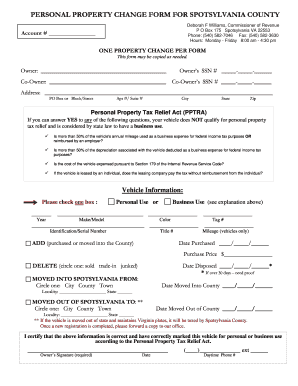
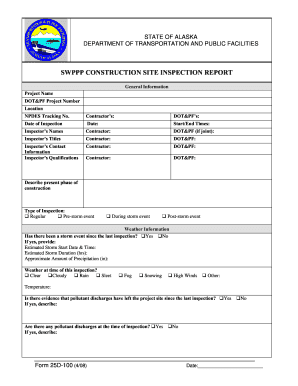
1. Obtain birth certificate, apostille, and translate. 2. Obtain marriage certificate from the Italian town hall (Serradifalco in our case) Estratto DelRead more
Under Italian law, records of births, marriages, and deaths are maintained by the Registrar of Vital Statistics (Ufficio dello Stato Civile) in the city (comuneRead more


