




01. Edit your tn revenue service vehicle registration online
Type text, add images, blackout confidential details, add comments, highlights and more.

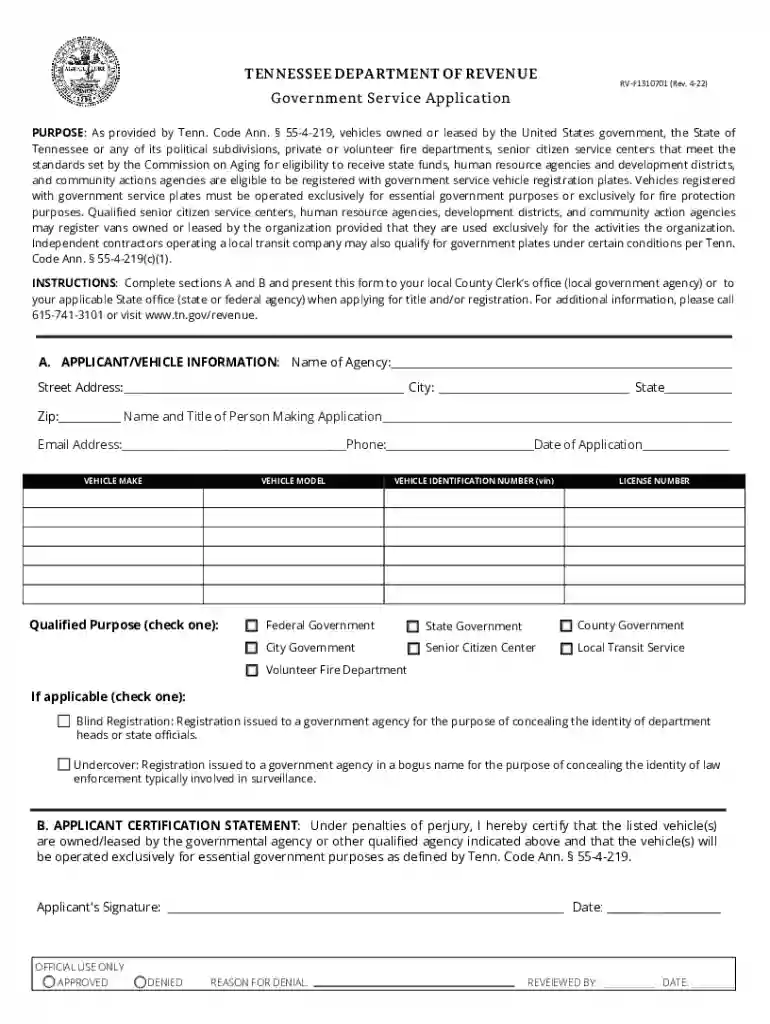
Type text, add images, blackout confidential details, add comments, highlights and more.

Draw your signature, type it, upload its image, or use your mobile device as a signature pad.

Send it via email, link, or fax. You can also download it, export it or print it out.
Temporary motor vehicle tags are provisional license plates issued to drivers who have recently purchased a vehicle. These tags serve as temporary registration, providing legal authority to operate the vehicle on public roads until permanent registration is established. Often printed on paper or lightweight material, these tags typically display critical information such as the expiration date, temporary registration number, and issuing authority. The use of temporary tags provides a grace period for drivers to finalize the necessary paperwork and vehicle inspections required for full registration.
Temporary tags are essential for ensuring vehicle mobility immediately after purchase. They allow drivers to legally operate their newly acquired vehicles while awaiting permanent registration and tag issuance. This provisional arrangement facilitates consumer convenience, enabling vehicle operation without unnecessary delays in administrative processing. Additionally, temporary tags help maintain legal compliance and public safety by providing visible evidence that the vehicle is in the process of being officially registered.
Temporary tags must be visibly displayed on the vehicle they are assigned to, typically in the same location as permanent license plates. They should remain legible and securely attached to prevent loss or damage during transit. Users must adhere to any specific instructions provided by the issuing authority regarding the placement and visibility of the temporary tags. Once permanent tags are received and installed, the temporary tags should be removed and properly discarded to avoid confusion or misuse.
To acquire temporary motor vehicle tags, drivers must follow a set process typically handled by the vehicle dealership or a designated state motor vehicle agency. This process often involves submitting proof of vehicle purchase, identification, and insurance coverage. Some states may require the completion of specific application forms and payment of a nominal fee. The timeframe for receiving temporary tags can vary but is generally expedited to align with the purchaser's immediate needs.
Filling out temporary motor vehicle tags requires attention to detail and adherence to guidelines provided by the issuing authority. Users must ensure accuracy in information such as vehicle identification numbers (VIN), purchaser details, and expiration dates. Assistance from dealership representatives or DMV personnel can aid in the precise completion of these forms, reducing the likelihood of errors.
Temporary motor vehicle tags are commonly utilized by individuals who have recently purchased a vehicle and need immediate legal authority to operate it. This includes consumers obtaining new or pre-owned vehicles through dealerships, private sales, or online marketplaces. Temporary tags are also used by vehicle dealerships for test drives or in-transit purposes, by individuals relocating vehicles across state lines, and by parties involved in short-term vehicle leases awaiting full registration.
Operating a vehicle with temporary tags requires compliance with state-specific laws and regulations, which dictate the allowable use of temporary registration. These rules often include restrictions on the duration of validity, which typically ranges from seven to thirty days. Additionally, drivers must ensure that all supporting documentation, such as proof of insurance and purchase agreements, is readily accessible to authorities if requested during vehicle operation.
Temporary motor vehicle tags prominently display:
Different states have distinct guidelines governing the use of temporary motor vehicle tags. These variations may include the length of validity, permissible extensions, and necessary forms for application. For example, some states might offer online services to manage temporary tags, while others require in-person visits for processing. Therefore, it is crucial for drivers to familiarize themselves with the specific requirements of their jurisdiction to ensure compliance and avoid penalties.
Driving with expired or improperly displayed temporary tags can result in fines, vehicle impoundment, or other legal consequences. States have enforcement measures to ensure that temporary tags are used appropriately and transitioned to permanent tags within the allotted timeframe. Non-compliance may also impact a driver’s record, potentially affecting insurance rates and future registration processes.
By understanding the guidelines and procedures related to temporary motor vehicle tags, drivers can navigate the initial registration phase seamlessly and maintain compliance with local regulations. Thorough knowledge of these processes ensures continued legal operation of newly acquired vehicles until permanent registration is finalized.
We've got more versions of the tn revenue service vehicle registration form. Select the right tn revenue service vehicle registration version from the list and start editing it straight away!
At DocHub, your data security is our priority. We follow HIPAA, SOC2, GDPR, and other standards, so you can work on your documents with confidence.






The date of expiration for preprinted temporary license plates is 45 calendar days from the date the vehicle is physically delivered to the purchaser or lessee.Read more
xDMV issues 30-Day Permits for the temporary movement of qualifying, non-commercial, or light commercial vehicles subject to Texas registration laws.


